
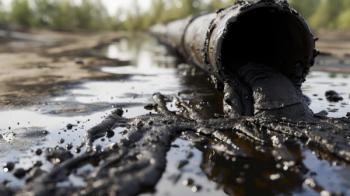
Researchers from Northwest University in Xi’an, China, developed a novel portable Raman spectroscopy method with advanced chemometric techniques to accurately quantify harmful polycyclic aromatic hydrocarbons (PAHs) in oily sludge.
Researchers from Northwest University in Xi’an, China, developed a novel portable Raman spectroscopy method with advanced chemometric techniques to accurately quantify harmful polycyclic aromatic hydrocarbons (PAHs) in oily sludge.
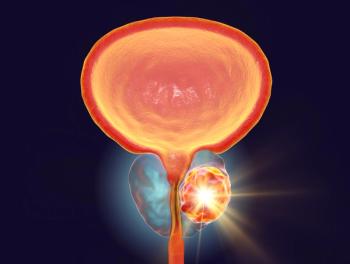
A recent study demonstrates the potential of infrared (IR) spectroscopy-based breath analysis as a non-invasive method to detect prostate cancer by identifying disease-specific volatile organic compounds.
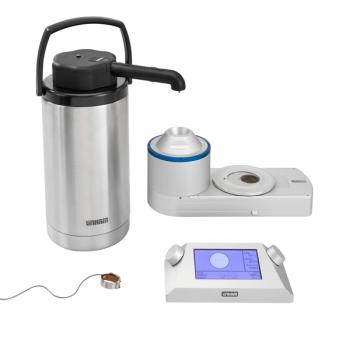
This update is designed to help researchers investigate samples at cryogenic temperatures.
This study uses Fourier transform infrared (FT-IR) spectroscopy to analyze how the globular protein ovalbumin's secondary structures transition under varying pH conditions in the presence of the cosolvent xylitol, highlighting the role of noncovalent interactions in these conformational changes.
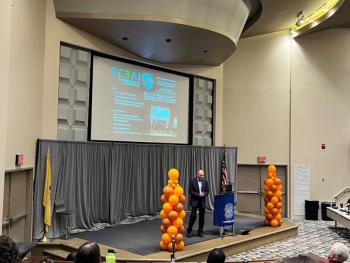
Igor Lednev, Rachel Martin, and Jeanne Pemberton were all honored at the 2024 Eastern Analytical Symposium for their work across in variety of spectroscopic techniques and applications.
Researchers from India developed a new micro-Raman spectroscopy system to detect and analyze microplastics.

Laser-induced breakdown spectroscopy (LIBS) is being used frequently in space exploration missions. In this article, we review how LIBS is being used to increase our knowledge of the Moon and certain asteroids.

Laser-induced breakdown spectroscopy (LIBS) is being used to propel many space exploration missions forward. In this two-part article, we recap a recent study that explores the role LIBS is playing in space exploration.

This article recaps a recent study into the infrared (IR) spectroscopy market.

A study published in the Journal of Analytical and Applied Pyrolysis by Yuanwen Kuang and colleagues used advanced pyrolysis techniques to reveal the preservation and chemical transformations of 2,000-year-old Chinese swamp cypress wood, offering valuable insights for archaeological conservation and environmental reconstructions.

A recent study out of Russia introduced a new method for identifying plant-based oils and adulterated dairy products.

Top articles published this week include highlights from the recently released “The Future of Forensic Analysis,” articles about detecting olive oil fraud, and an announcement from 3M regarding the winner of their Young Scientist competition.
A compilation of recent studies that used laser-induced breakdown spectroscopy (LIBS) as part of the experimental procedure are presented.

With the release of Part 2 of “The Future of Forensic Analysis,” we break down what readers can expect from this issue.
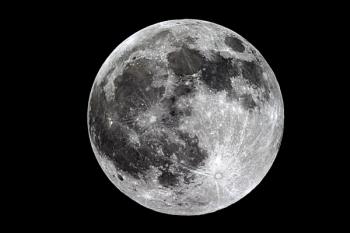
Scientists from the University of Tokyo explored the utility of laser-induced breakdown spectroscopy (LIBS) in lunar missions.

NASA’s Perseverance rover is collecting valuable information for scientists back on Earth. A recent study explored how laser-induced breakdown spectroscopy (LIBS) is being used to analyze the Martian surface.

A recent study presents a new technique that combines femtosecond double-pulse laser-induced breakdown spectroscopy (fs-DP-LIBS) with machine learning (ML) algorithms to significantly enhance tissue discrimination and signal quality, paving the way for more precise biomedical diagnostics.

Sirish Subash is the winner of the Young Scientist Award, presented by 3M and Discovery education. His work incorporates spectrophotometry, a nondestructive method that measures the light of various wavelengths that is reflected off fruits and vegetables.
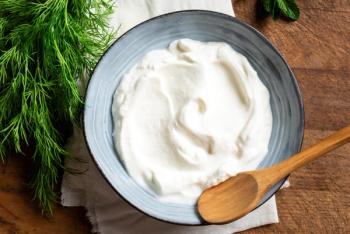
Researchers at Henan Agricultural University have developed a multi-channel magnetic flow device combined with surface-enhanced Raman spectroscopy (SERS) for the rapid and precise isolation, identification, and quantification of lactic acid bacteria and yeast, revolutionizing quality control in fermented food production.
Top articles published this week include an interview with Landulfo Silveira Jr., an article about using Raman spectroscopy in hematology, and a recap of a recent study that used infrared (IR) spectroscopy to screen for cancer.

In this paper, a system based on laser induced breakdown spectroscopy (LIBS) and back propagation (BP) method was developed for the composition and traceability analysis of crop burning smoke.

Researchers at Bilkent University and Sabancı University, led by Burak Ülgüt, have advanced the understanding of charge transfer processes in lithium batteries by employing electrochemical impedance spectroscopy (EIS) with varied parameters, revealing critical insights into battery performance and kinetics.

Researchers from Sichuan University and the University of Georgia have developed an advanced method combining Raman spectroscopy and chemometric analysis to effectively identify and distinguish between various PFAS compounds, improving detection and environmental monitoring capabilities.
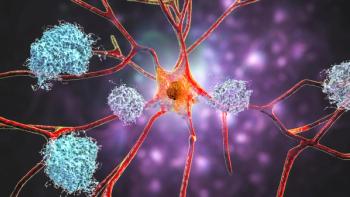
A recent study published in Frontiers in Aging Neuroscience by Wenyu Jiang and colleagues in China found that patients with mild cognitive impairment (MCI) exhibit abnormal functional connectivity in the right prefrontal cortex as revealed by fNIRS, highlighting potential cognitive implications and the protective role of education.
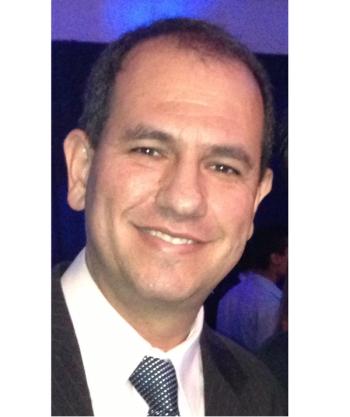
Spectroscopy sat down with Landulfo Silveira Jr. of Universidade Anhembi Morumbi-UAM and Center for Innovation, Technology and Education-CITÉ (São Paulo, Brazil) to talk about his team’s latest research using Raman spectroscopy to detect biomarkers of cancer in canine sera.
Top articles published this week include a SciX interview about mentorship, a feature article on wildlife crime, and a news article highlighting a new near-infrared (NIR) transient absorption spectrometer.

A recent study looked at how deep–UV Raman technology is studying the volcanic history of Mars.
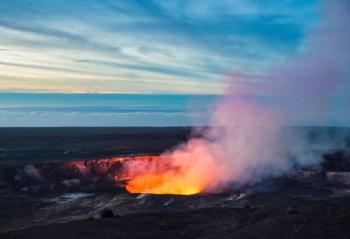
A recent study examined the role of infrared (IR) spectroscopy in volcanology.

Here, a recap of a recent study that used Fourier transform infrared (FT-IR) imaging to evaluate changes in the inulin, lignin, and suberin contents of tuberous roots is presented.
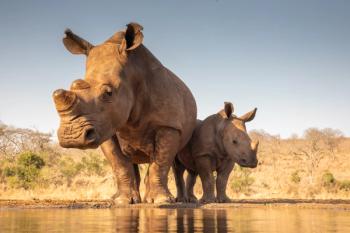
The emergence of new spectroscopic technologies has allowed investigators to solve and prosecute wildlife crimes more quickly.