

A recent study from Jiangsu University highlighted the challenges associated with the real-time application of microfluidic technology. We summarize their research here.
A recent study from Jiangsu University highlighted the challenges associated with the real-time application of microfluidic technology. We summarize their research here.

Top articles published on Spectroscopy involving inductively coupled plasma–optical emission spectroscopy (ICP-OES), according to our readers.
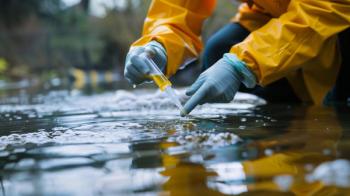
A recent review article published in the Journal of Analytical Atomic Spectrometry describes the latest advancements in environmental monitoring while expanding the capabilities of inductively coupled plasma–mass spectrometry (ICP-MS) and laser-induced breakdown spectroscopy (LIBS).

Tanta University recently published a review article that highlighted the versatility of metal complexes in analytical chemistry. We recap their research here.
Top articles published this week include a preview of our upcoming “The Future of Forensic Analysis” e-book, a few select offerings from “The Future of Forensic Analysis,” and a news story about next-generation mineral identification.

In honor of “The Future of Forensic Analysis,” which launched on September 16th, we highlight five of our most popular articles, according to readers.

A recent study examined how near-infrared (NIR) spectroscopy can estimated the water content in recycled construction materials.
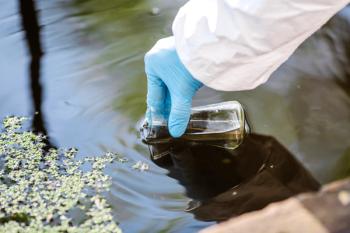
A recent review article evaluates how artificial intelligence (AI) and machine learning (ML) are being used to assess water quality.

A recent study recently examined how proton nuclear magnetic resonance (NMR) spectroscopy can characterize debranched waxy rice starches in ice cream.
Part 2 of The Future of Forensic Analysis will be released in an e-book. We preview what this e-book will feature.
This landing page highlights the various Q&A interviews conducted for “The Future of Forensic Analysis.”
This landing page highlights some of the latest studies conducted in forensic analysis that used spectroscopic instrumentation and techniques as part of the methodology.
![Artifacts arranged in a display case at an archaeological museum, showcasing the fruits of excavation. [Artifacts arranged in a museum display case] | Image Credit: © Julia - stock.adobe.com](https://cdn.sanity.io/images/0vv8moc6/spectroscopy/9e8e8a3ab701eafd12b2e31257ee3e8812691cf6-7280x4080.jpg?w=350&fit=crop&auto=format)
A new compilation in the Journal of Raman Spectroscopy highlights advanced Raman spectroscopy techniques, showcasing their transformative applications in forensic and cultural heritage fields. These approaches include mobile setups, enhanced optics, and sophisticated data treatment methods.
Researchers have developed a cutting-edge, portable LIBS sensor designed for crime scene investigations, offering both handheld and tabletop modes. This device enables on-the-spot analysis of forensic samples with unprecedented sensitivity and depth, potentially transforming forensic science.

This article offers some insight into using attenuated total reflectance Fourier transform infrared (ATR FT-IR) spectroscopy at crime scenes.
Scanning electron microscopy/energy-dispersive x-ray (SEM/EDX) spectrometry analysis of cigarette burns on the corpse of a child led to adding child abuse to the charges against the alleged perpetrator.
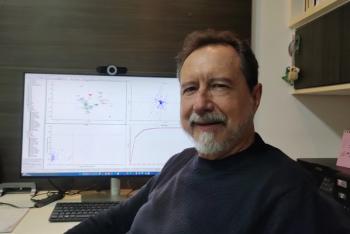
The introduction of miniaturized near-infrared (NIR) instruments has transformed the use of technology in the field of forensics. A recent research paper examines the main aspects and provides a comprehensive, critical review of this equipment.
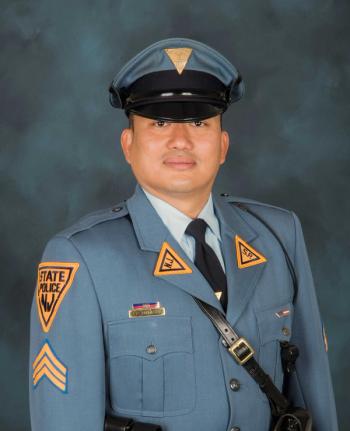
Pakorn Patimetha, Detective Sergeant with the New Jersey State Police's Hazardous Materials Response Unit spoke to Spectroscopy about how officers use portable spectroscopy technology to detect potentially harmful materials at crime scenes.
For "The Future of Forensic Analysis” series, we interviewed Barry Lavine, regents professor from The Department of Chemistry at Oklahoma State University in Stillwater, Oklahoma, to describe his most recent work in applying Raman and infrared (IR) spectroscopy in forensic paint analysis.

The Institute of Forensic Science and Criminology of Bundelkhand University (Jhansi, India) has used Fourier transform infrared spectroscopy (FT-IR) combined with principal component analysis (PCA) and partial least square regression (PLSR) to investigate adulteration in petroleum products and to design an adulterant profiling method.
Spectroscopy sat down with Brandon Gayle, who specializes in training first responders to use FT-IR, Raman, and other analytical techniques in emergency situations.

Matthieu Baudelet, an associate professor of Chemistry at the National Center for Forensic Science at the University of Central Florida, is currently exploring how laser-based spectroscopic techniques can be used in forensic anthropology. Spectroscopy recently sat down with Matthieu Baudelet, Kristen Livingston, and Katie Zejdlik to discuss their research as part of “The Future of Forensic Analysis” content series.

Researchers at Texas A&M University (College Station, Texas) presented a novel approach to forensic hair analysis that is based on high-throughput, nondestructive, and non-invasive surface-enhanced Raman spectroscopy (SERS) and machine learning (ML). Using this approach, Dmitry Kurouski and his team investigated the reliability of the detection and identification of artificial dyes on hair buried in three distinct soil types for up to eight weeks.
As part of “The Future of Forensic Analysis” content series presented by Spectroscopy, we sat down with Dr. Rajinder Singh of Department of Forensic Science, Punjabi University, Patiala, to talk about his recent work using attenuated total reflectance Fourier transform infrared spectroscopy (ATR-FT-IR) to distinguish different animal species based on hair samples.
As part of "The Future of Forensic Analysis," executive editor Jerome Workman, Jr. sat down with Igor Lednev to discuss several of his recent papers related to his spectroscopic research in forensic analysis.
A recent study explores the effectiveness of near-infrared (NIR) and ultraviolet-visible (UV-vis) spectroscopy in determining the time since deposition (TSD) of bloodstains, a critical aspect of forensic investigations. By comparing these two methods, researchers aim to improve the accuracy and reliability of bloodstain dating, with potential implications for real-world forensic applications.
A multi-organizational team, believing that a reason for slow adoption is a lack of evidence that data taken on one spectrometer can transfer across to data taken on another spectrometer to provide consistent diagnoses, investigated multi-center transferability using human oesophageal tissue. By using a common protocol, the researchers aimed to minimize the difference in machine learning performance between centers.
Top articles published this week include a preview of our upcoming “The Future of Forensic Analysis” content series, a peer-reviewed article about the pharmaceutical industry, and a news story about a recent study that examined the neural synchrony in close relationships.
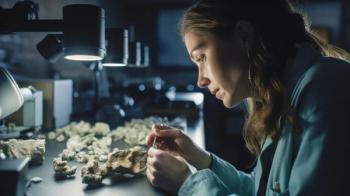
A recent review article examines the historical progression of analytical techniques in geochemical sciences, including X-ray fluorescence (XRF).

In this preview leading up to the SMASH NMR Conference in Burlington, Vermont, we preview the oral sessions set to take place on Tuesday September 17th.