Raman spectroscopy is entering one of its most consequential periods since its commercialization, driven by artificial intelligence, coherent heterodyne detection, and radical instrument miniaturization, with new deep-learning frameworks and portable systems moving Raman analysis into fields, factories, and crime scenes.
This interactive e-book celebrates National Forensic Science Week by highlighting the vital role of spectroscopy in modern criminal investigations and emphasizing how technological innovation is making forensic analysis faster, safer, and more reliable for courtroom testimony.
Spectroscopy invites the scientific community to nominate an outstanding early-career atomic spectroscopist for the 2027 award. Nominations are due December 10, 2026.
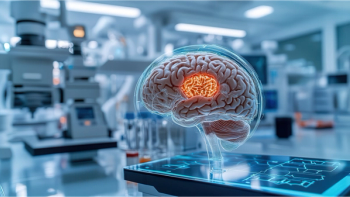
Near-infrared spectroscopy has quietly stopped being a niche calibration exercise and started acting like an autonomous diagnostic partner, reading consciousness in an injured brain, steering a fermenter without a human hand, and hunting invisible plastic in a glass of water. The tool chemists once used to check moisture in grain is now fusing with artificial intelligence to make decisions no spectrometer could make alone.
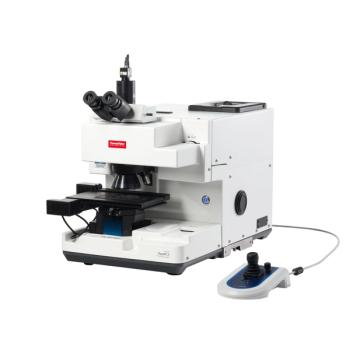
The modular system is intended to help laboratories analyzing microplastics, pharmaceutical formulations, forensic evidence, and other microscopic samples.
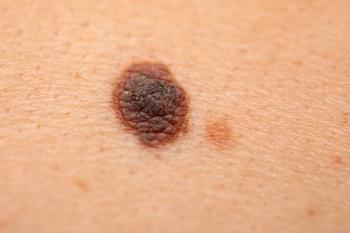
Discover how handheld Raman spectroscopy is helping distinguish skin cancer from normal tissue, courtesy of researchers from Florida Atlantic University.
Eight FACSS award winners at SciX 2026, One LIBS trailblazer. Forty-eight questions. And not one of them is a softball. Award season in spectroscopy usually means polite applause, a plaque, and a photo. We're not completely interested only in the award sessions. The eight scientists honored at SciX 2026 in Sparks, Nevada, along with LIBS researcher Alessandro De Giacomo, are pushing Raman into operating rooms, flying LIBS on drones, reading chemistry off Mars, and tracing toxic metals downwind of industrial sites. Their work makes big claims. In the coming days, Spectroscopy will sit down with eight of these researchers and ask whether those claims hold up.
The interviews that follow won't just celebrate. They'll press on the gaps between simulation and experiment, between the lab bench and the clinic, and between a clever paper and an instrument someone will actually buy and use.
Fourier-transform infrared (FT-IR) spectroscopy, long the workhorse of molecular fingerprinting, is being reinvented by photothermal detection schemes and quantum cascade laser (QCL) sources that push spatial resolution and analysis speed far beyond classical dispersive and interferometric limits.
New instrumentation such as optical photothermal infrared (O-PTIR) microscopy and laser direct infrared (LDIR) chemical imaging is enabling sub-micron, label-free chemical mapping of biological, environmental, and pharmaceutical samples.
This article reviews the latest FT-IR-adjacent technologies, recent patents, and research driving the field, featuring perspectives from the scientists and instrument developers advancing the technique.