


Environmental Analysis
Latest News
Advertisement
Latest Videos






Shorts



Advertisement
More News

An upcoming interview with Brandon E. Boor, the Dr. Margery E. Hoffman Associate Professor in Purdue University's Lyles School of Civil and Construction Engineering, will recap his talk at the American Chemical Society (ACS) Fall 2026 Meeting.

An upcoming talk at SciX 2026 will explore how spectroscopy is being used to evaluate urban air pollution.

An upcoming talk at the 2026 SciX Conference will focus on nanoplastic analysis to distinguish between plastic and non-plastic particles.

A recent study presented a new system for testing metal contamination on microplastics.

This curated selection of articles highlights recent advancements in microplastics and nanoplastics and soil analysis.

Environmental analysis is a growing area of study, and single-particle inductively coupled plasma–mass spectrometry (spICP-MS) is one of the techniques contributing to this growth.
Top articles published this week include a preview of an upcoming presentation at the American Chemical Society (ACS) 2026 Fall Meeting in Chicago, Illinois.

How is the water quality in Biscayne Bay? A talk at the American Chemical Society (ACS) Fall 2026 Meeting will explore this.

Atomic spectroscopy is making strides in fields such as forensics and environmental analysis. This Q&A explores how atomic spectroscopy-based techniques are being used and what the future looks like for these techniques.
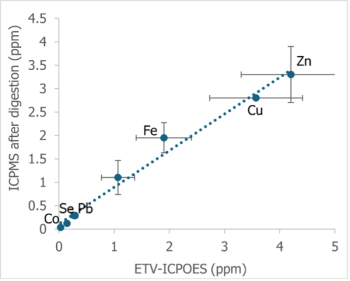
Electrothermal vaporization (ETV) sample introduction into ICP-OES enables direct analysis of solids, liquids and slurries with minimal sample prep, offering results comparable to ICP-MS after digestion in 80-100 seconds per sample.

Measuring neonicotinoids in drinking water is not heavily regulated in the United States, but low-cost, rapid analytical tools are changing the conversation.

Can spectroscopy help cities manage water quality during monsoons?

A European study of nearly 9,000 cropland soil samples found that combining visible–near-infrared (vis-NIR) spectroscopy with climate and topographic data only improves soil carbon and nitrogen prediction accuracy at spectral resolutions of 10 nanometers or finer.
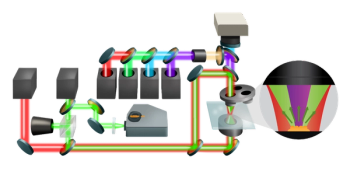
This paper demonstrates the use of optical photothermal infrared (O-PTIR) spectroscopy for the detection, identification, and localization of microplastics in tissue samples.

Researchers detect up to 587 particles per kilogram in locally marketed table salt, raising questions about daily consumer exposure through a dietary staple.

Webcasts
Webinar Date/Time: Thu, Jul 9, 2026 1:00 PM ED

This review highlights major advances in infrared (IR) and near-infrared (NIR) spectroscopy from 2022–2026, including instrument miniaturization, hyperspectral imaging, machine learning, and artificial intelligence. These developments are expanding the use of vibrational spectroscopy beyond the laboratory into portable and field-deployable analytical systems. Environmental applications such as microplastic detection, biosolids analysis, soil characterization, and contaminant monitoring are emerging as key growth areas.

Concentrations comparable to polluted European rivers detected in sediments of the Urdaibai Biosphere Reserve.

A team at Hebei University has developed a fluorescent probe that visualizes heavy metal stress in plant cells by detecting changes in intracellular viscosity, offering researchers a new real-time tool for assessing crop stress resistance.
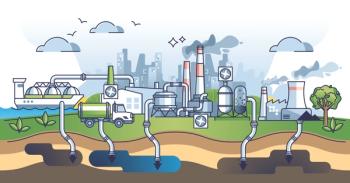
How is spectroscopy being used to detect methane and contribute to sustainability missions?

Webcasts
Webinar Date/Time: Tue, Jun 9, 2026 11:00 AM EDT
Webcasts
Webinar Date/Time: Thu, Jun 18, 2026 2:00 PM EDT

Webcasts
Webinar Date/Time: Tue, May 26, 2026 11:00 AM EDT
Webcasts
Webinar Date/Time: Thu, Apr 16, 2026 11:00 AM EDT

A 2026 study published in the journal Remote Sensing tested Germany’s EnMAP hyperspectral satellite to see if it could identify and map acid mine drainage (AMD) and associated mineral residues from a legacy sulfide mine in Sardinia, Italy.
Advertisement
Advertisement
Trending on Spectroscopy Online
1
Separating Skin Cancer From Normal Tissue Using Handheld Raman Spectroscopy
2
Past the Diffraction Limit: How Photothermal and Quantum Cascade Lasers Are Reinventing FT-IR Spectroscopy
3
Thermo Fisher Scientific Announces Launch of New FT-IR Microscope for Microscale Chemical Analysis
4
SciX 2026 Award Winners: The Conversations Coming Next
5