



In combination with attenuated total reflectance (ATR), Fourier transform infrared (FT-IR) spectroscopy can be used to classify different moss species.
In combination with attenuated total reflectance (ATR), Fourier transform infrared (FT-IR) spectroscopy can be used to classify different moss species.
Webcasts
Webinar Date/Time: On-Demand
We study the spectrum of polymethyl methacrylate (PMMA)—otherwise known as plexiglass—and the spectra of PMMA mixtures and copolymers.

We continue our survey of the spectra of carbonyl-containing polymers by looking at cellulose acetate and the economically important polycarbonate Lexan.
Webcasts
North America: Wednesday, November 16, 2022 at 11am PST | 1pm CST | 2pm EST Europe: Thursday, November 17, 2022, at 11am BST | 12pm CET Asia: Thursday, November 17, 2022, at 10:30 IST | 1pm SGT | 2pm JST | 4pm AEST Fast, easy, and accurate analysis of microplastics is a key need of anyone with an interest in this area. With the capacity to conduct this analysis directly on the filter in the Agilent 8700 LDIR for microplastics, this analysis has now reached a new level.

The implementation of 120 open-path spectroscopy analyzers at oil refineries has taught us lessons about compound identification, target species detectability, interferences, and data management, which can help spectroscopists generate more accurate data when monitoring air quality.

An exploration of polyethylene terephthalate (PET), one of the most important polymers, is presented.
We continue our survey of the infrared (IR) spectra of polymers with a look at the spectra of polymers that contain carbonyl or C=O bonds. Our long-term goal is to examine the spectra of polymers that contain ketone, carboxylic acid, ester, and carbonate linkages. Studying these spectra is vital, because these molecules are important economically and are ubiquitous in society.
This issue presents a selection of peer-reviewed articles on the subject of infrared (IR) spectroscopy.

In this study, the measured spectra of acetic anhydride, acetic acid, salicylic acid, and aspirin are used for in situ monitoring of the progression of aspirin synthesis in a reaction system. Traditional methods such as HPLC and titration ultraviolet (UV) absorption are not optimal for such real-time monitoring because of long analytical times and complicated procedures. ATR-FT-IR offers an alternative solution that overcomes the shortcomings of traditional techniques.
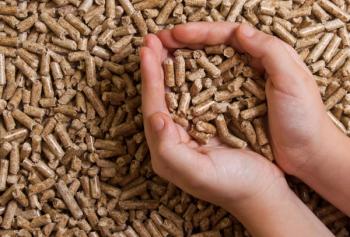
FT-IR offers an alternative method for the quantification and classification of lignocellulose in biofuel pellets, based on determination of cellulose, hemicellulose, and lignin content. The IR spectroscopic evaluation presented here provides an understanding of the pretreatment and storage of biofuel pellets.
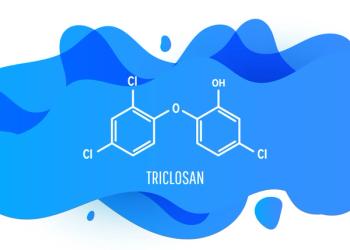
Selecting the correct basis set is essential for enhancing accuracy of DFT simulations. Here, the effects of five basis sets on the theoretical frequencies and calculated infrared intensities are compared to predict the molecular structural and vibrational properties of the triclosan. The demonstrated methods can help provide a benchmark for studying the pollution mechanisms and ecological effects of antibacterial products like triclosan.

By extracting the RGB, HSI, and grayscale information from a spectral range of 400–1100 nm and comparing the spectral features of sound and bruised peaches, the authors provided a classification system and theoretical basis for online fruit bruise detection.
IR absorption spectroscopy technology can solve the problem of line aliasing in gas detection. Here, continuous wavelet transform was used in time-frequency analysis to improve spectral component identification and quantitative detection of gases.
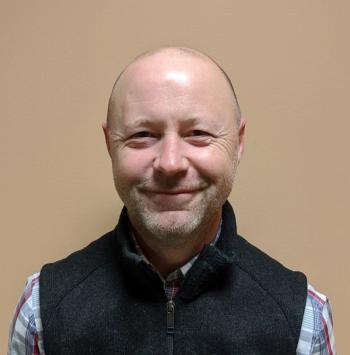
Professor Martin Zanni, the Meloche-Bascom Professor of Chemistry at the University of Wisconsin-Madison, and his colleagues explored how to resolve diagonal peaks using a polarization scheme that can be implemented in pump-probe beam geometry—not only in two-dimensional infrared (2D-IR) spectroscopy but also in TA spectroscopy. Zanni is the 2022 recipient of the Ellis R. Lippincott Award. This interview is part of an ongoing series of interviews with the winners of awards that are presented at the annual SciX conference, which will be held this year from October 2 through October 7, in the Greater Cincinnati/Northern Kentucky area.

In this second part of this four-part series on spectroscopy instrument components, we take a closer look at optical components or subassemblies used for vibrational spectroscopy instruments.
An examination of polymers with C-O bonds, focusing on the spectra of polyvinyl alcohol, cellulose, starch, and copolymers.

Our annual review of new products for atomic and molecular spectroscopy, including details by category and highlights of overarching trends.
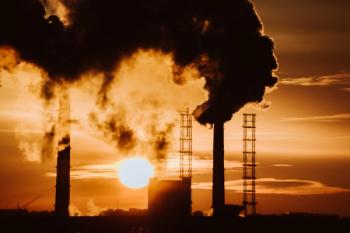
Controlling methane is one of the highest-impact ways to reduce climate impacts, so its accurate measurement is essential. Spectroscopy offers valuable tools for this task.
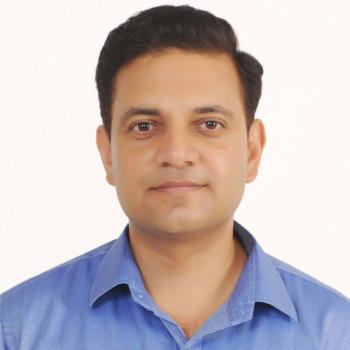
Spray paint is often used by vandals for creating graffiti, as well as for criminals to leave signs, messages, and blots to conceal the left traces at the scene of their efforts. Rajinder Singh and his colleagues in the Department of Forensic Science at Punjabi University (Punjab, India) have used attenuated total reflectance Fourier transform infrared (ATR-FT-IR) spectroscopy for nondestructive analysis of 20 red spray paints of different manufacturers, which could possibly be encountered at a crime scene, particularly in case of vandalism. Singh spoke to Spectroscopy about the findings, and the paper that resulted from their efforts.
Epoxies are perhaps the most economically important functional group of polymers. We explain how to interpret their spectra.
High-performance instrumentation requires many critical components. We focus here on energy sources, lasers, and detectors.
The Covid-19 pandemic has led to extraordinary developments of both testing methods and vaccines. Can spectroscopy play a role in next-generation testing for Covid and other pathogens?
Many rubbery polymers contain C=C bonds, which means they are alkenes. Thus, we can identify natural and synthetic rubbers by examining the spectra of cis-, trans-, and tri-substituted alkenes.
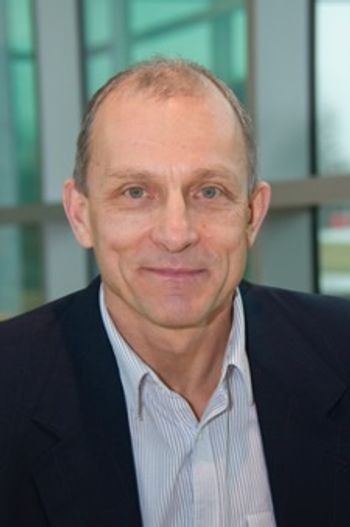
As forensic analysis continues to advance, such as in the understanding of source identification and analysis of trace quantities of bodily fluids, spectroscopic techniques and machine learning are playing a significant role. Igor K. Lednev, a chemistry professor at the University at Albany, SUNY, in Albany, New York, has been working in this field with his team. The analytical methods currently under investigation include Raman spectroscopy, attenuated total reflection Fourier transform infrared (ATR FT-IR) spectroscopy, and advanced chemometric classification and analysis methods. We recently interviewed him about his work.