





Webcast
Webinar Date/Time: Thu, May 23, 2024 1:00 PM EDT
Webcast
Webinar Date/Time: Thu, May 23, 2024 1:00 PM EDT
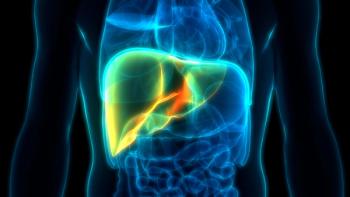
In a recent study out of China, Liyi Zhou and her fellow scientists created a nanoprodrug system to help treat liver cancer.
Here are the top five articles that the editors of Spectroscopy published this week.
In this article, tunable diode laser absorption spectroscopy (TDLAS) is used to measure ammonia leakage, where a new denoising method combining empirical mode decomposition with the Savitzky-Golay smoothing algorithm (EMD-SG) is proposed to improve the signal-to-noise ratio (SNR) of absorbance signals.

A group of scientists led by Zozan Guleken of the Gaziantep University of Science and Technology in Gaziantep, Turkey looked into the blood serum composition of childhood obesity (CO) tissues using Fourier transform infrared (FT-IR) spectroscopy.
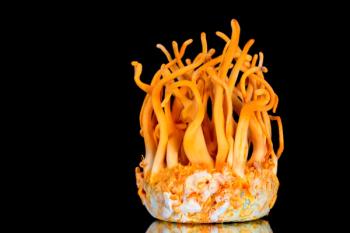
Scientists in Poland recently tested how multidimensional discriminant analysis and reflectance spectroscopy can help identify species within fungi strains.

Here are the top five articles that the editors of Spectroscopy published this week.
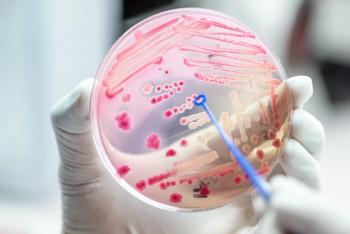
Scientists from Ben-Gurion University of the Negev, the Afeka Tel-Aviv Academic College of Engineering, and the Shamoon College of Engineering recently created a system that combines Fourier transform infrared (FT-IR) spectroscopy with machine learning algorithms to identify bacteria that is resistant to antibiotics.

A recent study published in The Astrophysical Journal explored two new substructures of the inner Milky Way, Shakti and Shiva, unearthing more information into the formation of the galaxy.

NASA’s X-ray Imaging and Spectroscopy Mission (XRISM) uses spectroscopy to study the hottest regions of the universe.
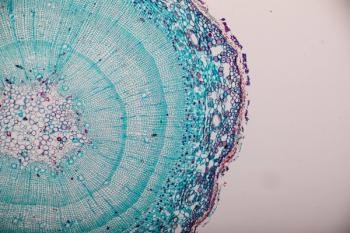
In a study led by scientists from Northwest University in Xi’an, China, carbon quantum dots were tested on how well they can detect hypochlorite and aid in cellular imaging.
In a recent study, spectroscopy-based detection protocols were used to detect Covid-19.
We wrap up our discussion of the mid-infrared spectra of inorganic compounds by looking at the spectra of silicates, nitrates, and phosphates. We will see that silicates have complex surface chemistry, and that infrared spectroscopy can tell us something about this. We will note that, of the five families of inorganics examined, the wavenumber ranges for the polyatomic anion stretching peaks in several of these functional groups overlap. However, polyatomic anion bending vibration peaks can be used to distinguish the five types of inorganics studied.
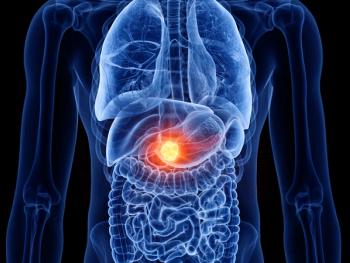
A recent study from Jagiellonian University examined how spectroscopic techniques can aid in the detection of pancreatic cancer.
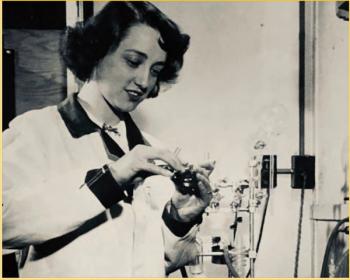
As one of the first renowned women spectroscopists, Craver broke down barriers in the field and is recognized for her work compiling reference libraries of spectra that set the foundation for modern infrared (IR) spectroscopy.

To study the effect of various extractants on the structure of peat humic acid, peat humic acid was extracted using NH3·H2O, Na2CO3, NaHCO3, and Na2SO3 via alkali-extraction and acid-precipitation methods.

In a recent study from Optica, researchers from Kyoto University attempt to resolve the limitations of traditional infrared (IR) spectroscopy by using quantum entangled photons to conduct broadband IR spectroscopy.
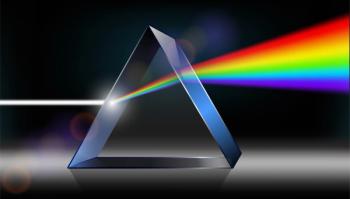
Industrial scientists, in the spectroscopy community, scour the literature and scientific conferences to buy the technology they need.

Boris Mizaikoff of the University of Ulm recently held a presentation on how analyzing a subject’s exhaled breath can help identify who is suffering from long COVID-19.

Boris Mizaikoff of the University of Ulm in Germany held a presentation on how mid-infrared spectroscopy techniques and exhaled breath analysis can help detect diseases like gastric cancer.
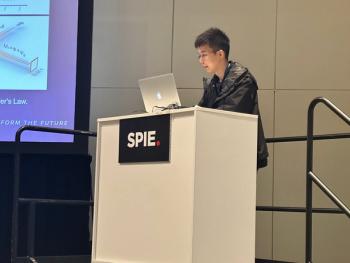
At SPIE Photonics West 2024, Jiachi Ye of the University of Florida held a presentation about a 4f-based free-space optical system (light-based computer) to address power consumption and speed limitations of calculations performed with convolutional neural networks (CNNs).
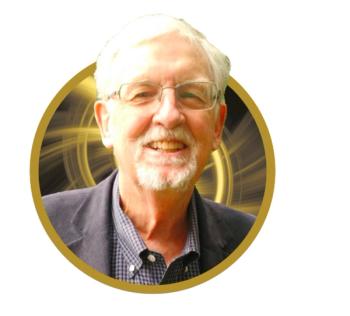
Spectroscopy is publishing a series of feature articles highlighting the lives and careers of the most influential spectroscopists over the past 100 years. These individuals were selected by our Editorial Advisory Board and team of editors to represent the leading figures in spectroscopy over the century. Our second featured Icon of Spectroscopy is Peter R. Griffiths.

Exploring the transformative capabilities of handheld Fourier transform infrared (FT-IR) spectrometers, Luis Rodriguez-Saona of The Ohio State University emphasizes their pivotal role in ensuring food integrity and safety across the entire supply chain.

In a recent study, a team of researchers revisited methoxyacetone and discovered more about its photochemistry and infrared (IR) spectra.
Webcast
Webinar Date/Time: Tue, Jan 23, 2024 11:00 AM EST