




The author dispels the notion that inorganics do not have mid-infrared spectra by providing an overview of the general characteristics of their infrared spectra.
The author dispels the notion that inorganics do not have mid-infrared spectra by providing an overview of the general characteristics of their infrared spectra.
Researchers from Technische Universität Dresden, reveal new insights into protonated mono and polyamines' behavior by determining pKa values using Fourier transform infrared titration, providing valuable data for chemical analysis.

Spectroscopy spoke with Alexandra Deal about her latest research in using infrared reflection absorption spectroscopy (IRRAS) to analyze molecules at the surface level.
Luis G. Vieira from Universidade do Minho presents a new method in Applied Spectroscopy to address poor contact issues between the sample and the internal reflection element in attenuated total reflection (ATR) spectroscopy, ensuring accurate optical function determination and opening new avenues for precise material analysis

Professor Mary J. Wirth, W. Brooks Fortune Distinguished Professor Emerita at Purdue University, has been named the winner of the 2023 EAS Award for Outstanding Achievements in Separation Science.
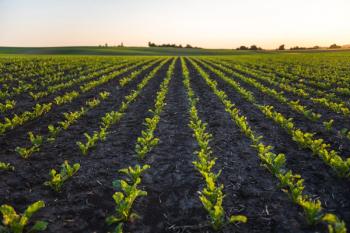
Felipe Bachion de Santana of Teagasc in Wexford, Ireland, is exploring new ways to monitor soil quality through using spectroscopic techniques. Spectroscopy spoke to him about his team’s work in monitoring the quality of soil to improve agricultural efficiency.

Monica Arienzo, an associate research professor in the Division of Hydrologic Sciences at the Desert Research Institute, and her team recently used ATR-FT-IR to determine the polymer composition of plastic litter recovered by scuba divers from the lakebed of Lake Tahoe. Spectroscopy spoke to Arienzo about the significance of her work and how spectroscopy can be used to help monitor plastic litter in the environment.
Spectroscopy's laureate series will highlight the lives and careers of some of the most influential vibrational and atomic spectroscopists.
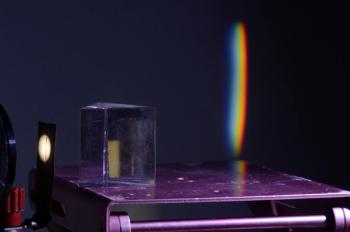
This study explores the enhanced performance of modified alternating least squares (MALS) over alternating least squares (ALS) in analyzing infrared and Raman image spectral data, highlighting the stability and computational efficiency of MALS.

High-resolution X-ray and infrared analyses of a tiny paint fragment from the Mona Lisa's ground layer uncovered Leonardo da Vinci's use of a unique mixture of saponified oil with high lead content, including the presence of the rare compound plumbonacrite, offering new insights into the artistic techniques and materials employed by the master.
Andrew Schmitz, an application scientist at ThermoFisher Scientific, held a workshop at the Gulf Coast Conference in Galveston, Texas, focused on real-time lubricant analysis.
At SciX, Dmitri Kurouski of Texas A&M University will be recognized as the 2023 Spectroscopy Emerging Leader in Molecular Spectroscopy Award recipient. Here's a summary of the award session.
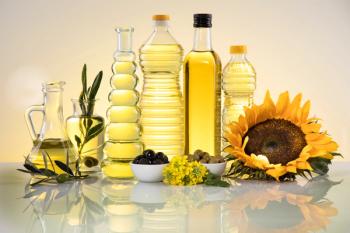
In the Chemometrics in Food and Agriculture oral symposia today at SciX 2023, Barry Lavine of Oklahoma State University delivered a talk titled, “Authentication of Edible Oils Using an Infrared Spectral Library and Digital Sample Sets for Calibrated and Uncalibrated Adulterants.” Here is a brief reflection of his talk.
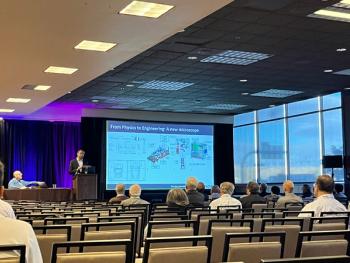
During a talk at SciX, Rohit Bhargava outlined the evolution of Fourier transformation infrared spectroscopy and how it could be used as a method for treating rare diseases like cancer.
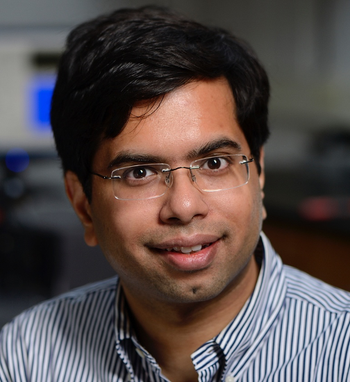
The Coblentz Society created the Clara Craver Award to recognize young individuals who have made significant contributions in applied analytical vibrational spectroscopy. The work may include any aspect of infrared (IR), terahertz (THz), or Raman spectroscopy in applied analytical vibrational spectroscopy. This year’s recipient, Ishan Barman, is an Associate Professor in the Department of Mechanical Engineering at the Johns Hopkins University with joint appointments in Oncology and Radiology and Radiological Science.

Researchers from Zhejiang University in China have revealed the transformative potential of infrared (IR) and Raman spectroscopy techniques for rapidly and accurately assessing herb quality and safety, offering a promising path toward intelligent and eco-friendly herb industry development.
A group of scientists from the University of Wrocław and the University of Innsbruck studied the relationships between aliphatic ketones and water molecules in various environments.

A study out of Bohai University in China has uncovered some of the unique characteristics of water when in extreme confinement.
In a recent study published in Spectrochimica Acta Part A: Molecular and Biomolecular Spectroscopy, two researchers from India studied the molecular composition of topiramate, revealing new insights.
An examination of halogenated compounds and some common halogenated polymers is explored here.

A team of scientists created a portable infrared attenuated total reflection (IR-ATR) spectrometer and tested its food analysis capabilities against similar systems.

A recent study used aluminum foil-assisted ATR-FT-IR spectroscopy to detect acute kidney injury (AKI) in a rat model using plasma samples. The results show how ATR-FT-IR could be used to study more types of clinical samples in the future.
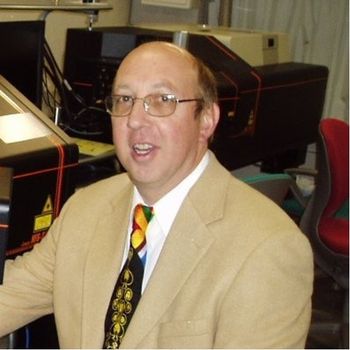
With more than four decades of experience, Larsen made significant contributions to the field of analytical chemistry.
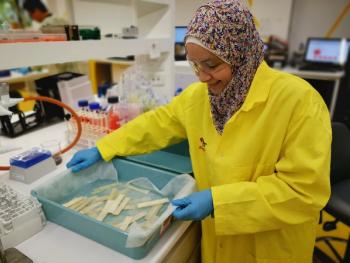
Arzak Mohamed from Macquarie University in Australia broke down how she uses spectroscopy to analyze ancient manuscripts.

In a recent study, researchers used molecular and elemental spectroscopic techniques, such as LIBS, Raman spectroscopy, and FT-IR spectroscopy, to characterize silicate gems found in ancient Egyptian mines.