
Spectroscopy Interviews
Latest News
Advertisement
Latest Videos

Shorts
1:04
Predicting Crop Health Without Killing the Plant
8 months ago
by
Renee Romano
1:49
Pathways in Spectroscopy: Tips for Pursuing a Career in Industry and Scientific Instrumentation
8 months ago
by
John Margeson
1:07
How Liquid-Fuel Nuclear Reactors Handle Fission Gases
8 months ago
by
Hunter Andrews
0:50
Studying Single and Double Ring Aromatic Molecules
8 months ago
by
Brett McGuire
0:37
The Hidden Enemy in Scientific Analysis: Contamination
8 months ago
by
Anika Retzmann
0:24
How AI Should Be Used in Science
8 months ago
by
Alex Scheeline
0:46
The Benefit of Laminography
8 months ago
by
Johanna Nelson Weker
2:47
Pathways in Spectroscopy: How to Be A Successful Product Manager
8 months ago
by
John Margeson
1:20
Is SIBS Just Repeating the History of LIBS?
8 months ago
by
Alex Scheeline

0:59
The Ongoing Trends and Developments in Imaging Spectroscopy
8 months ago
by
Christian W. Huck
Advertisement
More News
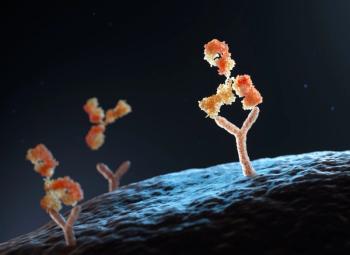
Narangerel Altangerel, Zhenhuan Yi, and Marlan Scully of Texas A&M University recently used TRIP to analyze eight protein–ligand systems. Spectroscopy recently spoke to these three researchers about their findings and what the implications are for high-throughput drug screening.
At SPIE Photonics West, Spectroscopy spoke with Ana Doblas of the University of Massachusetts, Dartmouth about artificial intelligence, deep learning, and their potential in microscopy.
LCGC and Spectroscopy Editor Patrick Lavery spoke with Oligo Factory CEO Chris Boggess about the company’s recently attained compliance with Good Manufacturing Practice (GMP) International Conference on Harmonisation of Technical Requirements for Registration of Pharmaceuticals for Human Use (ICH) Expert Working Group (Q7) guidance and its distinction from Research Use Only (RUO) and International Organization for Standardization (ISO) 13485 designations.

At the Winter Conference on Plasma Spectrochemistry, Jacob Shelley of Rensselaer Polytechnic Institute sat down with Spectroscopy to talk about the latest work he and his group are conducting.

Miri Park of the Fraunhofer Institute for Environmental, Safety, and Energy Technologies is examining how Raman spectroscopy could aid non-destructive sensing in agricultural science. Recently, Park sat down with Spectroscopy to discuss micro-Raman spectroscopy's role in assessing crop quality, particularly secondary metabolites, across different contexts (in vitro, in vivo, and in situ), while suggesting future research for broader application possibilities.
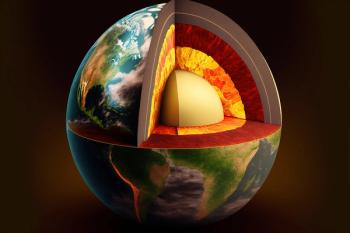
In this edition of “Inside the Laboratory,” John Cottle, PhD, a professor of geology at the University of California, Santa Barbara, and a member of Spectroscopy’s Editorial Advisory Board, discusses his group’s most recent work using “laser ablation split steam” analysis to measure elemental concentrations and isotopic ratios in rocks and minerals.
At the Winter Conference on Plasma Spectrochemistry, John Burgener of Burgener Research spoke with us about his company's nebulizers and detailed his proudest achievement.
At the Winter Conference on Plasma Spectrochemistry, Spectroscopy sat down with Robert Jones to discuss how he used ICP-MS to advance the work of the Center for Disease Control (CDC).
At the Winter Conference on Plasma Spectrochemistry, Spectroscopy magazine sat down with John Burgener of Burgener Research Inc. to discuss his career in inductively coupled plasma (ICP) and the importance of accumulating various experiences during your career.

Spectroscopy spoke with researchers from the Columbia Climate School about how they are using stimulated Raman scattering microscopy to test for nanoplastics in water bottles.
At the Winter Conference on Plasma Spectrochemistry, Spectroscopy sat down with Robert Jones to discuss his career at the Center for Disease Control (CDC), and how their ICP-MS laboratory helped advance the work of the CDC.
At the Winter Conference on Plasma Spectrochemistry, Spectroscopy magazine sat down with John Burgener of Burgener Research Inc. to discuss his career working with mass spectrometers, inductively coupled plasma (ICP), and developing the Burgener nebulizer.

The Surface-Specificity of IRRAS in Studying Soluble Organic Acids: An Interview with Alexandra Deal
Spectroscopy spoke with Alexandra Deal about her latest research in using infrared reflection absorption spectroscopy (IRRAS) to analyze molecules at the surface level.
At the Eastern Analytical Symposium (EAS) in Plainsboro, New Jersey, Spectroscopy sat down with Robert Kennedy to discuss his research and career in analytical chemistry.
At the Eastern Analytical Symposium (EAS) in Plainsboro, New Jersey, Spectroscopy sat down with Curtis Marcott to discuss his research and career in spectroscopy.

Monica Arienzo, an associate research professor in the Division of Hydrologic Sciences at the Desert Research Institute, and her team recently used ATR-FT-IR to determine the polymer composition of plastic litter recovered by scuba divers from the lakebed of Lake Tahoe. Spectroscopy spoke to Arienzo about the significance of her work and how spectroscopy can be used to help monitor plastic litter in the environment.
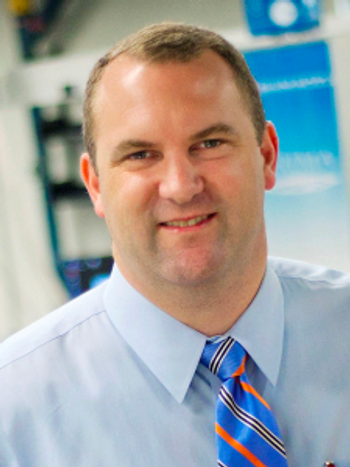
At the 2023 Gulf Coast Conference, Spectroscopy spoke with Kevin Schug of the University of Texas at Arlington, about predicting gas phase vacuum ultraviolet spectra using machine learning. This interview was one of four conducted live at GCC 2023.
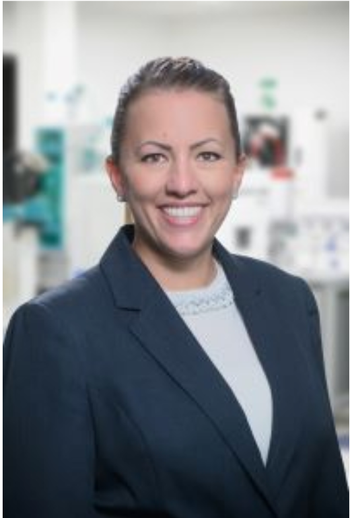
At the 2023 Gulf Coast Conference, Spectroscopy spoke with Elena Hagemann of Metrohm USA, about spectroscopy in relation to petrochemicals. This interview was one of four conducted live at GCC 2023.
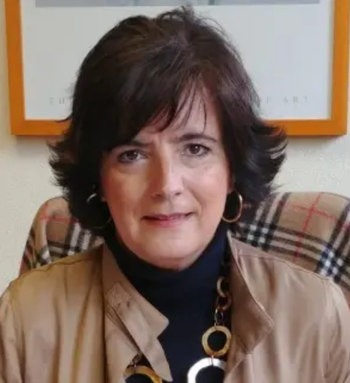
Spectroscopy sat down with 2023 Lester W. Strock Awardee Maria Montes-Bayon to talk about her research and what winning the Strock award means to her.
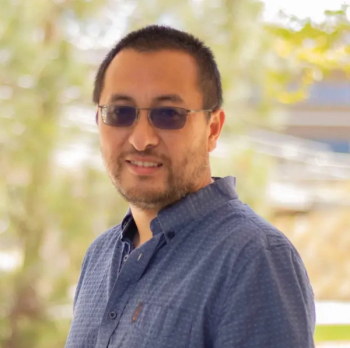
Fresh off his plenary talk at SciX, Wei Xiong sat down with Spectroscopy magazine to talk about his career accomplishments and what he enjoys most about his job.
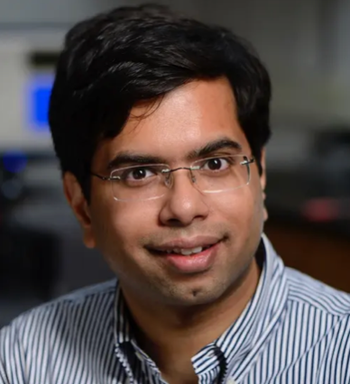
As a preview to SciX 2023, Spectroscopy magazine sat down with Ishan Barman of Johns Hopkins University to ask him about his thoughts on how artificial intelligence may impact spectroscopic research going forward.
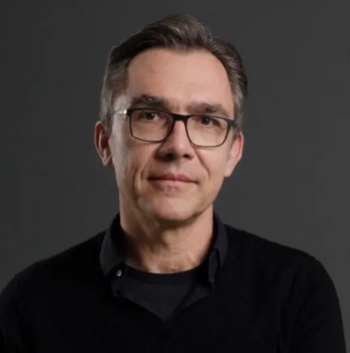
As a preview to SciX 2023, Spectroscopy magazine sat down with Juergen Popp of the Leibniz Institute of Photonic Technology to ask him about his research exploring the use of Raman spectroscopy in applications such as infectious diseases and cancer diagnostics.
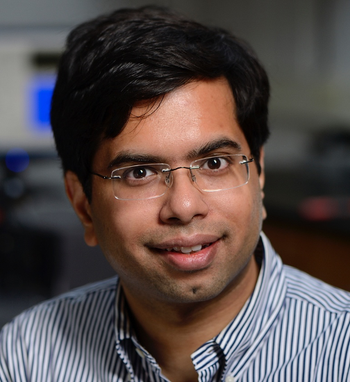
The Coblentz Society created the Clara Craver Award to recognize young individuals who have made significant contributions in applied analytical vibrational spectroscopy. The work may include any aspect of infrared (IR), terahertz (THz), or Raman spectroscopy in applied analytical vibrational spectroscopy. This year’s recipient, Ishan Barman, is an Associate Professor in the Department of Mechanical Engineering at the Johns Hopkins University with joint appointments in Oncology and Radiology and Radiological Science.
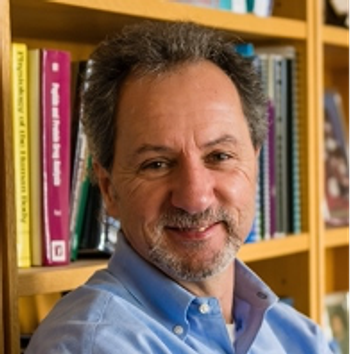
The AES Lifetime Achievement Award is given for exceptional career contributions to the fields of electrophoresis, electrokinetics, and related areas. This year’s recipient, James Landers of the University of Virginia, recently published (along with his colleagues) a paper illustrating a technique for fabricating electrophoretic microdevices for fluorescence detection.
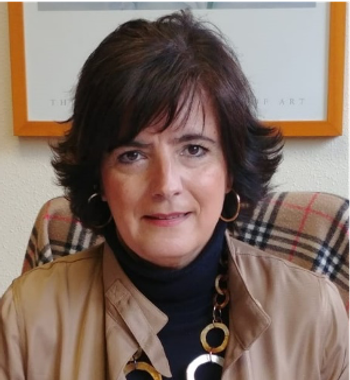
Earlier this year, Spectroscopy spoke to Maria Montes-Bayón of the Faculty of Chemistry at the University of Oviedo (Asturias, Spain) regarding her work with single cell inductively coupled plasma mass spectrometry (ICP-MS) to study the uptake and apoptotic status of nanoplatinum (IV) treated cells, specifically selenized yeast.
Advertisement
Advertisement
Trending on Spectroscopy Online
1
Analysis of Carbon Products using Raman Spectroscopy
2
The Color of Discovery: UV-vis Spectroscopy from Nobel-Winning Quantum Dots to AI-Driven Process Analyzers
3
Pathways in Spectroscopy: Addressing the Gap in Spectroscopy Education
4
From Innovation to Insight: The Avio® 3000 ICP-OES Webinar Series – Virtual Event 3: Designed for Today’s Laboratory
5