First, we discuss a recent feature article written by Jürgen Popp and his colleagues at Leibniz IPHT and Friedrich Schiller University Jena. In their article, they proposed the Personalized Optical Digital Twin (PDOT) as a tool for clinical analysis and disease prevention. It's a Photonics21 contribution to Europe's Virtual Human Twin ecosystem that is built to track disease over time instead of relying on one-off readings. Notably, the multicenter INTELLIGENCE trials found Raman leukocyte analysis was feasible across six centers, but didn't add diagnostic value in ICU and ED settings.
Next, we travel to Istanbul, which served as the host of ICORS 2026. With the conference in the rearview mirror, attendees reported on the key takeaways from the conference. One hot topic discussed throughout the conference was reproducibility, and how across operators, substrates, and instruments remains the defining challenge for Raman spectroscopy's move into routine use. AI is also creeping further upstream into experimental design and denoising, though its real value still depends on validation and explainability.
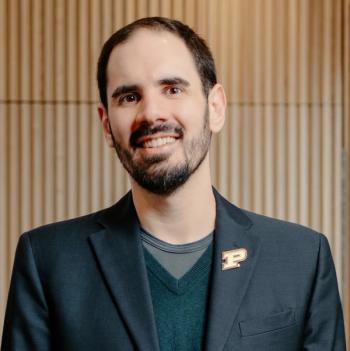
Meanwhile, we continued our coverage of the American Chemical Society (ACS) Fall 2026 Meeting. Brandon Boor of Purdue University walked us through how his team is tracking nanoparticles as small as 1.2 nanometers forming from everyday sources like scented cleaning products.3
And finally, associate editorial director Jerome Workman, Jr. reflected on the continued shrinking of near-infrared (NIR) spectrometers. However, standardization has not kept pace with the miniaturization, and his article highlights why this is the case.4
And that’ll do it for Best of the Week. Thanks for reading, and we’ll see you next week.
References
- Popp, J.; Mayherhofer, T. G.; Borowsky, A.; Schmitt, M.; Meier-Ewert, L.; Hamm, G. From Molecular Snapshots to Longitudinal Prevention: The Personalized Optical Digital Twin. Spectroscopy Online, 2026. https://www.spectroscopyonline.com/view/from-molecular-snapshots-to-longitudinal-prevention-the-personalized-optical-digital-twin (accessed September 15, 2026).
- Popp, J. From Better Spectra to Better Decisions: Five Trends Highlighted at ICORS 2026. Spectroscopy Online, 2026. https://www.spectroscopyonline.com/view/from-better-spectra-to-better-decisions-five-trends-highlighted-at-icors-2026 (accessed September 15, 2026).
- Boor, B. E.; Wetzel, W. Sizing Up the Nanoscale: Measuring Nanocluster Aerosol in Indoor Air. Spectroscopy Online, 2026. https://www.spectroscopyonline.com/view/sizing-up-the-nanoscale-measuring-nanocluster-aerosol-in-indoor-air (accessed September 16, 2026).
- Workman, Jr., J. Vanishing Spectrometers: How Near-Infrared Instrumentation Got Small, Smart, and Everywhere. Spectroscopy Online, 2026. https://www.spectroscopyonline.com/view/vanishing-spectrometers-how-near-infrared-instrumentation-got-small-smart-and-everywhere (accessed September 16, 2026).