SPEC PerkinElmer 10.13
News|Videos|October 8, 2026

Jay Kitt Named Spectroscopy's 2026 Emerging Leader in Molecular Spectroscopy

The University of Utah researcher discusses surface-area-enhanced Raman spectroscopy, lipid membrane studies, and his move into PFAS testing.

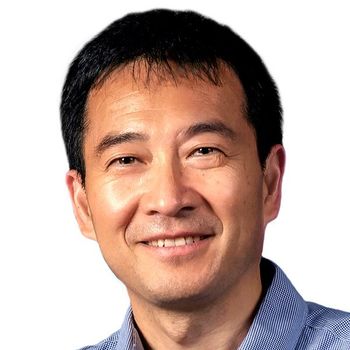
Jay Kitt, a Research Assistant Professor in the Department of Chemistry at the University of Utah, is the recipient of the 2026 Emerging Leader in Molecular Spectroscopy Award.1–3 Sponsored by Spectroscopy, the award recognizes scientists early in their careers making significant contributions to molecular spectroscopy; past winners include Lu Wei, Lingyan Shi, and Ishan Barman.1,3

As part of our coverage of the 2026 SciX Conference in Sparks, Nevada, Spectroscopy sat down with Kitt to talk about his research. In this clip, Kitt provides a brief overview of what he presented at SciX.


Working in Joel Harris's research group, Kitt applies confocal Raman microscopy to chromatographic silica surfaces, supported phospholipid bilayers, and DNA hybridization kinetics.3 His work includes surface-area-enhanced Raman spectroscopy as a quantitative, reproducible alternative to plasmonic surface-enhanced Raman spectroscopy (SERS).3 He previously received the Society for Applied Spectroscopy's Distinguished Service Award.3

In our conversation, Kitt reflected on his most cited paper, a 2017 Journal of the American Chemical Society study on cardiolipin and cytochrome c that connected membrane permeabilization to apoptosis and cancer biology, which he conceived and carried out largely independently as a graduate student.3 He discussed what made the question compelling and how his thinking has since evolved.

He also discussed his most recent paper on gramicidin A, in which self-modeling curve resolution showed seven to eight lipid molecules around each gramicidin channel are affected by hydrophobic mismatch. Kitt explains what that number reveals about how antimicrobial peptides disrupt membranes and how it might inform drug design.

Kitt also addressed his career pivot: in the same year, he took on a joint appointment in chemical engineering and a role as Director of Chemistry at Litmus Analytical, an early-stage per- and polyfluoroalkyl substances (PFAS) testing startup. He described what drew him to PFAS testing and how the transition is going, concluding by identifying the biggest unmet analytical need in molecular spectroscopy his generation is positioned to solve.

We are looking forward to sharing with you the rest of our conversation with Kitt soon. You can stay up to date on all our coverage of SciX 2026 here.

References
  1. Workman, J., Jr. SciX 2026 Award Winners: The Conversations Coming Next. Spectroscopy Online, 2026. https://www.spectroscopyonline.com/view/scix-2026-award-winners-the-conversations-coming-next (accessed October 7, 2026).
  2. University of Utah, Jay Kitt. University of Utah, 2026. https://www.chemistry.utah.edu/faculty/jay-kitt/ (accessed October 7, 2026).
  3. Workman, J., Jr. The 2026 Emerging Leader in Molecular Spectroscopy Award. Spectroscopy Online, 2026. https://www.spectroscopyonline.com/view/the-2026-emerging-leader-in-molecular-spectroscopy-award (accessed October 7, 2026).

Related to this article

Sparks near Reno Nevada – Site of 2026 SciX Conference ©   DTM Media  -chronicles-stock.adobe.com
Wednesday's program at SciX 2026 kept returning to one question: can spectroscopy perform outside the controlled laboratory? Speakers took surface-enhanced Raman scattering (SERS), laser-induced breakdown spectroscopy (LIBS), mid-infrared photonics, chemometrics, and fluorescence excitation–emission matrix (EEM) spectroscopy into clinics, food plants, reactor coolant loops, brine fields, and drinking water supplies.
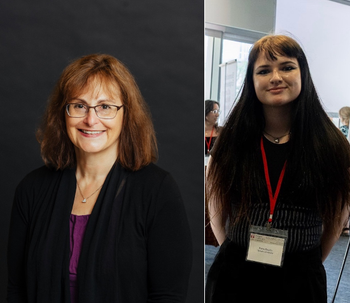
Nancy Pleshko (left) is a Laura H. Carnell Professor Emerita in Temple University's Department of Bioengineering. Petra A. Baylin (right) is a research assistant in the Tissue Imaging and Spectroscopy Lab at Temple University. Photo Credits: © Nancy Pleshko and Petra Baylin
As part of our coverage of the SciX 2026 Conference, Nancy Pleshko and Petra Baylin of Temple University sat down with Spectroscopy to talk about their recent study, explaining how Fourier transform infrared (FT-IR) imaging of ultra-high weight molecular polyethylene (UHMWPE) implants permits oxidation evaluation throughout the sample yielding insight into failure.
FACSS 2026 Award Interviews ©  Erin -chronicles-stock.adobe.com
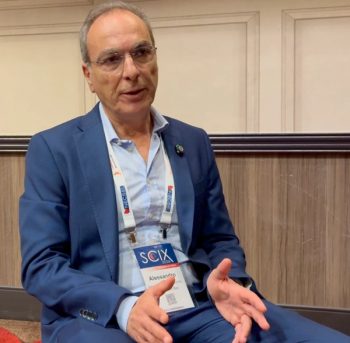
Eight FACSS award winners at SciX 2026, One LIBS trailblazer. Forty-eight questions. And not one of them is a softball. Award season in spectroscopy usually means polite applause, a plaque, and a photo. We're not completely interested only in the award sessions. The eight scientists honored at SciX 2026 in Sparks, Nevada, along with LIBS researcher Alessandro De Giacomo, are pushing Raman into operating rooms, flying LIBS on drones, reading chemistry off Mars, and tracing toxic metals downwind of industrial sites. Their work makes big claims. In the coming days, Spectroscopy will sit down with eight of these researchers and ask whether those claims hold up. The interviews that follow won't just celebrate. They'll press on the gaps between simulation and experiment, between the lab bench and the clinic, and between a clever paper and an instrument someone will actually buy and use.
Spectral Frontiers: Past the Diffraction Limit (FT-IR Spectroscopy)
Fourier-transform infrared (FT-IR) spectroscopy, long the workhorse of molecular fingerprinting, is being reinvented by photothermal detection schemes and quantum cascade laser (QCL) sources that push spatial resolution and analysis speed far beyond classical dispersive and interferometric limits. New instrumentation such as optical photothermal infrared (O-PTIR) microscopy and laser direct infrared (LDIR) chemical imaging is enabling sub-micron, label-free chemical mapping of biological, environmental, and pharmaceutical samples. This article reviews the latest FT-IR-adjacent technologies, recent patents, and research driving the field, featuring perspectives from the scientists and instrument developers advancing the technique.