
A Q&A interview from SciX explored a porous-particle Raman platform became an alternative to SERS, and why AI could unlock biochemical meaning in vibrational spectra.

Jay Kitt is a Research Assistant Professor in the Department of Chemistry at the University of Utah, working within Joel Harris's analytical chemistry research group. His work applies confocal Raman microscopy to chromatographic silica surfaces, supported phospholipid bilayers, and DNA hybridization kinetics, including surface-area-enhanced Raman spectroscopy as a quantitative, reproducible alternative to plasmonic SERS. He previously received the Society for Applied Spectroscopy's Distinguished Service Award. The Emerging Leader in Molecular Spectroscopy Award, sponsored by Spectroscopy magazine, recognizes scientists early in their careers making significant contributions to molecular spectroscopy; past winners include Lu Wei, Lingyan Shi, and Ishan Barman.
A Q&A interview from SciX explored a porous-particle Raman platform became an alternative to SERS, and why AI could unlock biochemical meaning in vibrational spectra.
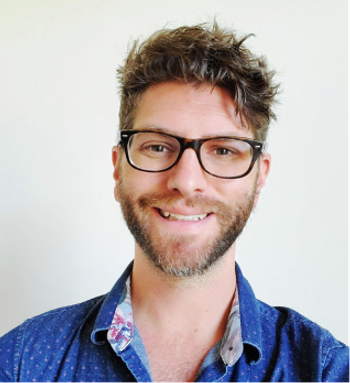
At SciX, Jay Kitt discusses a project applying Raman spectroscopy to PFAS analysis, the mentoring role he found after leaving traditional academia, and why machine learning could unlock the biochemical information in vibrational spectra.
At SciX, Jay Kitt describes the experiment he ran on his own that launched his cytochrome c research, and explains why putting a number on peptide–lipid interactions matters.
Jay Kitt of the University of Utah explains that his group’s platform for quantitative Raman measurements inside chromatographic particles didn’t come from a search for signal enhancement. It grew out of a decade of chromatography and biochemistry research.
The University of Utah researcher discusses surface-area-enhanced Raman spectroscopy, lipid membrane studies, and his move into PFAS testing.