The Infrared and Raman Discussion Group’s 238th meeting on December 21 will feature the IRDG-Coblentz Lecture, two award presentations, and talks spanning clinical Raman, SERS, and ultrafast spectroscopy.
Webinar Date/Time: Thu, May 30, 2024 11:00 AM EDT
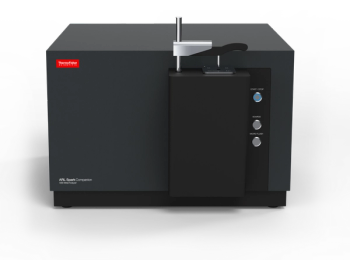
Attend this webinar to discover how Thermo Scientific iCAP PRO Series ICP-OES utilizes artificial intelligence and neural networks for an effective semi-quantitative analysis workflow that requires no prior analysis.
Register Free:
Event Overview:
Semi-quantitative analysis can be carried out by inductively coupled plasma-optical emission spectroscopy (ICP-OES) and involves determining the relative concentrations of elements in a sample rather than obtaining precise quantitative measurements. The semi-quantitative approach is often used for rapid screening of samples or for identifying elemental composition trends rather than obtaining exact concentrations. However, typically semi-quantitative analysis involves running a number of initial calibrations which are updated daily. Attend this webinar to discover how Thermo Scientific iCAP PRO Series ICP-OES utilizes artificial intelligence and neural networks for an effective semi-quantitative analysis workflow that requires no prior analysis.
Key Learning Objectives:
Who Should Attend:
Speakers:
Nora Bartsch
Product Manager AA & Optical ICP
Thermo Fisher Scientific
After finishing her education as a chemical technical assistant, Nora Bartsch joined Thermo Fisher Scientific in Bremen in 2010. In 2016 she moved to the position of an Application Specialist for ICP-OES and laterally has been a Product Specialist in the Trace Elemental business. In 2024 Nora moved into the role of Product Manager responsible for AA and ICP-OES instrumentation.
Matthew Cassap
Product Marketing Manager AAS and ICP-OES
Thermo Fisher Scientific
Matthew Cassap joined Thermo Fisher Scientific as an applications specialist in 2006. In this role, he became an expert in trace element analysis applications across a broad range of industry segments using various liquid/solid sampling accessories and hyphenated techniques. In 2012, Matthew assumed responsibility for the Thermo Scientific ICP-OES product line, based at the manufacturing facility in Cambridge, UK. In 2014, Matthew moved to the Thermo Scientific Center of Excellence in Bremen Germany as Product Manager for AA and ICP-OES. Since 2018, Matthew has been based in the UK as a product marketing manager for AA, ICP-OES, and MS.
Register Free: