

How do ions and water interact at the atomic level in nanochannels grafted with polymer brushes using all-atom molecular dynamics simulations? Siddhartha Das of the University of Maryland and his team are working on answering this question.
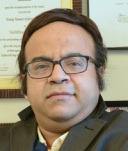
Siddhartha Das is a Professor of Mechanical Engineering at the University of Maryland working across micro- and nanoscale fluid mechanics, soft electrokinetics, polyelectrolyte brush systems, and the behavior of water and ions confined near 2D materials such as graphene and hexagonal boron nitride. His group also applies atomistic simulation and machine learning to soft-matter problems, including fluid dynamics in additive manufacturing. He has authored more than 210 papers in journals including Nature Materials, Science Advances, and PNAS, is a Fellow of the American Physical Society, the Royal Society of Chemistry, and the Institute of Physics, and is ranked among the top 2% of cited scientists globally. The AES Mid-Career Award recognizes an investigator in the middle of their career for exceptional contributions to electrophoresis, microfluidics, and related fields.
How do ions and water interact at the atomic level in nanochannels grafted with polymer brushes using all-atom molecular dynamics simulations? Siddhartha Das of the University of Maryland and his team are working on answering this question.
Siddhartha Das explains how machine learning helps his group sift through roughly a trillion simulation data points. It reveals water and electroosmotic flow behavior and could speed the design of sensor-like channels.

In this SciX interview segment, Siddhartha Das explains how his group’s simulations revealed a nanochannel scenario that produces energy and boosts flow at the same time. This overturns the classical electroviscous trade-off without breaking the laws of thermodynamics.
In this clip from our SciX interview with Siddhartha Das, he describes his team’s “eureka moment”: the discovery that the ion distribution inside a polymer layer shapes how water moves under an electric field. He also explains why experimental confirmation is still years away.
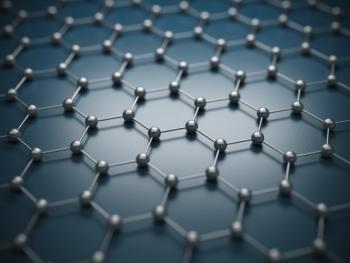
At SciX 2026, Siddhartha Das explains how graphene can be used to show how atom-level interactions between ions and water decide what passes through a membrane and what stays behind.
The 2026 AES Mid-Career Award recipient explains how molecular-scale simulations of polyelectrolyte brush-grafted nanochannels are revealing unexpected flow behavior.