The 2026 Ellis R. Lippincott Award recipient discusses the barriers to clinical adoption of photonic diagnostics and his vision for personalized optical digital twins.
The 2026 AES Mid-Career Award recipient explains how molecular-scale simulations of polyelectrolyte brush-grafted nanochannels are revealing unexpected flow behavior.
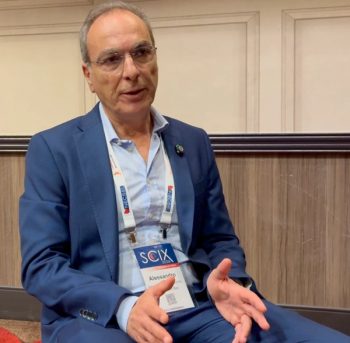
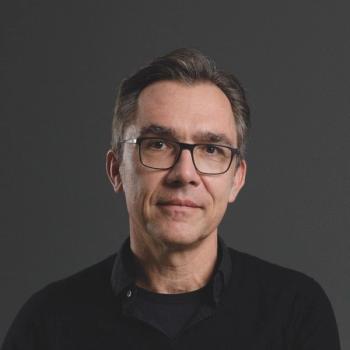
Siddhartha Das, a Professor of Mechanical Engineering at the University of Maryland, is the recipient of the 2026 AES Mid-Career Award, which recognizes an investigator in the middle of their career for exceptional contributions to electrophoresis, microfluidics, and related fields.1
As part of our coverage of the 2026 SciX Conference in Sparks, Nevada, Spectroscopy sat down with Das to talk about his research. In this clip, Das discusses winning the AES Mid-Career Award and provided an overview of his talk on the molecular-scale physics of electroosmosis in soft nanochannels.
Das's research spans micro- and nanoscale fluid mechanics, soft electrokinetics, polyelectrolyte brush systems, and the behavior of water and ions confined near two-dimensional (2D) materials such as graphene and hexagonal boron nitride.2 His group also applies atomistic simulation and machine learning (ML) to soft-matter problems, including fluid dynamics in additive manufacturing.2 He has authored more than 210 papers in journals including Nature Materials, Science Advances, and PNAS, is a Fellow of the American Physical Society, the Royal Society of Chemistry, and the Institute of Physics, and is ranked among the top 2% of cited scientists globally.2
He also explains how his fundamental wetting studies of water and ions near graphene and boron nitride have begun to inform filtration and desalination technologies.
Our conversation centered on his group's molecular dynamics (MD) simulations, which show that overscreening of the poly(acrylic acid) (PAA) brush layer leads to coion-driven electroosmotic (EOS) transport and even a reversal in flow direction under stronger electric fields. Das describes his reaction to first seeing that reversal and how confident he is that it will hold up experimentally, not only in simulation.
He further explained, in practical terms, what "electroslippage" means for someone designing a nanofluidic device, and why achieving energy generation and flow enhancement at the same time is unusual. Finally, Das described what his group's ML model is learning to predict or classify, and how it changes his approach to designing new brush-grafted nanochannel systems going forward.
We are looking forward to sharing with you the rest of our conversation with Das soon. You can stay up to date on all our coverage of