

A recent study used Fourier transform mid-infrared (FT-IR) spectroscopy and machine learning (ML) algorithms to understand the mineral content in camel’s milk.

Will Wetzel is a Senior Editor for Spectroscopy magazine. He specializes in creating engaging, high-value content for diverse audiences. His role involves driving digital growth through KPI assessments, social media strategies, and innovative content development.
Wetzel is also a sports writer and commentator, serving as a freelance writer for several sports websites, including FanSided. He currently serves as the host, producer, and creator of “The Inside Fastball,” a LinkedIn newsletter that discusses topical issues in Major League Baseball (MLB). Outside of work, Wetzel volunteers with the Nashville Humane Association and Habitat for Humanity. His stated goal is to help build one house with Habitat for Humanity in every U.S. state.
A recent study used Fourier transform mid-infrared (FT-IR) spectroscopy and machine learning (ML) algorithms to understand the mineral content in camel’s milk.

A recent study explored how polymer-based tea bags contribute to the release of microplastics and nanoplastics (MNPL).

We reflect on several of the major conferences Spectroscopy covered over the past year.

This year-in-review showcases the standout technical articles, compelling interviews, and key news stories that defined the pages of Spectroscopy. In this year in review, the editors of Spectroscopy highlight some of the top published technical articles, interviews, and news content published.

Top articles published this week include a news article on attenuated total reflectance (ATR) spectroscopy, a news article about microplastics, and a reflection on the life and career of David McMurtry.

Miniaturized NIR spectrometers are transforming forensic science by enabling rapid, cost-effective, and portable field analysis.

A new study in Infrared Physics & Technology highlights the pivotal role of Fourier transform infrared (FTIR) spectroscopy in identifying and quantifying microplastics, emphasizing its advantages, limitations, and potential for advancement in mitigating environmental pollution.

A recent study published in Food Research International demonstrates how visible and near-infrared spectroscopy (Vis-NIRS) combined with machine-learning algorithms can accurately authenticate meat and fat based on livestock feeding systems, offering a sustainable and reliable solution for traceability in the meat industry.

A recent review article explores the evolving landscape of pigment analysis in cultural heritage (CH).
Top articles published this week include a Q&A interview involving using µFT-IR to study the atmospheric deposits of microplastics, a news article about Raman spectroscopy in disease diagnosis, and a look at the latest advancements in mid-infrared (MIR) imaging.
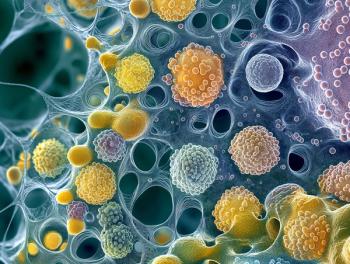
Researchers from Stanford University have combined surface-enhanced Raman spectroscopy (SERS) with machine learning (ML) to enable rapid, precise single-cell analysis, offering potentially transformative applications in diagnostics and personalized medicine.

Aleksandra "Sasha" Karapetrova and Win Cowger discuss their research using µ-FTIR spectroscopy and Open Specy software to investigate microplastic deposits in remote snow areas, shedding light on the long-range transport of microplastics.

A recent study examined the role that Raman spectroscopy is playing in disease diagnosis.

Researchers at Yanshan University have developed a groundbreaking method combining Raman spectroscopy and deep learning models to accurately identify and quantify components in blended vegetable oils.
Top articles published this week include a review of lithium-ion batteries, a news article about portable near-infrared (NIR) spectroscopy, and a look at using imaging techniques to preserve the wetlands.

A recent study reveals widespread and increasing microplastic contamination in the soils of Phoenix and the Sonoran Desert, highlighting significant environmental concerns and the need for further research into their sources and impacts.

A recent review article explored how vibrational spectroscopy techniques have been used in radiation biology.

A recent study examines a new micro-laser-induced breakdown spectroscopy (micro-LIBS) device that can provide elemental maps of lithium.
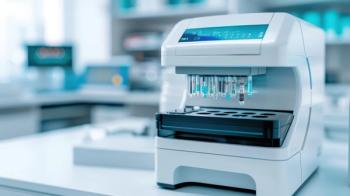
A recent study demonstrated how to advance chemical education with decommissioned optical spectrometers.

We examine some more of the latest articles that highlighted recent studies in environmental analysis.

A recent review article looks at how wetland ecosystems are being monitored using remote sensing technologies and imaging spectroscopy to better manage them.

A recent study examined how spectroscopic techniques, such as laser-induced breakdown spectroscopy (LIBS) and single-particle aerosol mass spectrometry (SPAMS), are monitoring indoor air quality.

Researchers have developed a novel method combining near-infrared (NIR) and mid-infrared (MIR) diffuse reflectance spectroscopy with advanced data fusion techniques to improve the accuracy of non-structural carbohydrate estimation in diverse tree tissues, advancing carbon cycle research.

As part of “The Future of Forensic Analysis” content series, Spectroscopy sat down with Glen P. Jackson of West Virginia University to talk about the historical development of mass spectrometry in forensic analysis.

As part of “The Future of Forensic Analysis” content series, Spectroscopy sat down with Brooke Kammrath of the University of New Haven to talk about the significance of spectroscopy in forensic analysis.

A new study published in the Journal of the European Ceramic Society introduces three XPS methodologies for accurately quantifying oxygen vacancies in metal oxides, challenging traditional misinterpretations and advancing material science research.
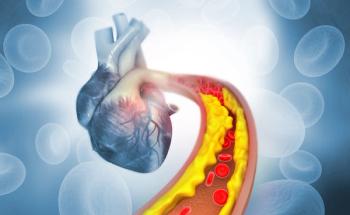
Researchers have developed a highly sensitive method using Raman and surface-enhanced Raman spectroscopy (SERS) with gold nanoparticles to accurately quantify intracellular cholesterol.

Researchers in China have developed a novel workflow for near-infrared reflectance spectroscopy (NIRS or NIR) that enhances the detection of low-level petroleum hydrocarbon pollution in soils, revealing new diagnostic features and significantly improving sensitivity for environmental monitoring.
Top articles published this week include highlights from the Eastern Analytical Symposium, a news article about the infrared (IR) spectroscopy market, and a couple of news articles recapping spectroscopic analysis of microplastics.
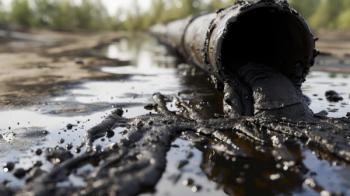
Researchers from Northwest University in Xi’an, China, developed a novel portable Raman spectroscopy method with advanced chemometric techniques to accurately quantify harmful polycyclic aromatic hydrocarbons (PAHs) in oily sludge.