

Near-infrared spectroscopy combined with principal components analysis and a back propagation neural network identified Huanglongbing-infected Gannan navel orange leaves with an overall accuracy of 98.75%, outperforming LDA, KNN, and SVM models.
Near-infrared spectroscopy combined with principal components analysis and a back propagation neural network identified Huanglongbing-infected Gannan navel orange leaves with an overall accuracy of 98.75%, outperforming LDA, KNN, and SVM models.

A history of the James L. Waters Symposium at Pittcon, from its 1987 origins and its founder, instrument entrepreneur James Logan Waters, through thirty-six installments of speakers spanning gas chromatography to generative AI.
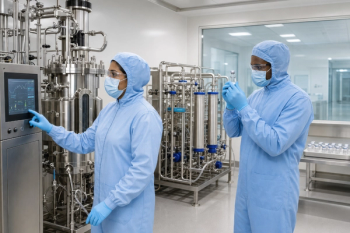
A hybrid Uniform Design and process-data calibration strategy improves Raman-based PLS model development for real-time monitoring of ultrafiltration/diafiltration and in vitro transcription steps in biopharmaceutical manufacturing.

A forensic case study using FT-IR, portable Raman spectroscopy, and SEM-EDS to differentiate three-layer automotive coatings from a hit-and-run accident, demonstrating that combining complementary spectroscopic and elemental techniques improves the accuracy of paint evidence identification.
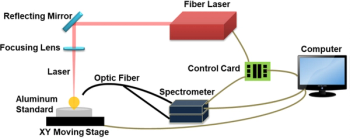
A study using fiber laser induced breakdown spectroscopy (FL-LIBS) to evaluate how pulse width and repetition rate affect the quantitative analysis of elements in aluminum alloys, reporting improved detection sensitivity and limit of detection at high repetition rate.
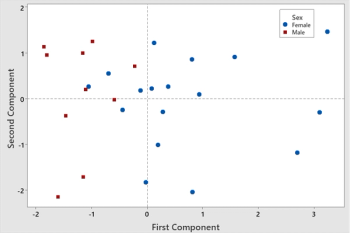
This peer-reviewed proof-of-concept study demonstrates that electrothermal vaporization inductively coupled plasma optical emission spectrometry combined with multivariate analysis can accurately classify the sex of individuals from both dyed and undyed hair samples, highlighting its potential as a green, forensic tool for human sex determination.

In this digital e-book “Spectroscopy and the Environment: Analyzing Air, Water, Land, and Life,” we examine the critical role of light-based analysis in monitoring the planet's health. Focusing on the four main categories in earth science—atmosphere, hydrosphere, lithosphere, and biosphere—we explore how advanced spectroscopic techniques can serve as a vital toolkit for environmental protection. Key topics include the detection of methane and particulate matter in the air, the discovery of microplastics in remote water sources, and the use of satellite imaging for land management.