

The Coblentz Society, a nonprofit organization dedicated to fostering the application and understanding of vibrational spectroscopy, announced the winners of its 2025 student awards.
The Coblentz Society, a nonprofit organization dedicated to fostering the application and understanding of vibrational spectroscopy, announced the winners of its 2025 student awards.

German researchers have demonstrated a portable Raman laser system that analyzes soil composition directly in agricultural fields, offering precise, real-time data for precision farming.

Researchers at INIAV in Portugal have demonstrated that near-infrared (NIR) spectroscopy combined with chemometric algorithms offers a rapid, non-destructive, and accurate method for detecting harmful fumonisins in maize, enhancing food safety monitoring.

Researchers at China Agricultural University developed a rapid and accurate spectroscopic method using NIR and FT-IR combined with PLS regression to measure protein content in rice noodles, enhancing quality control for the popular river snail rice noodle (luosifen) industry.

Spectroscopy's 2025 Emerging Leader in Molecular Spectroscopy is Lingyan Shi of the University of California, San Diego. Shi’s research focuses on developing and applying molecular imaging tools, including stimulated Raman scattering (SRS), multiphoton fluorescence (MPF), fluorescence lifetime imaging (FLIM), and second harmonic generation (SHG) microscopy.

A team from the University of Cordoba demonstrated that a portable near-infrared spectral sensor can accurately assess olive oil quality, offering a practical, low-cost alternative to laboratory methods.

This study presents a new system that enables the precise detection of glucose, choline, and lactate without traditional labels or antibodies.

A recent study unveiled a new adaptive Raman spectroscopy and transformer-based model for fast, high-accuracy microbial classification.
This tutorial addresses the critical issue of analyte specificity in multivariate spectroscopy using the concept of Net Analyte Signal (NAS). NAS allows chemometricians to isolate the portion of the signal that is unique to the analyte of interest, thereby enhancing model interpretability and robustness in the presence of interfering species. While this tutorial introduces the foundational concepts for beginners, it also includes selected advanced topics to bridge toward expert-level applications and future research. The tutorial covers the mathematical foundation of NAS, its application in regression models like partial least squares (PLS), and emerging methods to optimize specificity and variable selection. Applications in pharmaceuticals, clinical diagnostics, and industrial process control are also discussed.
Top articles published this week include an interview about drug detection techniques with Robert Ewing of the Pacific Northwest National Laboratory, a feature about how funding cuts are impacting analytical chemists, and a compilation of articles about how Raman spectroscopy is being used in cancer diagnostics.

A recent study presented a new, highly sensitive and eco-friendly fluorescent sensor, SU-1, which is capable of detecting ultra-low levels of cyanide in water and living cells.

Researchers at China’s National Key Laboratory have identified 170 nickel autoionization states using resonance ionization mass spectrometry, significantly advancing the spectral database critical for laser isotope separation and atomic spectroscopy.

Researchers from Nanjing University of Information Science & Technology have introduced a breakthrough AI-enhanced multimodal strategy for real-time detection of polyamide microplastics contaminated with heavy metals.

A new review article highlights the role Fourier transform infrared (FT-IR) spectroscopy plays in characterizing nanomaterials and polymers.

Researchers from the University of Copenhagen (Denmark) are using chromatography and spectroscopy combined to help predict wine ratings. The team investigated the relationship between chemical composition and consumer liking, using Vivino ratings as quality endpoints.
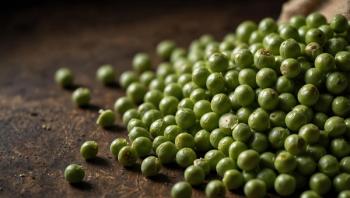
Researchers from China Agricultural University introduce PeaNet, promising rapid, accurate, and nondestructive protein analysis.

Chinese researchers have developed a cutting-edge cervical cancer diagnostic model that combines spontaneous Raman spectroscopy, CARS imaging, and artificial intelligence to achieve 100% accuracy in distinguishing healthy and cancerous tissue.

Researchers at the University of Belgrade have demonstrated that combining Raman and FT-IR spectroscopy with machine learning algorithms offers a highly accurate, non-destructive method for identifying seed varieties in lettuce, paprika, and tomato.

A compilation of articles that explore the role of Raman spectroscopy in cancer research is presented.

A new comparative study shows that scientific CMOS (sCMOS) cameras could rival traditional CCD detectors in certain Raman CARS spectroscopy applications, offering faster readout and dynamic range despite slightly higher noise levels.

Researchers from Guangdong Polytechnic Normal University highlight how combining Raman spectroscopy with machine learning enables rapid, non-destructive, and highly accurate analysis of fruit quality, offering transformative potential for food safety and agricultural diagnostics.

In this interview segment, Robert Ewing discusses how his contactless method improves on traditional drug detection techniques and how the VaporID technology remains adaptive to emerging synthetic variants.
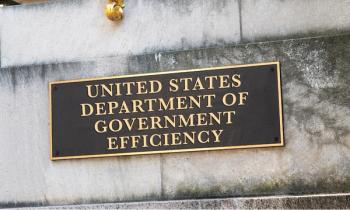
DOGE-related federal funding cuts have sharply reduced salaries, lab budgets, and graduate support in academia. Researchers view the politically driven shifts in priorities as part of recurring systemic issues in U.S. science funding during administrative transitions. The impact on Federal laboratories has varied, with some seeing immediate effects and others experiencing more gradual effects. In general, there is rising uncertainty over future appropriations. Sustainable recovery may require structural reforms, leaner administration, and stronger industry-academia collaboration. New commentary underscores similar challenges, noting scaled-back graduate admissions, spending freezes, and a pervasive sense of overwhelming stress among faculty, students, and staff. This article addresses these issues for the analytical chemistry community.

Published in Food Chemistry, researchers from Jiangsu University of Science and Technology and Jimei University use near-infrared (NIR) spectroscopy and machine learning to tackle food adulteration and enhance quality control.

Top articles published this week include an interview series with Robert Ewing of the Pacific Northwest National Laboratory, a news article on using infrared (IR) cameras to see invisible methane leaks, and an article about the role of vibrational spectroscopy in analyzing plant-based food products.
In Part II of our three-part interview with Robert Ewing, he reviews the results of the Nogales border test.

Researchers at Heilongjiang University have developed a rapid and accurate method for detecting sweeteners in food using Raman spectroscopy combined with a Random Forest machine learning algorithm, offering a powerful tool for improving food safety.

Researchers in Scotland have developed a drone-mounted infrared imaging system that can detect and map methane gas leaks in real time from up to 13.6 meters away. The innovative approach combines laser spectroscopy with infrared imaging, offering a safer and more efficient tool for monitoring pipeline leaks and greenhouse gas emissions.

Researchers from institutions in Brazil harness near-infrared spectroscopy and machine learning to determine cocoa content with precision.
