A new study presents a recent advancement in nuclear magnetic resonance (NMR) spectroscopy.

A new study presents a recent advancement in nuclear magnetic resonance (NMR) spectroscopy.

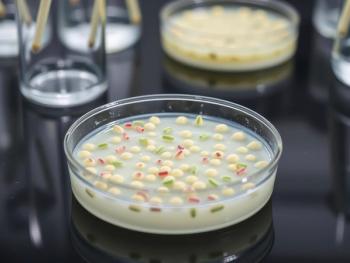
A recent study examined a new method using Europium ions as a magnetic-trapping and fluorescence-sensing probe against pathogenic bacteria.

In this article, we examine some of the latest business news in the field of spectroscopy.

Spectroscopy spoke with a senior scientist at Google to understand how the company is using light wearable technology like the Fitbit.

A recent study introduced a new fluorescence sensor that can properly determine lemon yellow in various samples.

A Researcher from Lomonosov Moscow State University has developed a convolutional neural network (CNN) model for Fourier transform infrared (FT-IR) spectra recognition. This AI-based system is capable of classifying 17 functional groups and 72 coupling oscillations with remarkable accuracy, providing a significant boost to material analysis in fields like organic chemistry, materials science, and biology.

A recent study from Hebei North University developed and tested a new fluorescence probe designed to improve copper detection.

Researchers have recently investigated the microdistribution of a variety of trace elements in dirty and washed toenails (and the speciation of arsenic specifically in situ) using synchrotron X-ray fluorescence microscopy (XFM) and laterally resolved X-ray absorption near edge spectroscopy (XANES).

Exum Industries, producers of the first laser ablation laser ionization time of flight mass spectrometer (LALI-TOF-MS), announced a partnership with Edge Scientific to better promote and distribute their products.

Spectroscopy published stories highlighting the work of Jeanette Grasselli Brown, as well as the latest analysis on spectral interpretation, atomic spectroscopy, and more.

Using logistics regression on laser-induced breakdown spectroscopy (LIBS) spectra of plasma samples collected pre- and post- Covid-19 pandemic from donors known to have developed various levels of antibodies to the SARS-Cov-2 virus, University of Massachusetts physics professor Nourddine Melikechi’s research team has shown that relying on the levels of sodium (Na), potassium (K), and magnesium (Mg) together is more efficient at differentiating the two types of plasma samples than any single blood metal alone. We spoke to Melikechi about this research.

This review covers products introduced in the spectroscopy space between May 2023 and April 2024.

A recent study showcases how a new rapid colorimetric nanosensor can make the process of detecting hydrogen peroxide in milk products more sustainable.

Portable spectrometers allow the equipment to be taken to the sample, as opposed to the sample to the spectrometer, moving the laboratory to the point of need.

A recent study from Denmark examined using microspatially offset low-frequency Raman spectroscopy (micro-SOLFRS) to analyze drug delivery systems.

A recent study from the Czech Republic examines the behavior of nanoparticles (NPs) in complex aqueous environments.

Spectroscopy sat down with Jeanette Grasselli Brown to discuss her early life and how she got started working in chemistry.

Spectroscopy Emerging Leader in Molecular Spectroscopy award winner Dmitry Kurouski and his team recently explored the link between fatty acids and neurodegenerative diseases.

A recent study from Lanzhou Jiaotong University presented a new fluorescent sensor that can detect permanganate ions in water.

Two distinct baseline correction methods: frequency-domain polynomial fitting, and time-domain molecular free induction decay (m-FID) are compared to determine which approach is more effective in reducing baseline errors in infrared absorption spectra.

Researchers in China have developed a cutting-edge machine learning approach that can detect chylous blood in blood intended for transfusion with more than 90% accuracy. This development promises to significantly reduce the risks associated with blood transfusions and improve the efficiency of blood donation centers.

Here, we detail the role time-domain spectroscopy is playing in the oil industry.

Here, we document recent studies using surface-enhanced Raman spectroscopy (SERS).

Spectroscopy published stories on Raman, infrared spectroscopy, UV-vis, and more. Here are the top reads from the week.

A recent study discusses the recent upgrades to the infrared (IR) beamline at BESSY II storage ring, which has helped it improve its results when conducting IR microscopy.

A recent study analyzed the mid-infrared (mid-IR) and visible near-infrared (VNIR) spectra of primitive Main Belt asteroids.

Researchers from Kyoto University and Japan's National Institute of Advanced Industrial Science and Technology have developed innovative probes to monitor the chemical composition of biodegradable polymer blends during injection molding. This breakthrough could lead to improved production efficiency and reduced waste in the polymer industry.

A recent study demonstrated experimental sensing on field-resolved molecular fingerprinting using scanning techniques.

We explore the buckminsterfullerene molecule using spectroscopy for its physical properties.

Researchers from Peking University and Kwansei Gakuin University are developing a new approach to analyze intermolecular interactions using two-dimension correlation spectroscopy.