

Researchers in Northeast China have demonstrated a new approach using drone-mounted multispectral imaging to monitor and predict soybean bacterial blight disease, offering a promising tool for early detection and yield protection.
Researchers in Northeast China have demonstrated a new approach using drone-mounted multispectral imaging to monitor and predict soybean bacterial blight disease, offering a promising tool for early detection and yield protection.

A new review highlights how vibrational spectroscopy techniques like FTIR, NIR, and Raman offer rapid, non-destructive tools for accurately analyzing plant-based protein content and structure.

Researchers at Xi’an Jiaotong University have demonstrated that ATR-FTIR spectroscopy, combined with histological analysis and machine learning, can accurately distinguish between drowning and strangulation in forensic cases.

A new study published in Geoderma demonstrates that combining soil spectroscopy with radar-derived vegetation indices and environmental data significantly improves the accuracy of soil organic carbon predictions in Brazil’s semi-arid regions.

A Virginia Tech study has combined drone-mounted NIR hyperspectral imaging (400 nm to 1100 nm) and AI to estimate soil moisture at root depths with remarkable accuracy, paving the way for smarter irrigation and resilient farming.
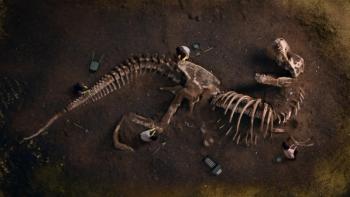
A new study published in the Journal of South American Earth Sciences reveals how microbial activity, low pH conditions, and sediment chemistry in Brazil’s São Carlos Shale uniquely preserved diverse Upper Cretaceous fossils, offering fresh insights into the paleoenvironment of the Bauru Basin.

This study used three distinct sample preparation techniques to examine the metal content of geological rocks.
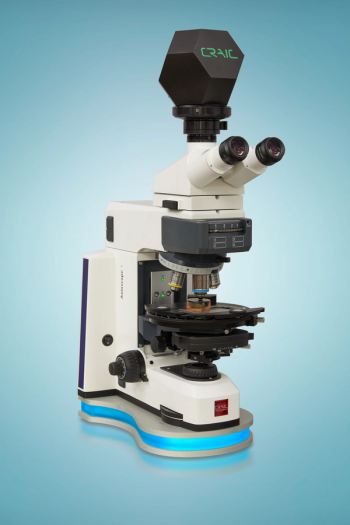
In a press release, CRAIC Technologies announced the launch of its novel maceral identification solution that is designed to improve coal analysis. This new system contains high-speed imaging, servo-driven scanning, and intelligent software that work together to generate more accurate maceral analysis.

A recent study presented a dual-method approach combining confocal micro-Raman spectroscopy and Nile Red-assisted fluorescence microscopy to enhance the accuracy and throughput of microplastics detection in environmental samples.

The Society for Applied Spectroscopy (SAS) recently announced the 2025 Fellows Award recipients. Here's a rundown of who was selected and their contributions to the field of spectroscopy.

Machine learning models and spectral analysis provide a scalable alternative to conventional trace metal detection.

A new review article highlights how researchers in Moscow are integrating machine learning with optical spectroscopy techniques to enhance real-time diagnosis and surgical precision in central nervous system tumor treatment.

A recent study showcases a cost-effective, ecofriendly UV spectrophotometric method enhanced with dimension reduction algorithms to accurately quantify veterinary drugs dexamethasone and prednisolone, offering a sustainable alternative to traditional analysis techniques.

Spectroscopy spoke to Lingyan Shi of the University of California San Diego, about her team's research exploring a noninvasive cancer classification tool.
A recent study reports high-purity blue emission and thermal stability in novel lanthanum (III) complex synthesized via low-energy precipitation method.
This tutorial examines the modeling of diffuse reflectance (DR) in complex particulate samples, such as powders and granular solids. Traditional theoretical frameworks like empirical absorbance, Kubelka-Munk, radiative transfer theory (RTT), and the Hapke model are presented in standard and matrix notation where applicable. Their advantages and limitations are highlighted, particularly for heterogeneous particle size distributions and real-world variations in the optical properties of particulate samples. Hybrid and emerging computational strategies, including Monte Carlo methods, full-wave numerical solvers, and machine learning (ML) models, are evaluated for their potential to produce more generalizable prediction models.

Researchers develop robust diagnostic method using functional near-infrared (fNIR) spectroscopy and deep neural networks with high accuracy.

Top articles published this week include a compilation of some of the top KOL interviews for the month of June, an announcement from DialAct Corporation about a new product line of Raman spectrometers, and an inside look at Raman spectroscopy in biomedicine.

Researchers from Cranfield University and partners from industry demonstrated the feasibility of using advanced, non-destructive imaging techniques to analyze and standardize organo-mineral fertilizers.

A new study published in Minerals reveals that red coral artifacts unearthed in Xinjiang’s Shengjindian cemetery originated from the western Mediterranean, highlighting early Silk Road trade and long-distance cultural exchange during the Han Dynasty.

Earlier this month, ABB and Hydrosat announced an expansion of their partnership by launching the second infrared (IR) camera that will go aboard Hydrosat’s VanZyl-2 satellite, which is scheduled for summer 2025.
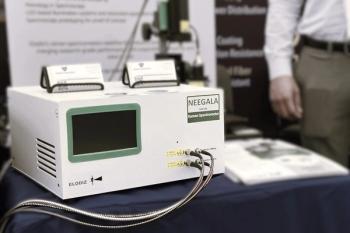

A new study published in the journal Food Chemistry by lead authors Qian Zhao and Jun Huang from Zhejiang University of Science and Technology unveil a new data-driven framework for predicting resistant starch content in rice

We sat down with top researchers in analytical spectroscopy to discuss their work, insights, and the paths that brought them here.
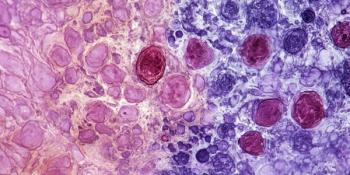
A recent study developed new photoacoustic probes to better visualize oxidative stress during acute liver injury.

In this edition of “Inside the Laboratory,” Brett McGuire of the Massachusetts Institute of Technology (MIT) discusses his laboratory’s work in astrochemistry.
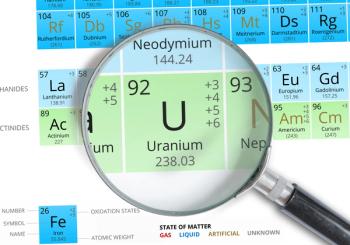
A joint study conducted by Applied Spectra (West Sacramento, California) and the Lawrence Berkeley National Laboratory (Berkeley, California) used laser-induced breakdown spectroscopy (LIBS) to measure uranium with a detection limit as low as 1.3 picograms, achieving unprecedented sensitivity by optimizing the uranium emission line, system hardware, and light collection efficiency. Richard Russo is the corresponding author for the paper that resulted from this research, and will receive, on behalf of the rest of his team, the 2024 Spectrochimica Acta Part B Best Paper Award.

The recipient of the 2025 NYSAS Gold Medal Award is Geraldine L. Richmond, Presidential Chair in Science and Professor of Chemistry at the University of Oregon.
In the lead-up to the International Symposium on Molecular Spectroscopy conference, Brett McGuire of the Massachusetts Institute of Technology sat down with Spectroscopy to preview the ISMS conference.

Researchers at Wittenborg University of Applied Sciences have developed a non-destructive method using hyperspectral imaging combined with chemometrics and machine learning to accurately predict fat and protein content in diverse cheese types.