

All News
Advertisement

Explore the evolution of atomic spectroscopy and its impact on science writing, highlighting key publications and industry advancements over the decades.

Explore the evolution of chemometrics in spectroscopy, celebrating 40 years of insights and mathematical exploration in this dynamic field.

In Part IV of our conversation with Pooja Sheevam, she discusses how scanning electron microscopy with an energy-dispersive X-ray spectroscopy (SEM-EDS) and bulk X-ray fluorescence (XRF) were used to better understand fluid-rock interactions.
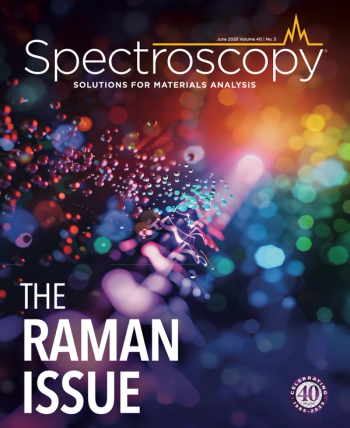
Click here to access the Spectroscopy June North America PDF in an interactive format.
Click here to access the Spectroscopy June 2025 Europe PDF in an interactive format.
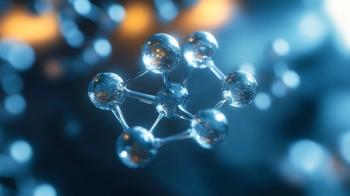
Researchers use EC-SERS to reveal the first detailed structural study of hU-II peptide in aqueous solution, paving the way for new drug development.

A recent review in the Journal of Pharmaceutical Analysis highlights how AI, particularly deep learning, is revolutionizing Raman spectroscopy by enhancing its accuracy, efficiency, and applications in drug development, quality control, and clinical diagnostics.

In Part III, our discussion with Pooja Sheevam focused on the use of long-wave IR (LWIR) spectroscopy in analyzing basaltic rocks.
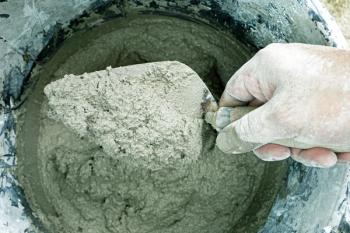
A recent study examined the inner structure of calcium silicate hydrate, a principal binding agent in concrete.
Advertisement

Shanghai researchers develop high-accuracy machine learning system to identify colorless microplastics across varied environments.

A recent study explored new rapid screening alternatives to traditional methods for detecting pork adulteration in meatballs, aiding halal food authentication efforts.

In a paper published in Nature Communications (1), Prashant Jain and a team of researchers from the University of Illinois Urbana-Champaign (Urbana, Illinois) demonstrate how in situ nanoscale surface-enhanced Raman scattering (SERS) can reveal detailed surface chemistry during CO₂ reduction on silver (Ag) nanoparticles under photocatalytic conditions.Jain will receive the 2025 Clara Craver Award from the Coblentz Society, presented annually to an outstanding young molecular spectroscopist whose efforts are in applied analytical vibrational spectroscopy.
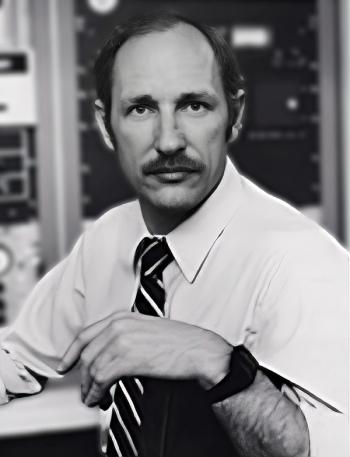
In this Icons of Spectroscopy article, Executive Editor Jerome Workman Jr. delves into the life and impact of Bruce Kowalski, an analytical chemist whose major contributions to chemometrics helped establish the field of applying advanced quantitative and qualitative mathematics to extract meaningful chemical information from complex datasets. Kowalski’s visionary approach to chemical data analysis, education, and software development has transformed the landscape of modern analytical chemistry for academia and industry.


In this interview segment, Pooja Sheevam elaborates on what LWIR and SWIR are and what advantages they both offer when analyzing Hawaiian geology.

Top articles published this week include an interview with Pooja Sheevam about her study analyzing Hawaii’s PTA-2 drill core, several news stories on recent meteorite studies, and a news article on using Raman spectroscopy and artificial intelligence (AI) to detect adulteration in maple syrup.

In Part I of our video interview with Pooja Sheevam, she discusses why she and her team used both LWIR and SWIR spectroscopy in analyzing Hawaii's PTA-2 drill core, and how the two techniques complemented each other in the study.
In this Q&A, Pooja Sheevam discusses why she used both long-wave infrared (LWIR) and short-wave IR (SWIR) spectroscopy in analyzing the PTA-2 drill core.
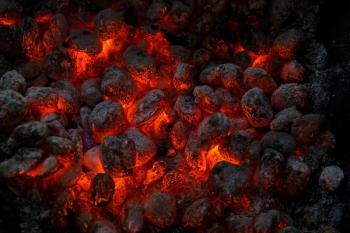
A proposed solution is a coal species classification method that combines terahertz time-domain spectroscopy with machine learning - specifically, principal component analysis (PCA) and cluster analysis (CA). By using terahertz (THz) time-domain spectroscopy (TDS), the absorption coefficient, dielectric constant, and refractive index of each sample were obtained from lignite, bituminous coal, and anthracite samples.

A new study published in Marine Pollution Bulletin reveals significant microplastic contamination at 5000-meter depths in the Central Indian Ocean Basin, highlighting the widespread reach of plastic pollution and the urgent need for regulatory action.

Researchers in China have pioneered a rapid, green, and non-destructive detection system using NIR spectroscopy and machine learning to ensure yak milk powder quality.

A new study published in the Journal of Food Composition and Analysis by researchers at the University of Sharjah reveals that while most cat foods sold in Sharjah meet international safety standards, some contain elevated metal levels, prompting calls for stricter regulation and quality control to protect pet health.
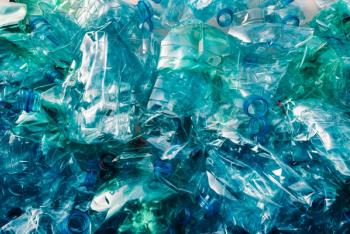
Researchers from Tohoku University, Shibaura Institute of Technology, and Shizuoka University unveil advanced sorting system using NIR, THz, and machine learning for improved recycling outcomes.
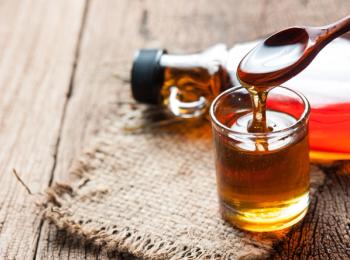
Researchers at McGill University have developed a fast, eco-friendly method using portable Raman spectroscopy and deep learning to accurately assess the antioxidant content of maple syrup on-site.

This work shows the great potential of mushrooms as excellent raw materials in the development of multifunctional fluorescence carbon materials.
Top articles published this week include an interview with Ayanjeet Ghosh and Rohit Bhargava on imaging for biomedical applications, a preview of the 78th International Symposium on Molecular Spectroscopy, and a news article on using artificial intelligence (AI) to study minerals.

Researchers at Guangdong University of Technology have developed a fast, non-destructive Raman spectroscopy method to accurately detect active ingredients in complex drug formulations.

On Wednesday, May 21st, 2025, Waters Corporation announced in a press release that they have acquired Halo Labs, which is a venture-backed company that produces imaging-based particle analysis technologies.

Surface hardness is one of the most important parameters which describes the degree of aging in polyvinyl chloride (PVC) cables. In this work, the hardness of PVC sheathing material was studied using laser-induced breakdown spectroscopy (LIBS).
Advertisement
Advertisement