

Spectroscopy is telling us the extraterrestrial history of space objects, helping us learn about planetary origins.
Spectroscopy is telling us the extraterrestrial history of space objects, helping us learn about planetary origins.

The 2026 Food Safety Summit is set to take place from May 11–14, in Rosemont, Illinois. Here’s what attendees should know.

The 79th meeting of the International Symposium on Molecular Spectroscopy is set to take place in June. Here’s what attendees should know.

A peer-reviewed study published in Remote Sensing confirms that a commercial Earth-observation satellite can map live coral cover with accuracy comparable to specialized aircraft — a potential turning point for global reef monitoring.
In this “Pathways in Spectroscopy” episode, Ayush Agarwal, a postdoctoral researcher at the Federal Institute of Materials Research and Testing in Berlin, discusses how his background in chemical engineering helped him make the adjustment to analytical spectroscopy and chemistry.
This new feature in Spectroscopy introduces a structured, application-focused series that curates and examines the most influential research papers in molecular and atomic spectroscopy. Each installment presents a focused “Top 10” collection of seminal publications within a specific analytical domain, spanning techniques such as ultraviolet–visible, infrared, Raman, near-infrared, and atomic spectroscopy. Across biomedical, biopharmaceutical, environmental, and forensic applications, the selected papers illustrate how spectroscopic methods are applied to real-world analytical challenges. Emphasis is placed on the integration of spectral data with chemometric approaches to enable robust calibration, accurate prediction, and meaningful interpretation. Together, these curated collections provide practitioners with a concise, application-oriented perspective on impactful developments in spectroscopy. This article brings together the first nine “Top 10” collections in the series, offering a cross-disciplinary view of influential work shaping the field.
Insights from experts this week explored topics such as career transitions in spectroscopy, how near-infrared (NIR) spectroscopy can study collagen in archaeological remains, and the key takeaways from the Spring SciX Conference in Exeter, United Kingdom.

Spectroscopy associate editorial director Jerome Workman Jr. highlights the current trends and ongoing research in space exploration.

In the final clip of our conversation with Thomas Mayerhöfer, he talks about attenuated total reflectance (ATR) spectroscopy's sensitivity to nanometer-thick layers, and its connection to spectroscopic ellipsometry.
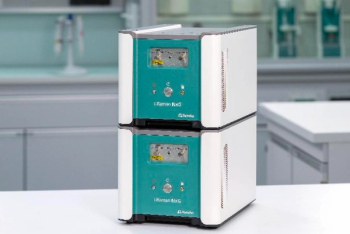
Metrohm USA has introduced two new laboratory Raman spectrometers—the i-Raman NxG and i-Raman Duo—targeting researchers and quality control teams who require more detailed chemical characterization than standard identification systems provide.
How can micro-particle induced X-ray emission (µ-PIXE) and micro-ion beam induced luminescence (µ-IBIL) spectroscopy improve conservation practices?
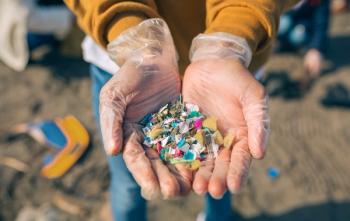
Researchers combined two analytical techniques to characterize individual microplastic particles with both elemental and molecular detail.

In this brief Q&A, Christina Ryder, who is a postdoctoral researcher at Texas A&M University and the lead author of this study, explains the remaining limitations in using NIR spectroscopy for collagen prediction.
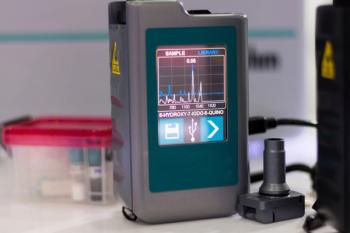
Can electron paramagnetic resonance (EPR) spectrometers be used in beer production? The answer may surprise you.
Tutorial Tuesday is a new, upcoming video series that will offer bite-sized overviews of the key trends, topics, and techniques in analytical spectroscopy.

In this brief Q&A, Christina Ryder, who is a postdoctoral researcher at Texas A&M University and the lead author of this study, explains why restricting sampling to the 2030–2060 nm spectral region was key in avoiding interference from consolidants.
Spring SciX highlighted the latest advancements in spectroscopy, with a focus on biomedical research.
In this “Pathways in Spectroscopy” episode, Ayush Agarwal, a postdoctoral researcher at the Federal Institute of Materials Research and Testing in Berlin, talks about the transition from chemical engineering to analytical chemistry and describes what that transition was like.

In this brief Q&A interview, Christina Ryder, who is a postdoctoral researcher at Texas A&M University and the lead author of this study, discusses her team’s findings.

A comprehensive review from the University of Porto identifies critical bottlenecks in biologics analysis and maps a technology-driven path forward.
What does the aluminosilicate and carbonate particles on bitumen-coated bandages of mummies tell us about the burial environment?
Senior editor Will Wetzel recaps the top articles published this week on Spectroscopy.
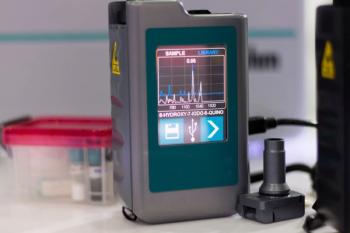
CEA-Leti’s Moonshot Program is developing compact spectrometer platforms that can operate outside traditional lab environments.
In this interview clip, we explore how an optical model accounts for thin-layer thickness on the order of the penetration depth so spectra reflect partial-reflection effects.
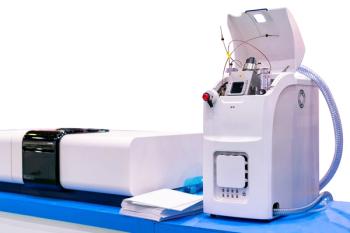
What are the advantages of electron paramagnetic resonance (EPR)-on-a-chip spectrometers?
This interview explores how micro-particle induced X-ray emission and micro-ion beam induced luminescence spectroscopy can analyze trace elements in mummy samples.

A new study used predictive modeling to identify wood species in the Amazon.
Is sample thickness important for signal detection? The answer is yes, and in this interview segment, Thomas Mayerhofer of Leibniz Institute of Photonic Technology explains why.
The following articles are the 10 most accessed digital object identifier (DOI) manuscripts for Spectroscopy and LCGC International during March, 2026.
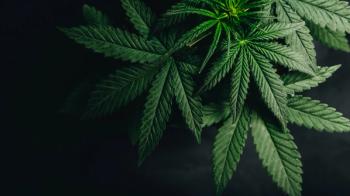
This overview article discusses how spectroscopic techniques are being used to improve cannabis analysis.