
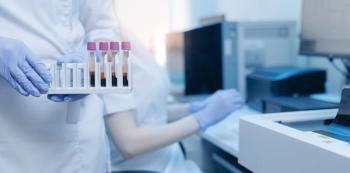
A new diagnostic platform may help detect drug-induced liver injury better. How would this work in real-world clinical settings?
A new diagnostic platform may help detect drug-induced liver injury better. How would this work in real-world clinical settings?
An upcoming “Pathways in Spectroscopy” video series with Mary Kate Donais of St. Anselm College will address the current challenges students are facing in landing internships.
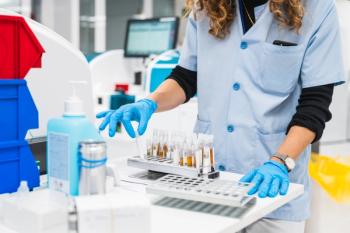
The combination of surface-enhanced Raman spectroscopy (SERS) and digital microfluidics (DMF) might be able to improve detection of liver injury biomarkers.

A recent study showcased a wearable, glove-mounted sensor that can detect trace residues of two cancer drugs on workplace surfaces.

A comprehensive introduction to LIBs coverage published in Spectroscopy Online from 2022–2025.
The following articles are the 10 most accessed digital object identifier (DOI) manuscripts for Spectroscopy and LCGC International during the month of May 2026.
What should students working in clinical research settings keep in mind?

Today we celebrate World Oceans Day, where we highlight how spectroscopy is helping us advance ocean analysis and preserve this fragile ecosystem.
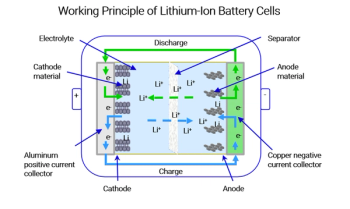
Lithium-ion batteries have revolutionized energy storage across consumer electronics, electric vehicles, and grid-scale systems, but further advancement requires overcoming challenges in safety, performance, affordability, and sustainability as production scales from laboratory to gigafactory levels. This article highlights the essential role of analytical chemistry techniques and rigorous process control in mitigating thermal runaway, reducing variability, managing impurities, optimizing costs, and improving recyclability to enable safer, higher-performing, and more sustainable next-generation battery technologies.

Did you miss Sian Sloan-Dennison’s talk on digital microfluidics and surface-enhanced Raman spectroscopy (SERS) at Spring SciX? If yes, she recaps her talk in this video clip.
Top articles published this week include a continuation of our deep dive into the role of surface-enhanced Raman spectroscopy (SERS) and digital microfluidics (DMF) in clinical applications and an inside look at the historical evolution of lasers in spectroscopy.

Spectroscopy’s “What’s Nu” newsletter in May highlights the development of lasers in spectroscopy, compensating for repack variation in near-infrared (NIR) spectroscopy, and validity by design.
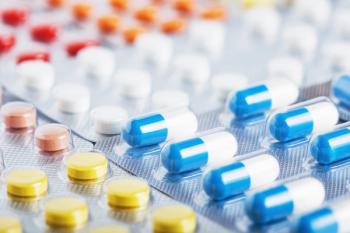
A recent study explores a solvent-free FT-IR spectroscopy method for simultaneously measuring two common hypertension drugs in tablet form.

Engineered spherical tip design pushes sensitivity below 10 ppb, researchers report.

Researchers at Nanjing Forestry University have developed a color-changing fluorescent probe made from waste spruce wood that can detect formaldehyde in drinking water at concentrations below World Health Organization (WHO) safety limits.
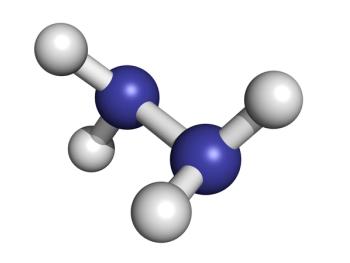
Dual-mode chemosensor developed at Shanxi Agricultural University achieves sub-micromolar detection limits in under five minutes.
In this interview clip, Sian Sloan-Dennison, a postdoctoral research associate at the University of Strathclyde, discusses how a new digital microfluidics surface-enhanced Raman spectroscopy (DMF-SERS) platform be implemented in clinical settings.

A team at Hebei University has developed a fluorescent probe that visualizes heavy metal stress in plant cells by detecting changes in intracellular viscosity, offering researchers a new real-time tool for assessing crop stress resistance.
Why is determining the function of a surface-enhanced Raman spectroscopy (SERS) assay important? This "Pathways in Spectroscopy" clip offers career advice for researchers in biological and clinical analysis by addressing this question.

How is spectroscopy being used to detect methane and contribute to sustainability missions?
Top articles published this week include a new “Pathways in Spectroscopy” clip, an exploration of the recent advances in Raman spectroscopy and artificial intelligence (AI), and a preview of an upcoming conference focused on tip-enhanced Raman spectroscopy (TERS).
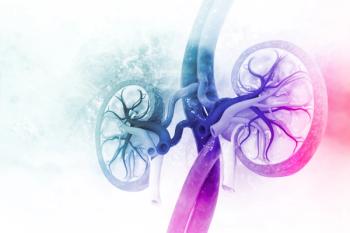
A Portuguese study suggests a low-cost optical technique could help stratify risk for delayed graft function before transplantation, though researchers caution the findings require larger-scale validation.
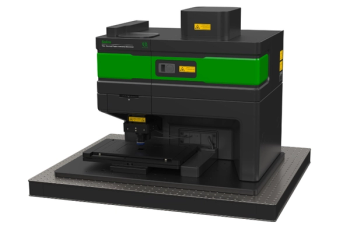
PicoQuant announced the launch of a new microscope designed for materials characterization.

This column considers the spectra of saturated rings, such as cyclopentane and cyclohexane, and how not all of them are easily detectable by infrared spectroscopy.

What were attendees talking about the most at Spring SciX?
Sian Sloan-Dennison, a postdoctoral research associate at the University of Strathclyde, discusses how young researchers can leverage their time at scientific conferences effectively to land their postdoctoral research opportunity.

The upcoming 10th International Conference on Tip-enhanced Raman Spectroscopy is set to take place from June 3–5, 2026, in Zurich, Switzerland. Here’s what attendees can expect.
Jennifer Ferguson, an Applications Manager at Renishaw, discusses why Raman spectroscopy is an ideal technique for characterizing lithium-ion battery anodes.
Inductively coupled plasma–mass spectrometry (ICP-MS) is a popular atomic-based technique, and it can be used to solve some of our most pressing environmental issues.
Sian Sloan-Dennison, a postdoctoral research associate at the University of Strathclyde, discusses the importance of considering the end-use application of SERS assays and random probes, such as whether they are for early diagnostics or patient use.