





Researchers at Oregon State University explore how machine learning, optical sensors, and robotics are transforming food quality assessment and processing, improving efficiency and reducing waste.
Researchers at Oregon State University explore how machine learning, optical sensors, and robotics are transforming food quality assessment and processing, improving efficiency and reducing waste.
Given the importance of this nomenclature in guiding authors and reviewers, we invite members of the spectroscopy community to provide feedback, suggest updates, or participate in future revisions.

A new study published in the Journal of Dairy Science demonstrates that FT-MIR spectroscopy can effectively authenticate farming practices and dairy systems in Parmigiano Reggiano production but has limited ability to verify animal welfare parameters.

Researchers have developed a portable mid-infrared (IR) spectroscopic method combined with chemometric analysis to rapidly and non-destructively detect aflatoxin contamination in Aspergillus-infected peanuts. This approach offers a field-deployable alternative to traditional wet chemistry methods, with high sensitivity and specificity in identifying toxic metabolites such as aflatoxins.


University of Granada researchers compared different methods and their effectiveness in classifying ink found in historical documents.

A new approach to analyzing bituminous coals was created using Fourier transform infrared spectroscopy.

A study by researchers at Universidad de Talca in Chile explores the integration of artificial intelligence (AI), the Internet of Things (IoT), and remote sensing to modernize modern farming. The research highlights how these technologies optimize resource use, improve crop yields, and promote sustainable agricultural practices.

With Pittcon 2025 officially beginning, here are some notable upcoming workshops based around the advancement of spectroscopy.

A recent review by researchers at Nagpur University and Seth Kesarimal Porwal College explores the ever advancing landscape of the Internet of Things (IoT) and its essential components—sensors and actuators. The review paper classifies various IoT sensors and examines their role in integrating the physical and digital worlds to enable smarter devices and enhanced automation.

Our IR Spectral Interpretation column contains some of the most popular articles, according to our readers.

This article highlights key contributors who have significantly advanced the field of spectroscopy in recent decades.

A team of researchers from the International Iberian Nanotechnology Laboratory (INL) in Braga, Portugal, has developed an autonomous Internet of Things (IoT) spectral sensing system designed to monitor grape ripening in real-time. The study, led by Hugo M. Oliveira, Alessio Tugnolo, Natacha Fontes, Carlos Marques, and Álvaro Geraldes, was published in Computers and Electronics in Agriculture and introduces a novel approach to non-destructive, in-situ optical monitoring of grape maturity.

A new study examines the role of Internet of Things (IoT) technology in fostering sustainable urban development. Through a systematic review of 73 publications, researchers highlight how IoT-enabled sensors improve air quality, transportation, disaster management, and resource efficiency in smart cities.

The most viewed Spectroscopy DOI-registered articles from January 2025.

Researchers highlight the growing role of Internet of Things (IoT) and sensor technologies in enhancing food security and agricultural sustainability. The study, published in Ain Shams Engineering Journal, explores the applications, benefits, and challenges of smart agriculture, emphasizing the potential of optical sensors in monitoring and optimizing farming practices.
A recent study provides an in-depth overview of the latest advancements in infrared (IR) semiconductor sensor technology, highlighting new materials, enhanced detection capabilities, and expanding applications across industrial, medical, security, and environmental fields. The research explores how quantum dots, graphene, and novel nanomaterials are revolutionizing IR detection, paving the way for more efficient and versatile sensor systems.

At the American Academy of Forensic Sciences Conference (AAFS) 2025, several sessions will focus on the use of spectroscopy in forensic analysis.

Spectroscopy sat down with Samiksha Singh to discuss her team’s latest research in microplastics research, which provided insight into how marine monitoring can improve mitigation of plastic pollution.

W. W. Coblentz was one of the preeminent researchers in the field of infrared spectroscopy with work spanning a broad range of physics, chemistry, spectroscopic theory, instrumentation, applications, and sample handling. The Coblentz Society was established in his name in 1954 by Norman E. Wright and Van Zandt Williams.
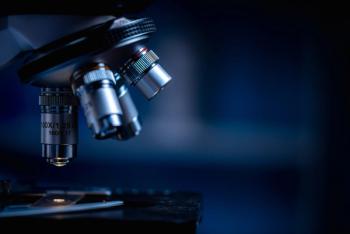
Fourier transform infrared (FT-IR) microscopy using reflection methods (diffuse reflection, reflection/reflection-absorption, or attenuated total reflectance) typically requires less sample preparation than transmission. However, optimal results will depend upon the sample and, in particular, the sample surface.

The study developed an effective mid-infrared spectroscopic identification model, combining principal component analysis (PCA) and support vector machine (SVM), to accurately determine the geographical origin of five types of millet with a recognition accuracy of up to 99.2% for the training set and 98.3% for the prediction set.

A new study published in Food Control combines Fourier transform infrared (FT-IR) spectroscopy and deep learning to accurately authenticate the geographical origin of Gastrodia elata f. glauca, offering a reliable method for geographical indication (GI) verification and fraud prevention in the herbal and food industry.
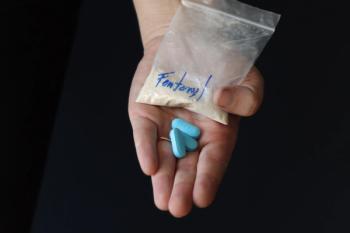
Researchers have successfully demonstrated that human nails can serve as a reliable biological matrix for detecting fentanyl use. By combining attenuated total reflectance-Fourier transform infrared (ATR FT-IR) spectroscopy with machine learning, the study achieved over 80% accuracy in distinguishing fentanyl users from non-users. These findings highlight a promising, noninvasive method for toxicological and forensic analysis.

A recent study out of Ben-Gurion University investigated how Fourier transform infrared-attenuated total reflectance (FT-IR-ATR) spectroscopy can detect fungal contamination in bread.