





A recent study from Texas Tech University explored using attenuated total reflectance Fourier transform infrared (ATR FT-IR) spectroscopy in age determination as part of forensic investigations.

Top articles published this week include a video interview that explores using label-free spectroscopic techniques for tumor classification, an interview discussing how near-infrared (NIR) spectroscopy can classify different types of horsetails, and a news article about detecting colorless microplastics (MPs) using NIR spectroscopy and machine learning (ML).

Advancing Zebrafish Research: FT-IR Imaging Sheds Light on Tissue Preservation in Zebrafish
A recent study from Texas Tech University explored using attenuated total reflectance Fourier transform infrared (ATR FT-IR) spectroscopy in age determination as part of forensic investigations.

In this "Icons of Spectroscopy" column, executive editor Jerome Workman Jr. details how Van Zandt Williams from Perkin-Elmer Corporation and American Cyanamid, and Norman E. Wright from the Dow Chemical Company, have made significant contributions to the field of vibrational spectroscopy.

In the fourth installment of our review of infrared spectral interpretation, we will discuss the spectroscopy of hydrocarbons. We will look at the stretching and bending vibrations of methyl (CH3) and methylene (CH2) groups, how to distinguish them, and how to know whether one or both of these functional groups are present in a sample. We will also discuss aromatic hydrocarbons, specifically the C-H stretching and bending peaks of mono- and disubstituted benzene rings, and how to distinguish them.

This excerpt from The Concise Handbook of Analytical Spectroscopy, which spans five volumes, serves as a comprehensive reference, detailing the theory, instrumentation, sampling methods, experimental design, and data analysis techniques for each spectroscopic region.

A recent study from researchers in Brazil examined a-pinene’s chemical composition using mid-infrared (MIR) Fourier transform infrared (FT-IR) spectroscopy.

A recent study examines how vibrational spectroscopic techniques are being used to evaluate the quality of seaweed.
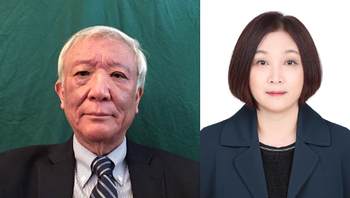
Spectroscopy recently sat down with Isao Noda of the University of Delaware and Young Mee Jung of Kangwon National University to talk about the principles of two-dimensional correlation spectroscopy (2D-COS) and its key applications.

Researchers from Northern Border University in Saudi Arabia have developed a rhein-loaded self-nano emulsifying drug delivery system (RS-SNEDDS), significantly enhancing the compound's solubility, bioavailability, and therapeutic potential, particularly for neurological applications.

A comprehensive review in the Microchemical Journal highlights ATR FT-IR spectroscopy's transformative role in forensic bloodstain analysis, detailing its applications, challenges, and potential advancements for more precise and reliable crime-solving methodologies.

A recent study looked at how spectroscopy can be used to differentiate ink based on its color and brand.

A recent study used Fourier transform mid-infrared (FT-IR) spectroscopy and machine learning (ML) algorithms to understand the mineral content in camel’s milk.

A recent study explored how polymer-based tea bags contribute to the release of microplastics and nanoplastics (MNPL).

It has occurred to me that, in the 10+ years I have been writing about molecular vibrations, I have never introduced my readers to its basic theory! I will rectify that now. Some of this is new material, and some will be review. Either way, it is important that all this material be covered in one place.

As part of Spectroscopy’s Icons of Spectroscopy Laureate Series, associate editorial director Caroline Hroncich sat down with Jeanette Grasselli Brown to discuss her career.

A new study in Infrared Physics & Technology highlights the pivotal role of Fourier transform infrared (FTIR) spectroscopy in identifying and quantifying microplastics, emphasizing its advantages, limitations, and potential for advancement in mitigating environmental pollution.

A recent study by researchers from the University of Belgrade highlights the transformative potential of attenuated total reflectance Fourier transform infrared (ATR-FT-IR) spectroscopy for analyzing protein structures. This versatile method not only provides insights into secondary structures but also excels at tracking aggregation processes, offering advantages over traditional techniques like X-ray crystallography and nuclear magnetic resonance (NMR) spectroscopy.

A new model corrects errors in analyzing complex mixtures using ATR FT-IR, paving the way for more accurate chemical insights.

Aleksandra "Sasha" Karapetrova and Win Cowger discuss their research using µ-FTIR spectroscopy and Open Specy software to investigate microplastic deposits in remote snow areas, shedding light on the long-range transport of microplastics.
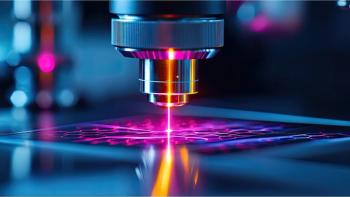
Scientists have developed a novel and creative mid-infrared (MIR) hyperspectral microscope using single-pixel imaging (SPI) technology and a quantum cascade laser (QCL). This innovation offers faster, more cost-effective chemical analysis compared to traditional methods, promising new frontiers in microscopic imaging.

HSI is widely applied in fields such as remote sensing, environmental analysis, medicine, pharmaceuticals, forensics, material science, agriculture, and food science, driving advancements in research, development, and quality control.

A recent review article explored how vibrational spectroscopy techniques have been used in radiation biology.

The following is a summary of selected articles published recently in Spectroscopy on the subject of handheld, portable, and wearable spectrometers representing a variety of analytical techniques and applications. Here we take a closer look at the ever shrinking world of spectroscopy devices and how they are used. As spectrometers progress from bulky lab instruments to compact, portable, and even wearable devices, the future of spectroscopy is transforming dramatically. These advancements enable real-time, on-site analysis across diverse industries, from healthcare to environmental monitoring. This summary article explores cutting-edge developments in miniaturized spectrometers and their expanding range of practical applications.

Over the past two years Spectroscopy Magazine has increased our coverage of artificial intelligence (AI), deep learning (DL), and machine learning (ML) and the mathematical approaches relevant to the AI topic. In this article we summarize AI coverage and provide the reference links for a series of selected articles specifically examining these subjects. The resources highlighted in this overview article include those from the Analytically Speaking podcasts, the Chemometrics in Spectroscopy column, and various feature articles and news stories published in Spectroscopy. Here, we provide active links to each of the full articles or podcasts resident on the Spectroscopy website.
Top articles published this week include highlights from the Eastern Analytical Symposium, a news article about the infrared (IR) spectroscopy market, and a couple of news articles recapping spectroscopic analysis of microplastics.