

Mass Spectrometry
Latest News
Advertisement
Latest Videos


Advertisement
More News

An upcoming talk at SciX 2026 will explore how spectroscopy is being used to evaluate urban air pollution.

A History of The James L. Waters Symposium: Innovators, Instrumentation, and Applications, 1989-2026
A history of the James L. Waters Symposium at Pittcon, from its 1987 origins and its founder, instrument entrepreneur James Logan Waters, through thirty-six installments of speakers spanning gas chromatography to generative AI.
Atomic spectroscopy has quietly moved past splitting light and counting ions toward instruments that track a single nanoparticle, fuse a laser pulse with an isotope-ratio mass spectrometer, and correct their own interferences with artificial intelligence in real time. The result is a new class of ICP-MS, LIBS, and X-ray fluorescence (XRF) platforms that are turning what used to be a benchtop-only science into field-ready, self-optimizing analytical intelligence.

A handheld infrared (IR) scanner paired with an artificial neural network (ANN) can identify human versus animal bone with over 96% accuracy.
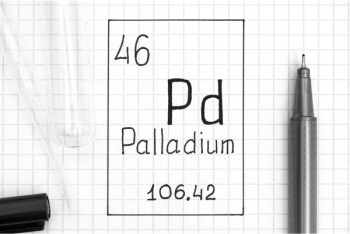
A method transfer case study describing how digestion vessel capability, elevated microwave digestion temperature, and optimized acid chemistry resolved poor palladium spike recovery and memory effects during ICP-MS trace metal analysis, achieving consistent 98–100% recoveries with no observable carryover.
The following articles are the most accessed digital object identifier (DOI) manuscripts for Spectroscopy and LCGC International during the month of July 2026. Nine articles are ranked here by DOI page views; a tenth entry in the July report (135 views) was recorded against the bare journal-level DOI rather than an individual article and is therefore not attributable to a single manuscript.

How is the water quality in Biscayne Bay? A talk at the American Chemical Society (ACS) Fall 2026 Meeting will explore this.
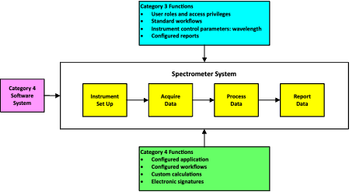
This "Focus on Quality" column will explore how a regulated laboratory can leverage supplier software development and testing to reduce User Acceptance Testing (UAT) of a configured spectrometer software.
The following articles are the 10 most accessed digital object identifier (DOI) manuscripts for Spectroscopy and LCGC International during the month of June 2026.

Webcasts
Webinar Date/Time: Tue, May 26, 2026 11:00 AM EDT

In this Q&A overview, we provide an inside look at how mass spectrometry (MS) and spectroscopy is helping us to learn more about the cosmos.

The 12th Nordic Conference on Plasma Spectrochemistry and Ionization Principles in Mass Spectrometry will take place from June 14–18, 2026, in Loen, Norway. We preview the conference here.
In the lead-up to the American Academy of Forensic Sciences (AAFS) Conference, we reflect on some of the most pertinent ongoing trends in forensic analysis.

The 2026 James L. Waters Annual Symposium at Pittcon will focus on the integration of generative AI into analytical chemistry, examining how large language models and AI tools can support method development, data analysis, and chemical measurement while maintaining scientific rigor, validation, and interpretability. Continuing its decades-long tradition of connecting historical perspective with emerging technologies, the symposium will feature presentations from leading chemists and spectroscopists, highlighting both the opportunities and challenges of responsibly incorporating AI into chemical measurement science.

A recent article discussed the need for interdisciplinary collaboration to better understand the unique chemistry occurring at air–water interfaces. Experimental and conceptual challenges of linking molecular-level structure to macroscopic reactivity and calls for integrating advanced spectroscopy, computation, as well as cross-disciplinary approaches to overcome current limitations, are highlighted. This summary was generated with the help of artificial intelligence.
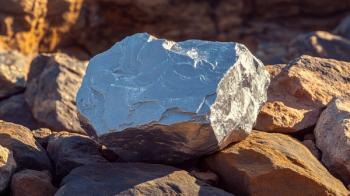
Researchers at China’s National Key Laboratory have identified 170 nickel autoionization states using resonance ionization mass spectrometry, significantly advancing the spectral database critical for laser isotope separation and atomic spectroscopy.

The U.S. Department of Energy’s Pacific Northwest National Laboratory’s (PNNL) VaporID, which is a newly developed portable air sampling system incorporating a miniaturized mass spectrometer (MS), can detect trace levels of fentanyl, methamphetamine, cocaine, and even explosives like TNT with great accuracy.
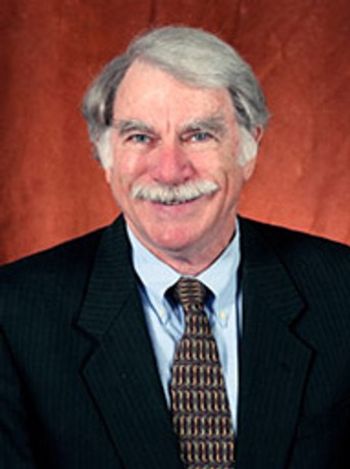
A pioneer of FT-ICR Mass Spectrometry, Alan G. Marshall (1944–2025), is best known for co-inventing Fourier transform ion cyclotron resonance mass spectrometry (FT-ICR MS), a transformative technique that enabled ultrahigh-resolution analysis of complex mixtures. Over a career spanning more than five decades at institutions like the University of British Columbia, The Ohio State University, and Florida State University, he published over 650 peer-reviewed papers and mentored more than 150 scientists. Marshall’s work profoundly impacted fields ranging from astrobiology to petroleomics and earned him numerous prestigious awards and fellowships. Revered for his intellect, mentorship, and dedication to science, he leaves behind a legacy that continues to shape modern mass spectrometry.
Advertisement
Advertisement