




X-ray Analysis
Latest News

August 31st 2026
A History of The James L. Waters Symposium: Innovators, Instrumentation, and Applications, 1989-2026
A history of the James L. Waters Symposium at Pittcon, from its 1987 origins and its founder, instrument entrepreneur James Logan Waters, through thirty-six installments of speakers spanning gas chromatography to generative AI.
Advertisement
Latest Videos




Shorts

1:15
Tutorial Tuesday: Which Applications Are X-ray Techniques Finding Success In?
2 months ago
by
Will Wetzel
Advertisement
More News

A talk at the upcoming American Chemical Society (ACS) Fall 2026 Meeting will present a new method for measuring the electronic state of individual atoms within multinuclear clusters.

An upcoming talk at the American Chemical Society (ACS) Fall 2026 Meeting will discuss new insights into the origins of Mars’s early water.
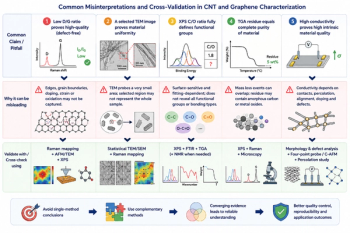
This review critically examines the progress in the characterization of carbon nanotubes and graphene, emphasizing how each X-ray technique probes a different aspect of structure–property relationships.

A rule proposed by the White House Office of Management and Budget (OMB) would give political appointees final authority over discretionary grant decisions ahead of peer reviewers, allow agencies to terminate active grants without a formal right of appeal, and restrict international collaboration and publication funding across federal science agencies. For the optical, molecular, vibrational, and atomic spectroscopy community, the proposal could affect the grants, journal support, and student and postdoctoral positions that sustain the field.
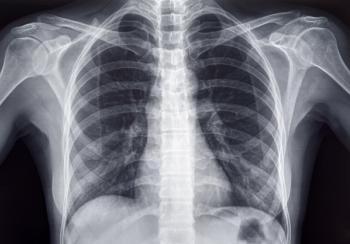
A review of selected X-ray analysis work published on Spectroscopy Online from 2022–2026.

A comprehensive introduction to LIBs coverage published in Spectroscopy Online from 2022–2025.

A recent study used a multi-technique analytical approach to characterize the 2021 Tiglit meteorite, revealing unexpected mineral phases that point to a more complex history of shock events and post-fall alteration.

In this Q&A overview, we explore how these scientific advancements are reshaping our understanding of Ancient Egyptian history and culture.
The 2024-2026 period has been marked by rapid methodological innovation and critical reassessment of established atomic spectrometric techniques in environmental analysis. Advances in inductively coupled plasma–tandem mass spectrometry (ICP-MS/MS) reaction-cell chemistry, matrix-effect correction in X-ray fluorescence (XRF), microwave-sustained plasma sources, and green preconcentration strategies have expanded analytical capabilities for soils, waters, sediments, plants, and atmospheric particulates. Simultaneously, comparative evaluations of inductively coupled plasma–mass spectrometry (ICP-MS), inductively coupled plasma–optical emission spectrometry (ICP-OES), and XRF have sharpened our understanding of detection limits, bias, and field applicability. This brief review highlights 10 of the most influential publications shaping environmental applications of XRF, ICP-MS, and ICP-OES during 2024–2026. Each paper is discussed with emphasis on its technical contributions and broader impact on environmental monitoring, regulatory science, and instrumental development.

A recent study used minimally invasive synchrotron and spectroscopic techniques to fully characterize the materials, degradation processes, and conservation needs of a 26th Dynasty Ptah–Sokar–Osiris wooden statuette from Giza, establishing technical baselines for Saite workshop practices and future preservation of polychrome artifacts.

Top articles published this week include a couple previews of upcoming “Pathways in Spectroscopy” episodes and an inside look at the role spectroscopy is playing in modern agriculture.

In this overview, we explore how spectroscopy is advancing the agriculture industry.

In this article, we highlight some of the important talks on atomic spectroscopy that will take place at Pittcon on Sunday March 8th.
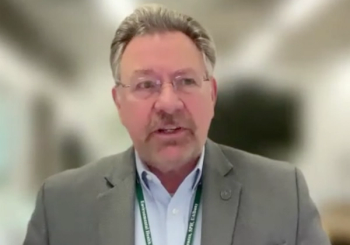
Patrick Parsons of the New York State Department of Health discusses how X-ray fluorescence (XRF) instruments can be used in food safety monitoring applications.
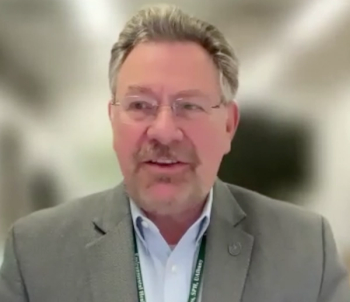
Patrick Parsons of the New York State Department of Health discusses the results of his recent study comparing different X-ray fluorescence (XRF) analyzers.

In this edition of “Inside the Laboratory,” Maryam Shakiba and Santiago Marin of the University of Colorado Boulder discuss the findings of their latest paper, which provides a predictive framework for understanding and forecasting long-term thermo-oxidative degradation in polyimides.

This explainer video highlights how energy-dispersive inelastic X-ray scattering (EDIXS) can be used to discriminate between different stamps.
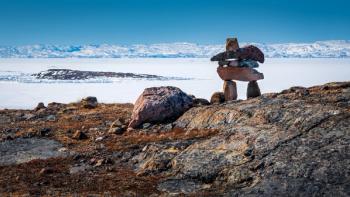
A new study led by Gaëlle Belleau-Magnat at Université de Sherbrooke reveals that Arctic gossans, analyzed using rover-compatible techniques, may serve as valuable analogs for Martian environments and help guide the search for past life on Mars.
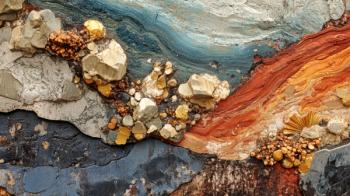
This study used three distinct sample preparation techniques to examine the metal content of geological rocks.

Researchers from Cranfield University and partners from industry demonstrated the feasibility of using advanced, non-destructive imaging techniques to analyze and standardize organo-mineral fertilizers.

In the final part of this video interview with Pooja Sheevam, she discusses the importance of her study in understanding the mineralogical and geochemical processes in Hawaii.

A team of scientists in Poland has unveiled the first detailed structural and magnetic analysis of the Ribbeck meteorite, a recently recovered space rock classified as an aubrite. Using Raman spectroscopy, X-ray diffraction, and advanced magnetic testing, researchers revealed the meteorite's unique mineralogy and its connection to deep space conditions.
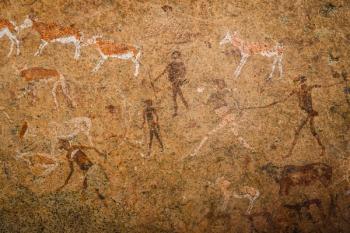
A recent study published in the Journal of Archaeological Science: Reports reveals that a multi-headed snake motif at Argentina's La Candelaria rock shelter was created through multiple painting events over time.

Researchers from Kannur University and Anand Niketan College have developed Dy³⁺-doped TiO₂ nanoparticles with unique luminescent properties using a novel solvothermal method.

Researchers from the University of Nevada, Reno, have conducted the most comprehensive subsurface analysis of Hawaiian shield basalts to date, using advanced spectroscopic and geochemical techniques to reveal short-lived hydrothermal alteration processes and establish a new foundation for future volcanic and geothermal studies.
Advertisement
Advertisement
Trending on Spectroscopy Online
1
Tracking Microplastics and Nanoplastics Using Laser-Based Imaging Technique
2
Celebrating National Forensic Science Week
3
Spectroscopy Top 10 Articles of the Month (August 2026)
4
How to Monitor Indoor Air Quality Effectively
5