

The upcoming 10th International Conference on Tip-enhanced Raman Spectroscopy is set to take place from June 3–5, 2026, in Zurich, Switzerland. Here’s what attendees can expect.
The upcoming 10th International Conference on Tip-enhanced Raman Spectroscopy is set to take place from June 3–5, 2026, in Zurich, Switzerland. Here’s what attendees can expect.
Inductively coupled plasma–mass spectrometry (ICP-MS) is a popular atomic-based technique, and it can be used to solve some of our most pressing environmental issues.

Sian Sloan-Dennison, a postdoctoral research associate at the University of Strathclyde, discusses the importance of considering the end-use application of SERS assays and random probes, such as whether they are for early diagnostics or patient use.
Top articles published this week include a new Molecular Spectroscopy Workbench column, a reflection of the life and career of C. V. Raman, and a preview of a new upcoming video series.
Why does integrating a surface-enhanced Raman scattering (SERS) assay with a digital microfluidics (DMF) platform improve sensitivity, reproducibility, and throughput when detecting onset of drug-induced liver injury?
"Spectroscopy Around the Globe with Will Wetzel” will take viewers on a journey around the world, highlighting how spectroscopy is being used to study famous world landmarks.
An upcoming two-part video series on “Pathways in Spectroscopy” tackles working with surface-enhanced Raman spectroscopy (SERS), offering practical advice for researchers in clinical laboratories.
Sian Sloan-Dennison, a postdoctoral research associate at the University of Strathclyde, highlights the key topics that were discussed at Spring SciX.
Curiosity may kill the cat, but in engineering, it opens up pathways for engineers to pursue other adjacent career paths.
Top articles published this week include a new Pathways in Spectroscopy episode, an inside look at how spectroscopy is being used in clinical diagnostics to assess drug induced liver injury, and a couple preview articles about two upcoming spectroscopy conferences.
Our coverage of the Spring SciX Conference includes a profile on the current issues of current clinical diagnostics, including how spectroscopy can improve assessment of drug induced liver injury.

Can visible-near-infrared (vis-NIR) spectroscopy detect toxic trace elements in soil and sediments effectively?

Researchers have identified chemical signatures in the South Atlantic Ocean that could allow scientists to track the movement of major deep-water masses using dissolved organic matter.

In this overview of the upcoming International Symposium for Molecular Spectroscopy (ISMS), we discuss the awards given out at the conference.

This preview of the upcoming Chemometrics in Analytical Chemistry (CAC) 2026 International conference covers the invited speakers, the topics that will be discussed, and some of the social events taking place.
A recent study in Analytical Biochemistry identified optimized circular dichroism spectroscopy parameters that reduced protein analysis times by up to 20-fold while maintaining data quality.
Accurate and precise measurements are important in analytical science, as this “Pathways in Spectroscopy” clip explains.

A systematic review from Beijing researchers maps how surface-enhanced and high-speed Raman technologies are reshaping what forensic examiners can extract from a single latent print.
Insights from experts this week explored how engineering students can transition to analytical chemistry, how spectroscopy is being used for coral reef monitoring, and the role spectroscopy has played in studying meteorites.

The 2026 Food Safety Summit is set to take place from May 11–14, in Rosemont, Illinois. Here’s what attendees should know.
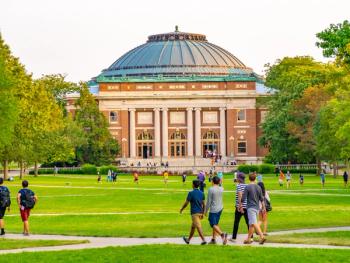
The 79th meeting of the International Symposium on Molecular Spectroscopy is set to take place in June. Here’s what attendees should know.
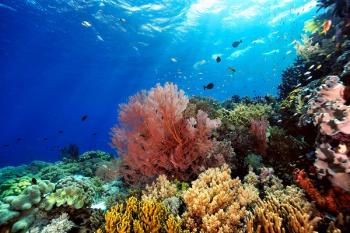
A peer-reviewed study published in Remote Sensing confirms that a commercial Earth-observation satellite can map live coral cover with accuracy comparable to specialized aircraft — a potential turning point for global reef monitoring.
In this “Pathways in Spectroscopy” episode, Ayush Agarwal, a postdoctoral researcher at the Federal Institute of Materials Research and Testing in Berlin, discusses how his background in chemical engineering helped him make the adjustment to analytical spectroscopy and chemistry.
Insights from experts this week explored topics such as career transitions in spectroscopy, how near-infrared (NIR) spectroscopy can study collagen in archaeological remains, and the key takeaways from the Spring SciX Conference in Exeter, United Kingdom.
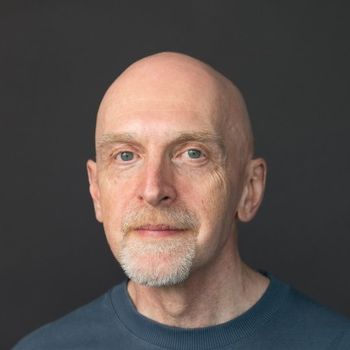
In the final clip of our conversation with Thomas Mayerhöfer, he talks about attenuated total reflectance (ATR) spectroscopy's sensitivity to nanometer-thick layers, and its connection to spectroscopic ellipsometry.
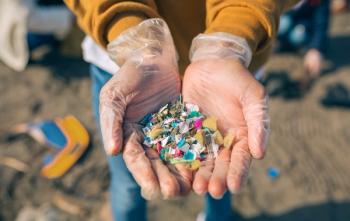
Researchers combined two analytical techniques to characterize individual microplastic particles with both elemental and molecular detail.
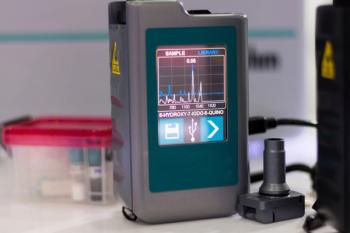
Can electron paramagnetic resonance (EPR) spectrometers be used in beer production? The answer may surprise you.
Tutorial Tuesday is a new, upcoming video series that will offer bite-sized overviews of the key trends, topics, and techniques in analytical spectroscopy.
In this “Pathways in Spectroscopy” episode, Ayush Agarwal, a postdoctoral researcher at the Federal Institute of Materials Research and Testing in Berlin, talks about the transition from chemical engineering to analytical chemistry and describes what that transition was like.

A comprehensive review from the University of Porto identifies critical bottlenecks in biologics analysis and maps a technology-driven path forward.