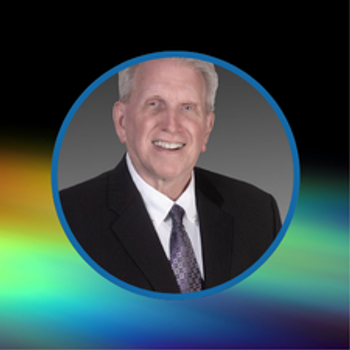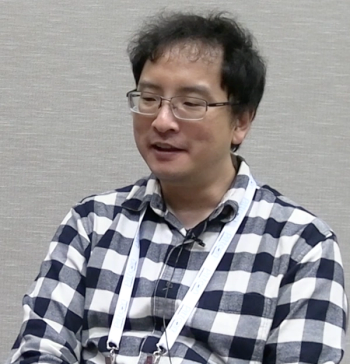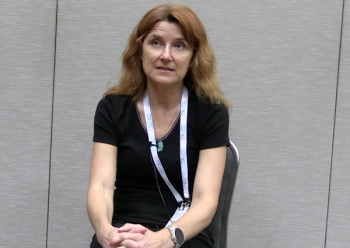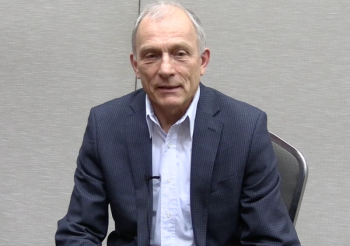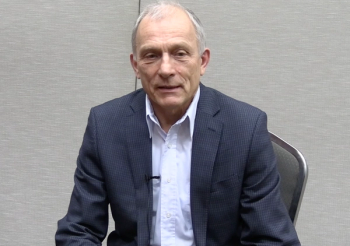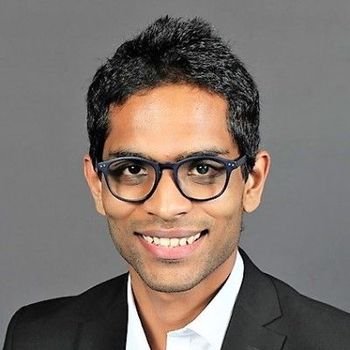
Gerardo Gamez, a Professor and Graduate Advisor at Texas Tech University, explains how ambient ionization techniques can improve polymer characterization.

Gerardo Gamez, a Professor and Graduate Advisor at Texas Tech University, explains how ambient ionization techniques can improve polymer characterization.

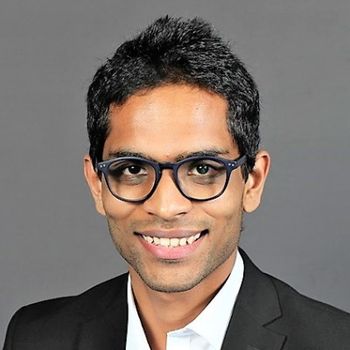
Hunter Andrews, an R&D Staff Scientist at Oak Ridge National Laboratory, discusses the key role that laser-induced breakdown spectroscopy (LIBS) plays in his research.

Gerardo Gamez, a Professor and Graduate Advisor at Texas Tech University, discusses the work that his laboratory at Texas Tech University performs using compressed sensing spectroscopy techniques.

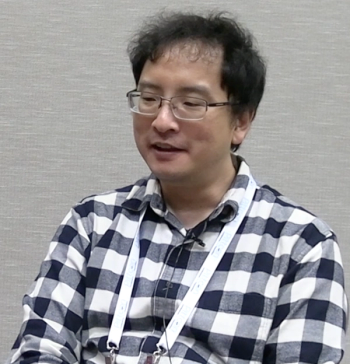
Patrick Parsons of the New York State Department of Health discusses the results of his recent study comparing different X-ray fluorescence (XRF) analyzers.

Gerardo Gamez, a Professor and Graduate Advisor at Texas Tech University, provides an overview about what glow discharge optical emission spectroscopy (GDOES) is and why it’s a useful technique for elemental mapping.

Hunter Andrews, an R&D Staff Scientist at Oak Ridge National Laboratory, discusses the work that he does in his laboratory.

Patrick Parsons of the New York State Department of Health previews his upcoming talk at the Winter Conference on Plasma Spectrochemistry.

Hunter Andrews, an R&D Staff Scientist at Oak Ridge National Laboratory, discusses what he is looking forward to at the Winter Conference on Plasma Spectrochemistry.

Gerardo Gamez, a Professor and Graduate Advisor at Texas Tech University, previews his upcoming talk at the Winter Conference on Plasma Spectrochemistry.

At the Winter Conference on Plasma Spectrochemistry, Hunter Andrews, an R&D Staff Scientist at Oak Ridge National Laboratory, will be giving a talk about using laser-induced breakdown spectroscopy (LIBS) for molten salt reactor monitoring. Andrews provides a preview of his upcoming talk here.

Experts comment on the biggest trends in spectroscopy heading into 2026, and what this means for science and technology.

This feature reflects on the interviews Spectroscopy magazine conducted in 2025.

A study published in the Journal of Raman Spectroscopy reports the detection of polyethylene, PET, and nylon microplastics in Greece’s remote Dragon Lake on Mt. Tymfi.

The study reveals that leaf spectroscopy far outperforms traditional leaf traits in predicting forest leaf dark respiration across diverse ecosystems, offering a more accurate and scalable approach for improving carbon cycle models.

A recent study investigated how structural phase changes inside sensing materials dynamically influence performance during gas exposure.

The study reveals that infrared and Raman spectroscopy can accurately identify dye sources and detect light-induced chemical degradation in culturally significant Māori harakeke fibers.

Damodaran Krishnan Achary explains how experimental NMR and computational chemistry work together to reveal the structure, dynamics, and reaction mechanisms of complex systems like ionic liquids.

Damodaran Krishnan Achary of University of Pittsburgh highlights how modern NMR education is shifting toward real-world samples and interdisciplinary applications, reflecting the needs of industry and materials science researchers.

The University of Pittsburgh professor discusses how diffusion, relaxation, multinuclear, and ultra-high-resolution NMR experiments can be strategically applied to probe structure, dynamics, and interactions in complex chemical systems.

Damodaran Krishnan Achary discusses how advanced NMR techniques reveal the unique structure, cation–anion interactions, and dynamic behavior of ionic liquids, providing insights that other analytical methods cannot capture.

Damodaran Krishnan Achary discusses how modern NMR spectroscopy enables interdisciplinary research, from biomolecular studies to solid-state materials, and emphasizes the importance of staying current with advanced techniques and experimental strategies.

This brief article highlights the key takeaways from studying the 3I/ATLAS comet and what it means for space exploration moving forward.

A recent study used operando UV-vis spectroscopy to learn more about metal–sulfur redox reactions.

This video in the Icons of Spectroscopy series highlights the life and scientific achievements of Albert A. Michelson, the first American Nobel Laureate in the sciences. It traces his journey from his early years in the American West and his education at the U.S. Naval Academy to his groundbreaking experiments measuring the speed of light. We explore his invention of the Michelson interferometer, its role in the famous Michelson–Morley experiment, and its lasting influence on modern optical and spectroscopic methods, including astronomy.

A recent study published in the Journal of Chemometrics explored how chemometric modeling can be used to examine ingredient interactions in processed foods.

A recent study presented a new AI model that can be used to improve patient outcomes for breast cancer.

In a recent study, a team of researchers developed a three-dimensional (3D) spectroscopic map of a distant exoplanet’s atmosphere, revealing surprising details about its structure and chemistry.

This compilation of articles shows how spectroscopy is being used to ensure honey authentication.

Recently, a team of researchers investigated a new approach for manipulating electron motion at the femtosecond timescale.

In this edition of “Inside the Laboratory,” we profile the Schultz Laboratory at The Ohio State University in Columbus, Ohio, speaking with Zac Schultz, Spencer Witte, Nishadi Nadeeshani, and Renee Romano about their work.