
Senior editor Will Wetzel recaps the top articles published this week on Spectroscopy.
Senior editor Will Wetzel recaps the top articles published this week on Spectroscopy.
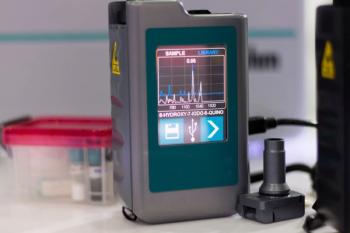
CEA-Leti’s Moonshot Program is developing compact spectrometer platforms that can operate outside traditional lab environments.
In this interview clip, we explore how an optical model accounts for thin-layer thickness on the order of the penetration depth so spectra reflect partial-reflection effects.
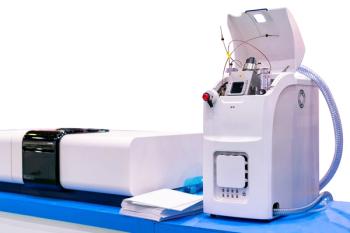
What are the advantages of electron paramagnetic resonance (EPR)-on-a-chip spectrometers?

A new study used predictive modeling to identify wood species in the Amazon.
Is sample thickness important for signal detection? The answer is yes, and in this interview segment, Thomas Mayerhofer of Leibniz Institute of Photonic Technology explains why.
In this “Pathways in Spectroscopy” episode, Brian Strohmeier, who is Pittcon’s President for the 2027 Conference, talks about his role as Pittcon president, what his main responsibilities are, and the amount of work that is required on his end when planning the 2027 show.
In this interview clip, Thomas Mayerhofer discusses why he re-evaluated the evanescent field in attenuated total reflectance (ATR) spectroscopy.
Insights from experts this week explored topics such as the current job market for spectroscopists, attenuated total reflectance Fourier transform infrared (ATR-FTIR) spectroscopy, and analytical laboratory management.
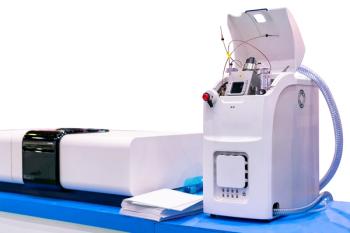
In this video clip, Jean-Baptiste David, who is a R&D Engineer at CEA-Leti, and Serge Gambarelli, who is a research director at CEA-IRIG and EPR spectroscopy expert, discuss the application areas where electron paramagnetic resonance (EPR) spectrometers could be useful.

A recent study highlights the pervasive reach of plastic pollution.
What is the evanescent field and how does it relate to attenuated total reflectance (ATR) spectroscopy? Thomas Mayerhofer explains.
Spectroscopy sat down with Jean-Baptiste David, who is a R&D Engineer at CEA-Leti, and Serge Gambarelli, who is a research director at CEA-IRIG and EPR spectroscopy expert, to talk about how EPR spectrometers are changing the way laboratory analysis is conducted.

A competitive job market requires candidates to differentiate themselves in order to secure employment. Hear from experts in the field about the skills spectroscopists need to have to succeed in this ever-changing job market.

Christina Ryder, a postdoctoral researcher at Texas A&M University, discusses the current limitations of using near-infrared (NIR) spectroscopy for collagen prescreening on archaeological bone.

In this “Pathways in Spectroscopy” video segment, Saikat Banerjee, a Senior Scientist and the Analytical Lab Manager at DuPont, provides advice to aspiring analytical laboratory managers regarding the skills they need to be hired in this role.
Top articles include a new “Pathways in Spectroscopy” episode, an interview with Christina Ryder about assessing collagen in archaeological bone, and a look at how hyperspectral satellite imaging can be used in detecting and analyzing methane emissions.
What is the impact of portable spectroscopy on archaeology? Christina Ryder, a postdoctoral researcher at Texas A&M University, addresses this question in this interview.
What is the issue with percent nitrogen analysis when analyzing collagen in archaeological bone? Christina Macie Ryder, a postdoctoral researcher at Texas A&M University, explains the main problem.
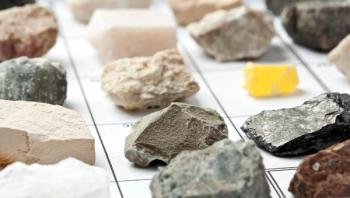
Researchers have found that LIBS spectroscopy models trained on compressed rock pellets produce inaccurate compositional readings when applied to fine-grained loose powders, raising concerns for planetary missions analyzing Martian soils.
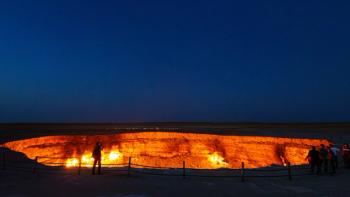
Explore how hyperspectral satellites are studying greenhouse gases, such as methane, in the environment.
Studying archaeological bone is important to learning more about the historical biological record that artifacts alone cannot tell us. Christina Ryder, a postdoctoral researcher at Texas A&M University, explains how to obtain the best collagen signals when studying archaeological bones.
There are numerous soft and technical skills spectroscopists need to have to serve as an analytical laboratory manager. Saikat Banerjee, who serves in this role at DuPont, explains what these skills are and why they are essential.
Top articles include an overview of the Artemis II mission, an interview with Christina Ryder about assessing collagen in archaeological bone, and a look at the importance of postdoctoral research.
What predictive modeling strategy works best for radiocarbon dating? According to Christina Macie Ryder, a postdoctoral researcher at Texas A&M University, random forest (RF) models perform better than other modeling strategies such as partial least squares regression (PLSR).
Why is near-infrared (NIR) spectroscopy a more useful technique when studying archaeological bone? According to Christina Macie Ryder, a postdoctoral researcher at Texas A&M University, it comes down to the penetration depth.
In an upcoming episode of “Pathways in Spectroscopy,” we sit down with Brian Strohmeier, who has had an extensive career in analytical spectroscopy, to talk about planning a large scientific conference such as Pittcon.

The National Aeronautics and Space Administration (NASA) is set to have its first crewed lunar mission since 1972, barring any setbacks.
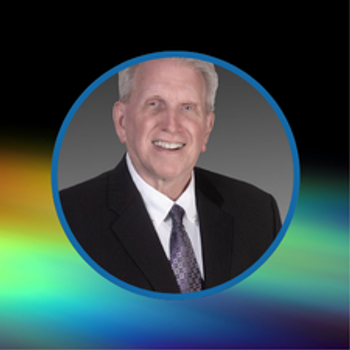
In this interview clip, Brian R. Strohmeier, who is serving as the President of Pittcon for 2027, discusses what he is seeing from the current job market for spectroscopists.
In this interview clip, Brian R. Strohmeier, who is serving as the President of Pittcon for 2027, discusses what social events are being planned for the conference.