
Students may not get the internship of their dreams, but they still might be able to land a relevant internship they can leverage into a full-time job after college.
Students may not get the internship of their dreams, but they still might be able to land a relevant internship they can leverage into a full-time job after college.
Top articles published this week include a preview of the upcoming International Symposium on Molecular Spectroscopy (ISMS) conference, an inside look at particle correlated Raman spectroscopy, and more.

The first episode of "Spectroscopy Around the Globe" will take viewers on a journey to the Great Pyramids of Giza, where spectroscopy is playing a key role in uncovering Ancient Egyptian history.
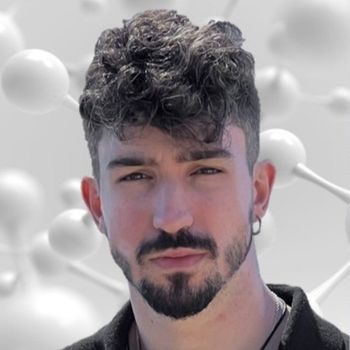
In a recent interview, Miguel Sanz-Novo, an Alexander von Humboldt Fellow at the Max Planck Institute for Extraterrestrial Physics, explained how simple molecules in molecular clouds evolve into increasingly complex chemical species during star formation.

A continuation of our conversation with Janam Pandya, Product Manager at Thermo Fisher Scientific, provides insight into how the global market for Raman, infrared (IR), and mid-infrared (MIR) instruments is set to evolve over the next five years.

A recent review article explores the problem of weak interfacial forces in soft matter research.
In this interview segment, Miguel Sanz-Novo, an Alexander von Humboldt Fellow at the Max Planck Institute for Extraterrestrial Physics, discusses why complex organic molecules are important to study.
How can molecular analyzers be integrated into closed-loop process control? Janam Pandya of Thermo Fisher Scientific explains.
Succeeding as an applications manager means multitasking, presenting, and learning new spectroscopies at a high level. Jennifer Ferguson explains.
Top articles published this week include a preview of the upcoming International Symposium on Molecular Spectroscopy (ISMS) conference, an inside look at particle correlated Raman spectroscopy, and more.
A continuation of our conversation with Janam Pandya, Product Manager at Thermo Fisher Scientific, highlights the challenges of operating field-deployable instruments in harsh, rugged landscapes.
What should attendees do to make the most out of their ISMS 2026 conference experience?
Raman spectroscopy is being used in the oil and gas industry for real-time process measurements. This video clip explores this current trend.
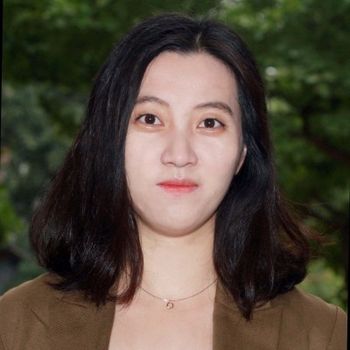
Minjung Son, an assistant professor of chemistry at Boston University, offers a preview of her upcoming talk at the International Symposium on Molecular Spectroscopy (ISMS) conference.

A team of researchers developed a set of green spectrophotometric techniques capable of simultaneously quantifying two widely prescribed antihypertensive drugs.
In this “Pathways in Spectroscopy” episode, Jennifer Ferguson, an Applications Manager at Renishaw, discusses what she does in her role and types of projects she gets involved in.

Researchers demonstrated that combining terahertz spectroscopy with a convolutional neural network can non-destructively determine the age of mountain-cultivated ginseng with up to 96.3% accuracy, outperforming traditional HPLC-based methods while preserving the integrity of high-value ginseng roots.
Top articles published this week include a celebration of World Oceans Day, a look at how spectroscopy is advancing lithium-ion battery analysis, and more.
An upcoming “Pathways in Spectroscopy” video series with Mary Kate Donais of St. Anselm College will address the current challenges students are facing in landing internships.
What should students working in clinical research settings keep in mind?

Did you miss Sian Sloan-Dennison’s talk on digital microfluidics and surface-enhanced Raman spectroscopy (SERS) at Spring SciX? If yes, she recaps her talk in this video clip.
Top articles published this week include a continuation of our deep dive into the role of surface-enhanced Raman spectroscopy (SERS) and digital microfluidics (DMF) in clinical applications and an inside look at the historical evolution of lasers in spectroscopy.

A recent study explores a solvent-free FT-IR spectroscopy method for simultaneously measuring two common hypertension drugs in tablet form.

Engineered spherical tip design pushes sensitivity below 10 ppb, researchers report.
Dual-mode chemosensor developed at Shanxi Agricultural University achieves sub-micromolar detection limits in under five minutes.
In this interview clip, Sian Sloan-Dennison, a postdoctoral research associate at the University of Strathclyde, discusses how a new digital microfluidics surface-enhanced Raman spectroscopy (DMF-SERS) platform be implemented in clinical settings.
Why is determining the function of a surface-enhanced Raman spectroscopy (SERS) assay important? This "Pathways in Spectroscopy" clip offers career advice for researchers in biological and clinical analysis by addressing this question.
Top articles published this week include a new “Pathways in Spectroscopy” clip, an exploration of the recent advances in Raman spectroscopy and artificial intelligence (AI), and a preview of an upcoming conference focused on tip-enhanced Raman spectroscopy (TERS).

A Portuguese study suggests a low-cost optical technique could help stratify risk for delayed graft function before transplantation, though researchers caution the findings require larger-scale validation.
Sian Sloan-Dennison, a postdoctoral research associate at the University of Strathclyde, discusses how young researchers can leverage their time at scientific conferences effectively to land their postdoctoral research opportunity.