Raman microspectroscopy can be used to characterize polycyclic aromatic hydrocarbons. Pavi Sundararajan, a postdoctoral fellow at NASA Ames Research Center, explains how.
At the upcoming 2026 SciX Conference, Ji-Xin Cheng at Boston University will be recognized with the Charles Mann Award for Applied Raman Spectroscopy. Leading up to the conference, Cheng sat down with Spectroscopy to talk about the advancements being made in confocal Raman microscopy.
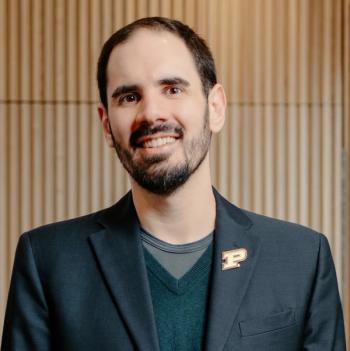
Ji-Xin Cheng is pushing coherent Raman microscopy toward a threshold once thought unreachable: detecting and characterizing single molecules with chemical specificity, while charting a course for the technology to move from the lab bench into clinics and industry.
At the upcoming SciX Conference in Sparks, Nevada, Cheng will be recognized for his research with the
The breakthrough that opened this path, Cheng explained, was recognizing that stimulated Raman absorption generates localized heat, which is a phenomenon that can be harnessed for photothermal detection. That insight led to stimulated Raman photothermal microscopy, which allows researchers to image a single protein molecule. A companion technique, photothermal modulation of interferometric scattering, goes further, probing a protein's secondary structure at the single-molecule level.
Looking ahead, Cheng said his laboratory's ongoing goal is to achieve nanomolar-level Raman imaging sensitivity while maintaining sub-micron spatial resolution. This combination would make the technology far more useful for studying biological samples at low concentrations.
But laboratory advances alone won't bring coherent Raman imaging into everyday clinical use, Cheng cautioned. The central obstacle to clinical translation, he said, is converting the technology's rich but complex vibrational spectra into diagnostic information that physicians can actually interpret and act on. Machine learning (ML) and artificial intelligence (AI), he suggested, are likely to play a critical role in bridging that gap, transforming raw spectroscopic data into actionable diagnostic signals.
Commercialization, Cheng added, hinges on two converging factors: a market significant enough to justify investment, and technology robust enough to be operated reliably by non-experts rather than specialists. That bar has already been cleared in some areas; coherent Raman systems are commercially available today through several companies, including Vibronix, which Cheng co-founded.
Together, Cheng's comments reveal a field undergoing significant change: one moving from proof-of-concept single-molecule imaging toward the harder, and arguably more consequential, work of making that sensitivity clinically interpretable and commercially durable.