
News|Articles|September 16, 2026
SciX 2026 Preview: The Charles Mann Award for Applied Raman Spectroscopy
Author(s)Will Wetzel, Spectroscopy Staff
Listen
0:00 / 0:00
Key Takeaways
- FACSS created the Charles Mann Award to recognize sustained scientific and service contributions advancing applied Raman spectroscopy, including leadership within SciX programming and ASTM Raman subcommittee activities.
- Professor Charles Mann helped shape analytical Raman spectroscopy through foundational quantitative and chemometric work, broad applied studies, and influential publications, conference engagement, and standards development.
An upcoming interview with Ji-Xin Cheng, a Theodore Moustakas Distinguished Professor in Photonics and Optoelectronics at Boston University, will highlight his ongoing work in coherent Raman scattering microscopy.
Advertisement
This year, the SciX Conference will be held in Sparks, Nevada, from October 4–9, 2026.1 At the conference, attendees can once again expect an extensive Awards program, where young scientists, established spectroscopists, and graduate students are recognized for their contributions to analytical spectroscopy.1 One of the awards given out at SciX annually is the Charles Mann Award for Applied Raman Spectroscopy.
What is the Charles Mann Award for Applied Raman Spectroscopy?
The Charles Mann Award for Applied Raman Spectroscopy recognizes a scientist and researcher who has made significant contributions to the field through their research or through their dedication to Raman spectroscopy programming at SciX or the ASTM Raman subcommittee.2 This award was established by the Federation of Analytical Chemistry and Spectroscopy Societies (FACSS) back in 2002.2
The award commemorates Professor Charles "Charlie" Mann of Florida State University, whose research spanned fundamental areas like chemometrics, databases, and quantitative Raman analysis, as well as applied work in polymers and inorganics.2 Alongside colleague Tom Vickers, Mann helped shape
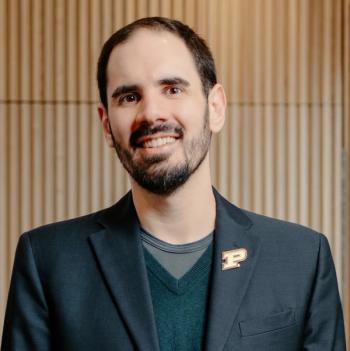
This year’s recipient of the Charles Mann Award is Ji-Xin Cheng, who is a Theodore Moustakas Distinguished Professor in Photonics and Optoelectronics at Boston University.
Why is Cheng being recognized at SciX 2026?
Ji-Xin Cheng is the Theodore Moustakas Distinguished Professor in Photonics and Optoelectronics at Boston University. A University of Science and Technology of China (USTC) graduate, Cheng began his faculty career at Purdue University in West Lafayette, Indiana, in 2003 after completing a postdoc at Harvard University.2
Over the course of his career this far, Cheng has conducted significant research in chemical imaging and confocal Raman scattering microscopy. He has authored 360 peer-reviewed publications (h-index of 110), edited two books, and holds over 30 patents, with more than $50 million in funding from the National Institute of Health (NIH), the National Science Foundation (NSF), the Department of Defense (DoD), the Department of Education (DoE), and private foundations.2 Cheng has also co-founded Vibronix Inc. and Photothermal Spectroscopy Corp, and his innovations, which include the Ultraview and mIRage chemical microscopes, are used worldwide.2 Cheng is also currently a fellow of National Academy of Inventors (NAI), American Institute for Medical and Biological Engineering (AIMBE), and Optica.2
What are some of the latest research projects Cheng and his team are conducting?
In a Nature Methods paper, Cheng and his research team introduced a new technique called fluorescence-detected mid-infrared photothermal microscopy (FILM).3,4 This technique is designed to enable chemical imaging of individual lysosomes in living cells for the first time.3 Combining the FILM technique with fluorescent labeling, boxcar demodulation denoising, and
As part of our ongoing coverage of the SciX 2026 conference, Spectroscopy Magazine sat down with Cheng in an exclusive interview before the conference to ask him about his research. Cheng discusses the key insights and unexpected experimental turns that shaped his research, the challenges of translating label-free chemical bond imaging from physics laboratories into clinical diagnostic tools, and the technical breakthroughs enabling Raman contrast at femtoliter-scale resolution. He also shares his perspective on when academic advances are ready for commercial translation, offering advice for researchers weighing that transition into entrepreneurship.
Our conversation with Cheng will be published in late September before the SciX Conference commences on October 4th.
References
- Wetzel, W.; Spectroscopy Staff. Previewing the Upcoming 2026 SciX Conference. Spectroscopy Online, 2026.
https://www.spectroscopyonline.com/view/previewing-the-upcoming-2026-scix-conference (accessed September 14, 2026). - SciX Conference, Charles Mann Award for Applied Raman Spectroscopy. SciX Conference, 2026.
https://www.scixconference.org/CHARLES-MANN-AWARD/ (accessed September 14, 2026). - Kleber, A. J. Mapping the Internal. Boston University, 2026.
https://www.bu.edu/eng/2026/05/28/mapping-the-internal/ (accessed September 14, 2026). - Ao, J.; Yin, J.; Lin, H.; Ding, G.; Guan, Y.; Savini, M.; Weinberg, B.; Dong, D.; Xia, Q.; Guo, Z.; Liu, B.; Gao, B.; Cheng, J.-X.; Wang, M. C. FILM: Mapping Organellar Metabolism by Mid-infrared Photothermal-modulated Fluorescence. Nat. Methods 2026, 23, 1196–1206. DOI:
10.1038/s41592-026-03090-1
Advertisement
Related Content
Advertisement
Advertisement
Advertisement
Trending on Spectroscopy Online
1
From Better Spectra to Better Decisions: Five Trends Highlighted at ICORS 2026
2
Tutorial Tuesday: Characterizing Polycyclic Aromatic Hydrocarbons Using Infrared Microspectroscopy
3
Pathways in Spectroscopy: What Scientists Can Offer Clients as a Consultant
4
Vanishing Spectrometers: How Near-Infrared Instrumentation Got Small, Smart, and Everywhere
5