SPEC PerkinElmer 11.10
|Webcasts|April 28, 2021

Heavy Metals in Baby Food

Author(s)Agilent

***Live: Wednesday, April 28, 2021 at 11am EDT | 8am PDT | 4pm BST | 5pm CEST Learn how to analysis baby food samples using the FDA-approved methodology (EAM 4.7) for microwave digestion and elemental analysis. As well as tips and tricks to improve analysis, speed sample prep, and reduce retesting. ***On demand available after airing until Apr. 28, 2022***

Register free: http://www.spectroscopyonline.com/spec_w/metals

Event Overview:

Recent news about heavy metals detected in baby food has many parents worried and with many questions. Join Agilent and CEM for an educational seminar on the preparation and analysis of baby foods by inductively coupled plasma–mass spectrometry (ICP-MS) using FDA Method EAM 4.7. Data from a market basket study on store bought baby foods will be presented. CEM will provide tips and techniques to prepare a wide range of baby foods in a single batch including acid selection, vessels, and programs. Agilent will demonstrate elemental analysis by ICP-MS and highlight new software features.

Key Learning Objectives:

  • Review FDA method EAM 4.7 for sample preparation and elemental analysis by ICP-MS
  • Learn how to perform microwave digestion of 40 baby food and food standard reference material (SRM) samples and blanks in a single batch
  • Learn how to best run your ICP-MS for food analysis, and how to have confidence in your data with new software features

Speakers: Jenny Nelson, Applications Scientist, Agilent Technologies

Elaine Hasty, Senior Applications Chemist, CEM Corporation

Time and date: Wednesday, April 28, 2021 at 11am EDT | 8am PDT | 4pm BST | 5pm CEST

On demand available after airing until Apr. 28, 2022.

Sponsor: Agilent

Register free: http://www.spectroscopyonline.com/spec_w/metals


Related to this article

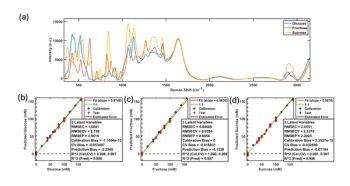
Monitoring Sugar Consumption and Ethanol Production During Yeast Fermentation Using a Raman Plate Reader and Multivariate Analysis
This column shows that a Raman plate reader paired with partial least squares regression can simultaneously quantify glucose, fructose, sucrose, and ethanol in yeast fermentation samples, using turbidity-matched calibration standards to correct for yeast-induced turbidity, and offers a rapid, label-free, high-throughput method for tracking sugar consumption and ethanol production in strain screening, media optimization, and process development.
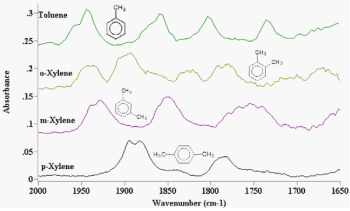
Highly Substituted Benzene Rings—The Rest of the Story II: Spectra
This column, the second installment on highly substituted benzene rings, shows that tri- and tetra-substituted substitution patterns can be distinguished by whether the ring bending peak is present and by the position of the in-phase aryl C-H wagging peak, which shifts according to how many adjacent hydrogens the ring carries.
Healthcare administrator reviewing an insurance policy schedule with a stethoscope on a clipboard, health insurance coverage, medical underwriting, prior authorization, and patient claims processing. | Image Credit: Joi_studio - stock.adobe.com
In a SciX interview, Marc Porter covered a lot of ground, from a student-driven pivot into immunoassays to a baseball analogy for Stokes and anti-Stokes scattering, and shares the open questions he is still chasing.