|Articles|December 1, 2013

Spectroscopy

  • Spectroscopy-12-01-2013
  • Volume 28
  • Issue 12

Horiba Scientific

HORIBA Scientific is the world-leading manufacturer of high performance optical spectroscopic instrumentation and photonics components. Our products offer unsurpassed sensitivity, precision, performance, and capabilities.

Company Description

HORIBA Scientific is the world-leading manufacturer of high performance optical spectroscopic instrumentation and photonics components. Our products offer unsurpassed sensitivity, precision, performance, and capabilities.

HORIBA Scientific offerings encompass elemental analysis, fluorescence, forensics, GDS, ICP, particle characterization, Raman, spectroscopic ellipsometry, sulfur-in-oil, water quality, XRF, and OEM spectrometers. We also provide components, custom and OEM solutions, and worldwide support.

Our global team is dedicated to providing researchers with the highest quality products and solutions by integrating and aligning HORIBA's core strengths of scientific research, development, applications, sales, service, and support.

Prominent absorbed brands include Jobin Yvon, IBH, SPEX, Instruments S.A., ISA, Dilor, Sofie, SLM, and Beta Scientific.

Chief Spectroscopic Techniques Supported

  • Atomic emission spectroscopy (ICP, GD-AES)

  • Ellipsometry and thin film analysis

  • Fluorescence spectroscopy and microscopy

  • Forensic science

  • Mass spectrometry (GD TOF-MS)

  • Optical spectroscopy

  • Raman spectroscopy and microscopy

  • SPRi

Markets Served

  • Academia

  • Bio

  • Chemicals

  • Environmental

  • Forensic science

  • Government

  • Homeland security

  • Life sciences

  • Medical

  • Metals

  • Nanotechnology

  • OEM

  • Optoelectronics

  • Paint/pigments

  • Petroleum

  • Pharmaceuticals

  • Photovoltaics

  • Plastics, polymers, etc.

  • Semiconductors

  • WEEE/RoHS

Major Products/Services

  • Elemental analyzers (C/S/O/N/H) and sulfur analyzers for petrochemicals

  • Ellipsometers

  • End-point detectors

  • Fluorescence

  • Forensic light sources and imaging devices

  • Glow Discharge - OES

  • Glow Discharge TOF-MS

  • Gratings

  • Hyperspectral imaging

  • ICP-AES

  • Lifetime fluorescence

  • Microscopy

  • OEM components

  • Particle size analyzers

  • Process control

  • Raman & FT-IR

  • Spectrographs

  • Spectrometers and CCDs

  • Spectroscopic training and support

  • Surface plasmon resonance imaging (SPRi)

  • TCSPC

  • VUV equipment

  • X-ray fluorescence

Facilities

HORIBA Scientific is part of the HORIBA Group, with manufacturing facilities in Edison, New Jersey, as well as in France and Japan.

Sales, service, and applications facilities are located around the world.

HORIBA Scientific

3880 Park Avenue

Edison, NJ 08820

TELEPHONE

(732) 494-8660

FAX

(732) 549-5125

E-MAIL

[email protected]

WEB SITE

www.horiba.com/scientific

NUMBER OF EMPLOYEES

700

Elsewhere: 5000

YEAR FOUNDED

1819

Articles in this issue

almost 13 years ago

PIKE Technologies

almost 13 years ago

Amptek, Inc.

almost 13 years ago

Ocean Optics

almost 13 years ago

Photonis USA

almost 13 years ago

Shimadzu Scientific Instruments

almost 13 years ago

Milestone, Inc.

almost 13 years ago

Savillex Corporation

almost 13 years ago

WITec GmbH

Related to this article

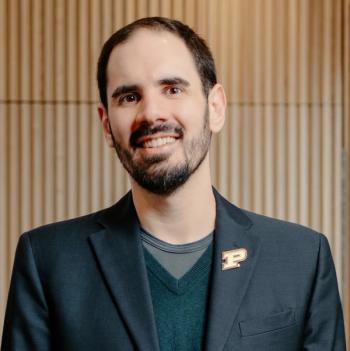
Brandon E. Boor is the Dr. Margery E. Hoffman Associate Professor in the Lyles School of Civil and Construction Engineering at Purdue University. | Photo Credit: © Brandon Boor.
In the second part of our interview with Brandon Boor of Purdue University, he discusses how his team controls experimental variables during cleaning experiments in order to obtain interpretable data.
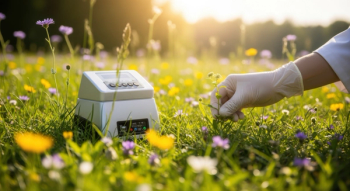
Scientist With Portable Spectrometer in Natural Field Setting ©  By Tika -chronicles-stock.adobe.com
The bulky bench-top NIR spectrometer is quietly being dismantled and rebuilt as a wafer-scale photonic chip, a self-calibrating algorithm, and a sensor small enough to ride in a shirt pocket. What once demanded a grating, a moving mirror, and a climate-controlled lab now fits inside a handheld module, a bioreactor probe, or a drone payload, and it increasingly figures out what it is looking at on its own.
Sizing Up the Nanoscale: Measuring Nanocluster Aerosol in Indoor Air
In the first part of a multi-part Q&A, Brandon Boor, the Dr. Margery E. Hoffman Associate Professor in the Lyles School of Civil and Construction Engineering at Purdue University, describes the instrumentation and methodology behind measuring nanoparticle size distributions at the nanocluster scale (1–3 nm) and outlines the technical challenges of acquiring reliable, real-time data at these dimensions.