|Webcasts|August 21, 2020

Injectable Implants: Manufacturing Advanced Medicines with Hot-Melt Extrusion

The promises of the digital lab are enticing but getting there can seem daunting. The good news is that you can start today. It’s simply about implementation, and not waiting for innovation. Live: Tuesday, Sept. 22, 2020 at 11am EDT| 8am PDT| 4pm BST| 5pm CEST On demand available after airing until Sept. 22, 2021

Register free: https://www.pharmtech.com/pt_w/injectable_implants

Event Overview:

Injectable implants offer several advantages as drug delivery systems including site-specific release and high patient compliance. Hot-melt extrusion (HME) is an ideal method for the manufacture of such implants because it can be scalable from early R&D to commercial manufacturing, often with a single instrument. HME can also be done in a continuous manufacturing environment. Watch this webcast for an overview of implant types, materials, and scale-up from development to full-scale manufacturing.

Key Learning Objectives:

  • Understand implant types and key applications
  • Learn how HME is used to produce injectable implants
  • See how instruments can be setup from R&D through commercial manufacturing

Speaker: Dirk Leister, Manager, Applications & Customer Support for Extrusion and Compounding, Thermo Fisher Scientific

Time and date: Tuesday, Sept. 22, 2020 at 11am EDT| 8am PDT| 4pm BST| 5pm CEST

On demand available after airing until Sept. 22, 2021

Sponsor: Thermo Fisher Scientific

Register free: https://www.pharmtech.com/pt_w/injectable_implants

Related to this article

Celebrating National Forensic Science Week
This interactive e-book celebrates National Forensic Science Week by highlighting the vital role of spectroscopy in modern criminal investigations and emphasizing how technological innovation is making forensic analysis faster, safer, and more reliable for courtroom testimony.
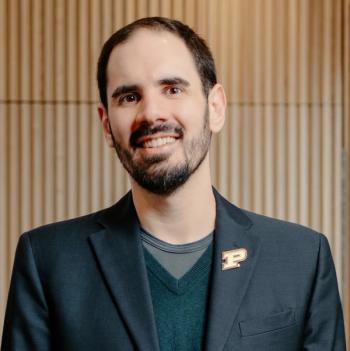
Brandon E. Boor is the Dr. Margery E. Hoffman Associate Professor in the Lyles School of Civil and Construction Engineering at Purdue University. | Photo Credit: © Brandon Boor.
In the second part of our interview with Brandon Boor of Purdue University, he discusses how his team controls experimental variables during cleaning experiments in order to obtain interpretable data.
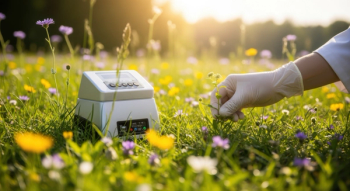
Scientist With Portable Spectrometer in Natural Field Setting ©  By Tika -chronicles-stock.adobe.com
The bulky bench-top NIR spectrometer is quietly being dismantled and rebuilt as a wafer-scale photonic chip, a self-calibrating algorithm, and a sensor small enough to ride in a shirt pocket. What once demanded a grating, a moving mirror, and a climate-controlled lab now fits inside a handheld module, a bioreactor probe, or a drone payload, and it increasingly figures out what it is looking at on its own.