SPEC PerkinElmer 11.10
|Webcasts|August 20, 2020

Streamline your raw materials identification process using handheld solution for through container handheld ID verification

Author(s)Agilent

This webinar will describe raw material verification testing through transparent and non-transparent packaging using the new Agilent Vaya handheld Raman system. True through-barrier analysis removes the need for sampling, increasing testing throughput without increasing costs—from clear glass vials to multilayer paper sacks. Live: US & Europe Broadcast: Thursday, Oct.1, 2020 at 9am EDT| 2pm BST| 3pm CEST, US Broadcast: Thursday, Oct. 1, 2020 at 4pm EDT | 3pm CDT| 1pm PDT, Asia Pacific: Friday, Oct. 2, 2020 at 10:30am IST| 1pm CST| 2pm JST| 3pm AEST On demand available after airing until Oct. 2, 2021

Register free: http://www.spectroscopyonline.com/spec_w/raw_materials

Event Overview:

This webcast will describe raw material verification testing through transparent and non-transparent packaging using the new Agilent Vaya Raman system.

Vaya is the first handheld Raman spectrometer incorporating spatially offset Raman spectroscopy (SORS) technology for the quick identification of raw materials through containers. SORS reduces the need for sampling, saving cost and resources by testing incoming goods quickly in the warehouse. Vaya combines the capabilities of conventional Raman systems with SORS for maximum sample/container compatibility. This webinar will also cover the transformative implementation of Vaya in a warehouse and use it in a cGMP environment, sharing the financial impact of the handheld SORS system for manufacturing operations.

Key Learning Objectives:

  • Raw material identity verification through transparent and non-transparent containers removes the need for sampling, increasing testing throughput without increasing costs
  • The new handheld Vaya system, with true through-barrier SORS technology, works through most common containers - from clear glass vials to multilayer paper sack
  • Vaya improves current testing protocols—from low volume sampling to 100% ID testing
  • How to streamline an identification process with Vaya
  • How much cost can be reduced through the deployment of Vaya for Raw material Identification?
  • Compliance support on Vaya: 21 CFR Part 11, USP (<1120>, <1858>, <858>, <1225>) and EP 2.2.48, CP and JP

Speaker: Frederic Prulliere, Raman ID Product Manager, Agilent Technologies

Time and date: 

US & Europe Broadcast: Thursday, Oct. 1, 2020 at 9am EDT| 2pm BST| 3pm CEST

US Broadcast: Thursday, Oct. 1, 2020 at 4pm EDT | 3pm CDT| 1pm PDT

Asia Pacific: Friday, Oct. 2, 2020 at 10:30am IST| 1pm CST| 2pm JST| 3pm AEST

On demand available after airing until Oct. 2, 2021

Sponsor: Agilent

Register free: http://www.spectroscopyonline.com/spec_w/raw_materials


Related to this article

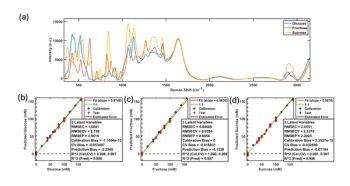
Monitoring Sugar Consumption and Ethanol Production During Yeast Fermentation Using a Raman Plate Reader and Multivariate Analysis
This column shows that a Raman plate reader paired with partial least squares regression can simultaneously quantify glucose, fructose, sucrose, and ethanol in yeast fermentation samples, using turbidity-matched calibration standards to correct for yeast-induced turbidity, and offers a rapid, label-free, high-throughput method for tracking sugar consumption and ethanol production in strain screening, media optimization, and process development.
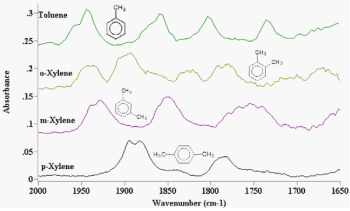
Highly Substituted Benzene Rings—The Rest of the Story II: Spectra
This column, the second installment on highly substituted benzene rings, shows that tri- and tetra-substituted substitution patterns can be distinguished by whether the ring bending peak is present and by the position of the in-phase aryl C-H wagging peak, which shifts according to how many adjacent hydrogens the ring carries.
Healthcare administrator reviewing an insurance policy schedule with a stethoscope on a clipboard, health insurance coverage, medical underwriting, prior authorization, and patient claims processing. | Image Credit: Joi_studio - stock.adobe.com
In a SciX interview, Marc Porter covered a lot of ground, from a student-driven pivot into immunoassays to a baseball analogy for Stokes and anti-Stokes scattering, and shares the open questions he is still chasing.