Jerome Workman, Jr.

Jerome Workman, Jr.

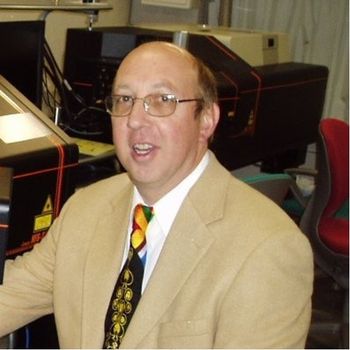
Jerome Workman, Jr. is former Senior Technical Editor of LCGC. He is on the Editorial Advisory Board of Spectroscopy and is the current Assoc. Editorial Director. He is the co-host of the Analytically Speaking podcast and has published multiple reference text volumes, including the three-volume Academic Press Handbook of Organic Compounds, the five-volume The Concise Handbook of Analytical Spectroscopy, the 2nd edition of Practical Guide and Spectral Atlas for Interpretive Near-Infrared Spectroscopy, the 2nd edition of Chemometrics in Spectroscopy, and the 4th edition of The Handbook of Near-Infrared Analysis. He is the recipient of the 2020 NYSAS Gold Medal Award (with Howard L. Mark). Mark and Workman have written their 250th Statistics and Chemometrics column for Spectroscopy. Direct correspondence to [email protected]

Articles by Jerome Workman, Jr.

Space planets background. Distant planetscape in cosmos with exoplanets. Concept art Generative ai | Image Credit: © sdecoret - stock.adobe.com

In a pioneering study published in Nature, researchers have presented their findings on the atmospheric properties of the exoplanet WASP-39b. Using data obtained from the JWST NIRISS instrument, the team successfully breaks model degeneracies and reveals intriguing insights into the exoplanet's heavy-element enhancement, carbon-to-oxygen ratio, potassium-to-oxygen ratio, and the presence of wavelength-dependent, non-grey clouds.

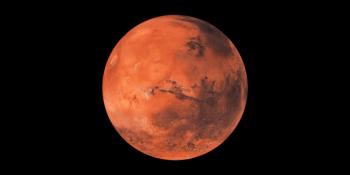
Mars red planet black background | Image Credit: © Martin - stock.adobe.com

A review article explores the significance of analyzing terrestrial analogues to enhance spectroscopic capabilities for Mars exploration. The review highlights key findings and lessons learned from studying terrestrial analogues, providing valuable insights for the development of spectroscopic systems in current and future missions to Mars.

Andreas Riedo of the Physics Institute at the University of Bern, the 2023 winner of the Emerging Leader in Atomic Spectroscopy Award, is using laser ablation–desorption ionization mass spectrometry (LIMS) to chemically analyze complex mineral surfaces found in space exploration.