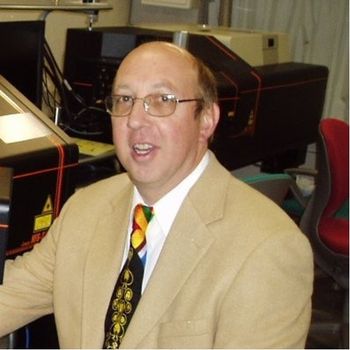
With more than four decades of experience, Larsen made significant contributions to the field of analytical chemistry.

Jerome Workman, Jr. is former Senior Technical Editor of LCGC. He is on the Editorial Advisory Board of Spectroscopy and is the current Assoc. Editorial Director. He is the co-host of the Analytically Speaking podcast and has published multiple reference text volumes, including the three-volume Academic Press Handbook of Organic Compounds, the five-volume The Concise Handbook of Analytical Spectroscopy, the 2nd edition of Practical Guide and Spectral Atlas for Interpretive Near-Infrared Spectroscopy, the 2nd edition of Chemometrics in Spectroscopy, and the 4th edition of The Handbook of Near-Infrared Analysis. He is the recipient of the 2020 NY/NJ SAS Gold Medal Award (with Howard L. Mark). Mark and Workman have written over 250 Statistics and Chemometrics columns for Spectroscopy. Direct correspondence to jworkman@mjhlifesciences.com
With more than four decades of experience, Larsen made significant contributions to the field of analytical chemistry.

A study published in Scientific Reports has given intricate details into the production and composition of Roman Egyptian blue pigment. Using advanced Raman microspectroscopy, researchers explored pigment balls and murals from ancient Swiss cities, uncovering evidence of raw material provenance, crystal lattice disorder, and the formation of a copper-bearing green glass phase, revealing the sophisticated techniques employed by Roman artisans.
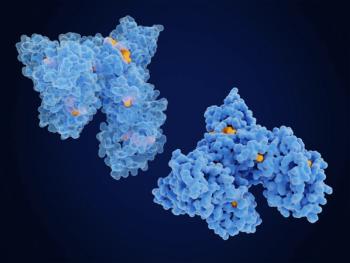
Researchers from Humboldt-Universität in Berlin have utilized ultraviolet resonance Raman (UVRR) spectroscopy to differentiate between bovine serum albumin (BSA) and human serum albumin (HSA) based on their similar structures and amino acid composition. By comparing the UVRR spectra of the proteins with those of specific amino acids, they have identified distinctive features that allow for accurate discrimination and provide insights into the secondary structure and binding sites of serum albumins.

In a pioneering study published in Nature, researchers have presented their findings on the atmospheric properties of the exoplanet WASP-39b. Using data obtained from the JWST NIRISS instrument, the team successfully breaks model degeneracies and reveals intriguing insights into the exoplanet's heavy-element enhancement, carbon-to-oxygen ratio, potassium-to-oxygen ratio, and the presence of wavelength-dependent, non-grey clouds.
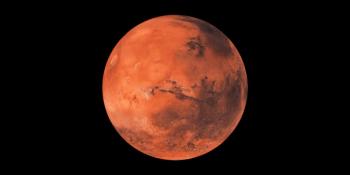
A review article explores the significance of analyzing terrestrial analogues to enhance spectroscopic capabilities for Mars exploration. The review highlights key findings and lessons learned from studying terrestrial analogues, providing valuable insights for the development of spectroscopic systems in current and future missions to Mars.

A sample library of selected references discussing the application of artificial intelligence (AI) in analytical chemistry and molecular spectroscopy is presented.

We interviewed an AI program (ChatGPT) for Spectroscopy asking questions about AI and its role in various applications for vibrational and atomic spectroscopy, including data analysis.

Are you intrigued by artificial intelligence, but unsure what it really means for analytical chemistry? Read on.

Andreas Riedo of the Physics Institute at the University of Bern, the 2023 winner of the Emerging Leader in Atomic Spectroscopy Award, is using laser ablation–desorption ionization mass spectrometry (LIMS) to chemically analyze complex mineral surfaces found in space exploration.


We provide a scorecard of chemometric techniques used in spectroscopy. The tables and lists of reference sources given here provide an indispensable resource for anyone seeking guidance on understanding chemometric methods or choosing the most suitable approach for a given analysis problem.
Spectroscopy
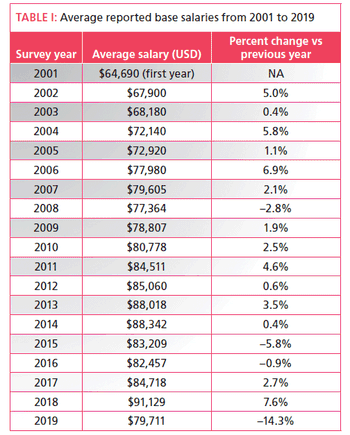
Our annual salary and employment survey looks at salaries, workload, job satisfaction, and the overall job market for spectroscopists. This year, we had some surprising results.