

A new study led by Ayanjeet Ghosh of the University of Alabama presents a transformative approach to analyzing infrared (IR) imaging data, with promising implications for neurodegenerative disease research.

Will Wetzel is a Senior Editor for Spectroscopy magazine. He specializes in creating engaging, high-value content for diverse audiences. His role involves driving digital growth through KPI assessments, social media strategies, and innovative content development.
Wetzel is also a sports writer and commentator, serving as a freelance writer for several sports websites, including FanSided. He currently serves as the host, producer, and creator of “The Inside Fastball,” a LinkedIn newsletter that discusses topical issues in Major League Baseball (MLB). Outside of work, Wetzel volunteers with the Nashville Humane Association and Habitat for Humanity. His stated goal is to help build one house with Habitat for Humanity in every U.S. state.
A new study led by Ayanjeet Ghosh of the University of Alabama presents a transformative approach to analyzing infrared (IR) imaging data, with promising implications for neurodegenerative disease research.

Researchers from James Cook University highlight critical gaps and future directions for developing a large-scale, machine-learning-based satellite spectroscopy system to monitor sugarcane health and detect diseases and pests.

In a press release on Tuesday May 6th, 2025, Waters Corporation, an analytical instrument, separations technology, and software manufacturer, announced several updates to its Empower software.
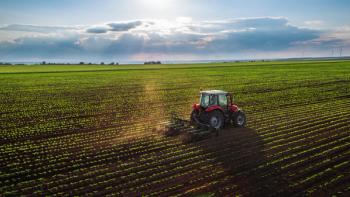
A recent review article highlights the promise of near-infrared (NIR) spectroscopy for on-farm analysis of liquid organic manure.

In this edition of “Inside the Laboratory,” Johanna Nelson Weker of SLAC National Accelerator Laboratory discusses her laboratory’s work in battery analysis. In the final part of our interview, Weker continues our discussion of battery cell geometries and why computed laminography is a good technique to use for this purpose.

A new study published in Geoderma Regional by J. A. Arias-Rios and colleagues at IFAB demonstrates that near-infrared (NIR) spectroscopy is a rapid, cost-effective tool for assessing soil and tree traits critical to forest ecosystem monitoring and management.
In Part 3 of our conversation with Johanna Weker of SLAC National Accelerator Laboratory, she discusses battery cell geometry configurations and how they inform battery design.
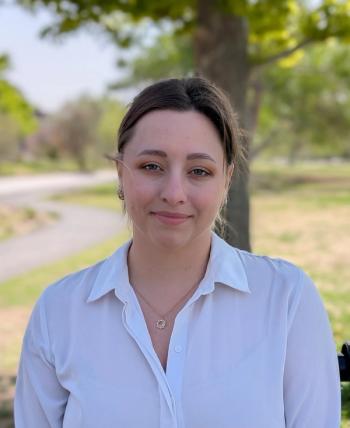
In this extended Q&A interview, we sit down with Kelsey Williams, a postdoctoral researcher at Los Alamos National Laboratory (LANL), who is working on planetary instrumentation using spectroscopic techniques such as laser-induced breakdown spectroscopy (LIBS) and laser ablation molecular isotopic spectrometry (LAMIS). In the final part of our conversation with Williams, she discusses how laser-based spectroscopic techniques might be used in the future to advance space exploration.
In this extended Q&A interview, we sit down with Kelsey Williams, a postdoctoral researcher at Los Alamos National Laboratory (LANL), who is working on planetary instrumentation using spectroscopic techniques such as laser-induced breakdown spectroscopy (LIBS) and laser ablation molecular isotopic spectrometry (LAMIS). In Part III, Williams goes into detail about ChemCam and SuperCam and how LIBS is used in both these instruments.
In this extended Q&A interview, we sit down with Kelsey Williams, a postdoctoral researcher at Los Alamos National Laboratory (LANL), who is working on planetary instrumentation using spectroscopic techniques such as laser-induced breakdown spectroscopy (LIBS) and laser ablation molecular isotopic spectrometry (LAMIS). In Part II of our conversation with Williams, she talks about the potential of mass spectrometry (MS) in space exploration applications.
Top articles published this week include interviews from our National Space Day content series, a news story about satellite-based spectroscopy, and an interview about battery analysis conducted at SLAC National Accelerator Laboratory.
Join us in celebrating National Space Day! Today, Spectroscopy magazine is teaming up with the Society for Applied Spectroscopy (SAS) to honor National Space Day and highlight the latest advancements in space exploration.
In honor of National Space Day, we interviewed Kelsey Williams, who is a postdoctoral researcher at Los Alamos National Laboratory (LANL) working on planetary instrumentation using spectroscopic techniques such as laser-induced breakdown spectroscopy (LIBS) and laser ablation molecular isotopic spectrometry (LAMIS). In Part I of our interview with Williams, she discusses how her background led her to her current position at LANL.

The Perseverance rover is equipped with many cameras and different instruments to conduct scientific experiments on Mars, including several spectrometers. We describe some of them here.
In a new study published in Measurement, researchers explored the power of low-frequency Raman spectroscopy for non-invasive drug analysis.
In Part 2 of our video interview with Johanna Weker of SLAC National Accelerator Laboratory, she discusses nutrient recovery systems and how X-ray techniques can improve them.
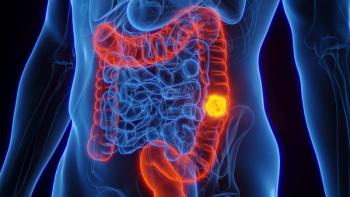
Researchers from Université de Tours have shown that serum mid-infrared spectroscopy (MIRS) may serve as a promising prognostic tool for identifying high-risk metastatic colorectal cancer patients undergoing first-line bevacizumab-based chemotherapy.

Researchers at Zhejiang University have developed an advanced optical modeling approach using spectroscopic ellipsometry, significantly enhancing the non-destructive analysis of amorphous silicon oxide thin films.

A recent study conducted by scientists in Brazil saw the development of a quick, non-invasive method to diagnose endometriosis.

"Inside the Laboratory" is a joint series with LCGC and Spectroscopy profiling analytical scientists and their research groups at universities worldwide. This series spotlights the current chromatographic and spectroscopic research their groups are conducting and the importance of their research in analytical chemistry and specific industries. In this edition of “Inside the Laboratory,” Johanna Nelson Weker of SLAC National Accelerator Laboratory discusses her laboratory’s work in battery analysis.

Researchers at Qiqihar Medical University have developed a dual-channel fluorescent probe, PYL-NBD, that enables highly sensitive, rapid, and selective detection of biothiols in food, pharmaceuticals, and living organisms.

A new tutorial provides a step-by-step, hands-on guide to using multivariate data analysis tools like PCA and PLS to extract meaningful insights from complex pharmaceutical data sets.
Top articles published this week include a preview of our upcoming content series for National Space Day, a news story about air quality monitoring, and an announcement from Metrohm about their new Midwest office.
Researchers from Tsinghua University and Qinghai University have uncovered how specific ambient gas properties affect the stability and accuracy of laser-induced breakdown spectroscopy (LIBS) signals.


Researchers from SGF International and Geisenheim University combine 1H NMR and HPLC-DAD to elevate juice quality assurance.

A new study published in Applied Food Research demonstrates that near-infrared spectroscopy (NIRS) can effectively detect subclinical bovine mastitis in milk, offering a fast, non-invasive method to guide targeted antibiotic treatment and support sustainable dairy practices.


Here is a collection of recent studies that used spectroscopic techniques in environmental analysis.