

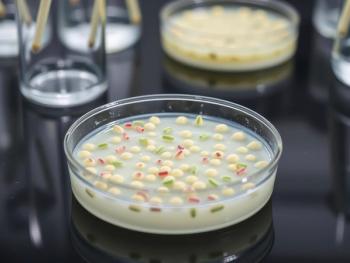
Jiangxi Agricultural University researchers use AI and vis-NIRS to predict meat quality and freezing duration with high accuracy.

Will Wetzel is a Senior Editor for Spectroscopy magazine. He specializes in creating engaging, high-value content for diverse audiences. His role involves driving digital growth through KPI assessments, social media strategies, and innovative content development.
Wetzel is also a sports writer and commentator, serving as a freelance writer for several sports websites, including FanSided. He currently serves as the host, producer, and creator of “The Inside Fastball,” a LinkedIn newsletter that discusses topical issues in Major League Baseball (MLB). Outside of work, Wetzel volunteers with the Nashville Humane Association and Habitat for Humanity. His stated goal is to help build one house with Habitat for Humanity in every U.S. state.
Jiangxi Agricultural University researchers use AI and vis-NIRS to predict meat quality and freezing duration with high accuracy.

Researchers from Jiangsu University and Zhejiang University of Water Resources and Electric Power have developed a transfer learning approach that significantly enhances the accuracy and adaptability of NIR spectroscopy models for detecting mycotoxins in cereals.

A recent study conducted by researchers from the Korea Institute of Fusion Energy and Jeonbuk National University presented a novel technique for analyzing lithium isotopes in liquid samples.

Top articles published this week include a tribute to John Albert Reffner, who was known for his work in infrared microspectroscopy, an application of Raman spectroscopy to improve recycling practices, and an Icons of Spectroscopy column on Karl Norris, known as the founder of near-infrared (NIR) spectroscopy.

In this brief segment from my full-length conversation with Monica Arienzo of the Desert Research Institute, she discusses the important key findings of her study.

In this brief segment from my full-length conversation with Monica Arienzo of the Desert Research Institute, she discusses the important key findings of her study.
In this brief segment from my full-length conversation with Monica Arienzo, who was the lead author of this study, she discusses whether there was a correlation between the different types of litter and the polymer type.

In this brief segment from my full-length conversation with Monica Arienzo, she explains why ATR FT-IR spectroscopy was the ideal technique of choice for her study characterizing polymers from the litter found on the lakebed of Lake Tahoe.

In the lead up to Earth Day 2025, we revisit an interview conducted with Monica Arienzo that discusses how ATR-FT-IR spectroscopy was used to classify polymers in plastic litter types found in Lake Tahoe back in 2023.

A new study published in Spectrochimica Acta Part A by Dominik Heger and colleagues at Masaryk University reveals that phenol's photophysical properties change significantly when frozen, potentially enabling its breakdown by sunlight in icy environments.

Researchers at Delft University of Technology have developed a novel method using single compound spectra to enhance the transferability and accuracy of Raman spectroscopy models for real-time fermentation monitoring.

Researchers from Gifu Pharmaceutical University and Gifu University Hospital unveil a novel polaprezinc (PLZ) mucoadhesive film designed to replace painful lozenges for cancer patients.

A recent study introduces a new development in cancer research using Raman spectroscopy.

A recent study demonstrated the utility of Raman spectroscopy and machine learning (ML) algorithms to classify plastic types found in waste of electric and electronic equipment (WEEE) streams.
Top articles published this week include an interview about flow imaging microscopy, a news story on fiber optics and electric vehicles, and a recap of a study that explored the use of micro-particle-induced X-ray emission (micro-PIXE) spectroscopy to trace urban and indoor air pollution sources in India.

On April 9th, Marama Labs, a scientific instrument company with offices in Wellington, New Zealand, and Dublin, Ireland, announced in a press release the launch of its new CloudSpec instrument.
A recent study by Southeast University researchers presented a cost-effective, high-accuracy solution for pharmaceutical quality control.

A recent study from Chinese researchers sheds light on protein unfolding and hydration structure dynamics in hydrogels, with implications for drug delivery and biomedical applications.

A new study recently demonstrated how micro-PIXE spectroscopy can effectively trace the elemental sources of air pollution in urban and indoor environments in India.

A new study highlights the potential of Raman spectroscopy for distinguishing between bee and wasp venom-based therapies from different manufacturers.

Researchers in China have developed a lightweight deep learning system for rapid, non-destructive analysis of wheat flour composition.

Researchers in China have developed a rapid, non-destructive Raman spectroscopy method that accurately detects active components in complex drug formulations by combining advanced algorithms to eliminate noise and fluorescence interference.

Researchers have demonstrated that heat treatment significantly enhances the corrosion resistance of additively manufactured TC4 titanium alloy by transforming its microstructure, offering valuable insights for aerospace applications.
Top articles published this week include several interviews with key opinion leaders on various topics including advanced mass spectrometry (MS) technologies in studying diseases, microplastic detection, and interpreting Raman spectra.

A study published in Sustainability by Giuseppe Bonifazi and his team at Sapienza University of Rome demonstrates how short-wave infrared (SWIR) spectroscopy combined with machine learning offers a noninvasive, accurate, and sustainable method for detecting asbestos in various materials.

A new study published utilizes advanced analytical techniques to validate the safety, quality, and health benefits of maifanitum, confirming its suitability for wellness applications.

Recently, we spoke to Tom Metz of the Pacific Northwest National Laboratory (PNNL), whose career has focused on molecular measurement science using mass spectrometry (MS).

A new study published in Talanta introduces SYSPECTRAL, a portable multi-spectroscopic system that can conduct non-invasive, in situ chemical analysis of cultural heritage materials by integrating LIBS, LIF, Raman, and reflectance spectroscopy into a single compact device.

Tom Metz of the Pacific Northwest National Laboratory spoke with us about his work using about using advanced mass spectrometry (MS) to study Ebola in Sierra Leone in 2015.