Application Notebook-02-11-2011

i1-713398-1408621869646.jpg

Application Notebook

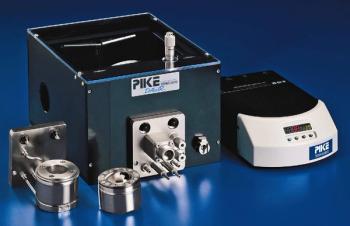
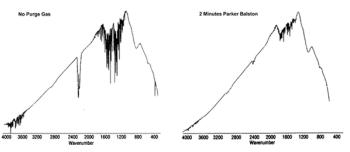
Fourier transform infrared (FT-IR) spectrometers provide spectra in less time than scanning systems, but water vapor and/or CO2 in the sample chamber leads to additional peaks that may obscure important information. These interferences can be eliminated by sealing the sample chamber and purging with dry, CO2 free air (purge gas) or nitrogen for a short period of time.
Application Notebook

After weathering the economic downturn of 2009, the analytical instrumentation industry's business appears to have made a U-turn in 2010, primarily due to the burgeoning requirements of the life sciences and pharmaceutical industries and substantial demands from the chemical and petrochemical industries, in addition to growing environmental concerns. The analytical instrumentation industry managed the economic downturn better than most other industries even though some of its primary revenue streams, such as the replacement market, were hurt by procurement postponements.

i1-713395-1416911715735.jpg

Application Notebook

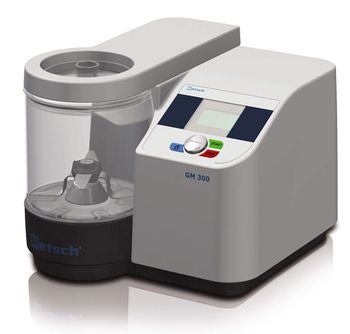
Fat and other nutritional values can easily be determined by NIR analysis. However a proper sample preparation beforehand is essential for a correct result.

i1-713396-1408621876950.jpg

Application Notebook

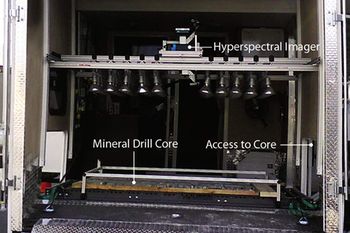
Photonic Knowledge, Inc., a spin-off of Photon etc., introduces the Core Mapper?, a hyperspectral imager that produces instantaneous, precise in situ mineralogy, lithology, and alteration mapping. This unique patented technology answers the increasing demand of the mining industry for better exploration tools.

i4-713409-1408621805394.jpg

Application Notebook

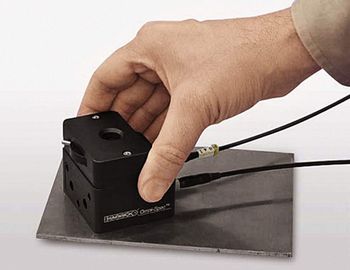
The application of FT-IR spectroscopy in quality assurance and quality control has largely been limited to laboratory efforts - bringing the samples to the instrument located on a benchtop in a lab. The advent of handheld analyzers such as A2 Technologies' Exoscan system, enables FT-IR to move from the lab to analyses at the sample site.

i1-713401-1408621858596.jpg

Application Notebook

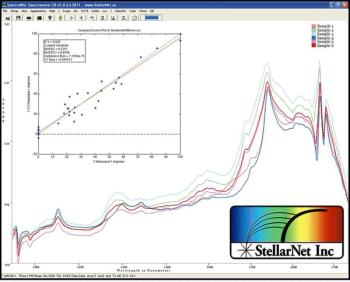
Near-infrared spectroscopy (NIRS) is a powerful technique for rapid and nondestructive material analysis. Scientific breakthroughs over the past several decades have made NIRS one of the most powerful tools for research, especially in industries such as food and drug, chemical, oil and gas, and plastics. This technique has mainly been limited to nonportable applications due to instrument size, fragility, and cost.

i4-713402-1408621850463.jpg

Application Notebook

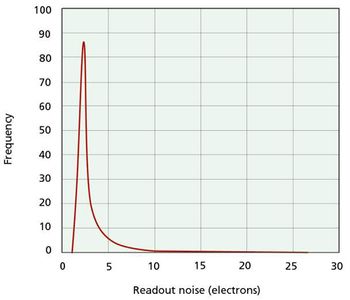
Starting in the 1980s and continuing today, there have been large improvements in charge-coupled devices (CCDs), driven to a large extent by the needs of both the military and the scientific community consisting of astronomers, chemists, and biologists. This resulted in technologies such as back thinning to increase UV and near-infrared (NIR) sensitivity, deep depletion to increase NIR sensitivity, as well as the direct detection of X-rays.

i4-713411-1408621790028.jpg

Application Notebook

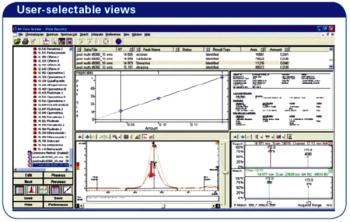
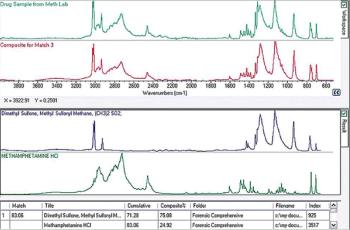
Infrared analysis of seized drugs is underutilized in many forensic laboratories owing to the ambiguous results produced by samples containing a mixture of compounds. The use of a patented multi-component search algorithm can help overcome the limitations of infrared for the identification of drugs in mixture samples.

Application Notebook

The onset of nanotechnology and targeted therapy methods for a number of pathologies has made it increasingly more difficult to image effectively in the medical field. With that being said, the inception of quantum dots and the improvements to optical filters has made this once daunting task a common practice.

i1-713399-1408621866593.jpg

True Surface Microscopy

Application Notebook

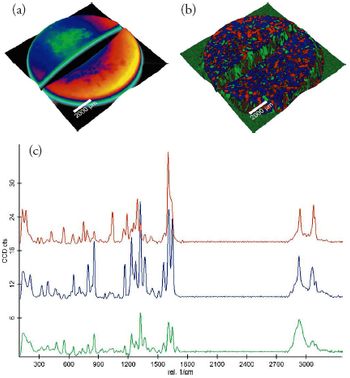
Confocal Raman imaging opened the door for many applications in Raman spectroscopy and imaging that were previously unavailable for measurement with conventional (non-confocal) Raman methods. However, high confocality always results in a high focus sensitivity and this can make measurements difficult with rough or inclined samples.

i1-713404-1408621835035.jpg

Application Notebook

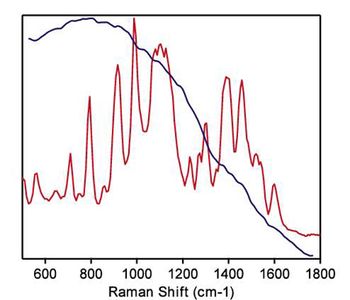
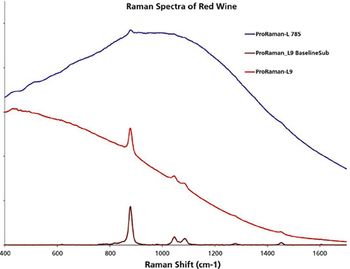
In recent years, the spectroscopy community has observed rapid development of Raman instrumentation and its usefulness in a variety of applications. Routine Raman analysis with 785 nm excitation has served well for the great majority of industrial applications and has become the most favored instrument configuration.