
In a recent study from Cairo University, researchers examined fixed-dose combination drug formulations using chemometrics and artificial neuron networks (ANNs).
In a recent study from Cairo University, researchers examined fixed-dose combination drug formulations using chemometrics and artificial neuron networks (ANNs).

A recent study from the Southern University of Science and Technology proposes a new Raman spectral preprocessing scheme based on self-supervised learning (RSPSSL).
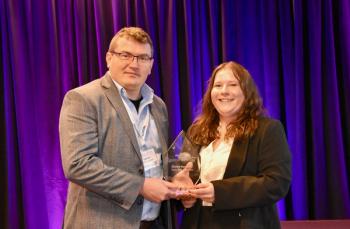
Nominate a candidate for the 2024 Emerging Leader in Molecular Spectroscopy Award!
The Gold Medal Award was established in 1952 to recognize outstanding contributions to the field of applied spectroscopy.

Among the products included in this estimate of the industry over the next seven years are fluorescence microarray scanners.

Pittcon highlighted how analytical scientists are exchanging research to tackle some of the world’s most pressing problems.
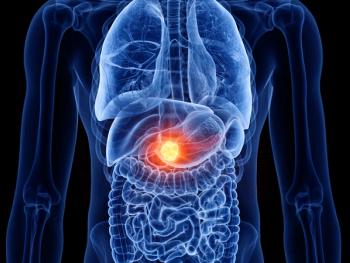
A recent study from Jagiellonian University examined how spectroscopic techniques can aid in the detection of pancreatic cancer.

Peter M. Carlson will take over as CEO of Spectral AI, replacing Wensheng Fan.

To study the effect of various extractants on the structure of peat humic acid, peat humic acid was extracted using NH3·H2O, Na2CO3, NaHCO3, and Na2SO3 via alkali-extraction and acid-precipitation methods.
The IDRC 2024 will feature an array of session topics and short courses, highlighting the latest advancements and applications in diffuse reflectance spectroscopy.

The award is presented annually at Pittcon to an industrial spectroscopist who has made significant contributions to the field of vibrational spectroscopy while working in industry.

In a recent study from Optica, researchers from Kyoto University attempt to resolve the limitations of traditional infrared (IR) spectroscopy by using quantum entangled photons to conduct broadband IR spectroscopy.

Industrial scientists, in the spectroscopy community, scour the literature and scientific conferences to buy the technology they need.

This award is given annually to a researcher who has demonstrated outstanding achievements in the field of spectroscopy.

The CEO of the LIMS provider, spoke about the company’s strategy during a press conference at Pittcon in San Diego, California.

A research team from Marquette University recently proposed a new machine learning model that could improve cancer diagnosis by analyzing the diffuse reflectance spectroscopy (DRS) better.

A recent study uses nuclear magnetic resonance (NMR) to analyze carbonaceous matter (CM) in Archean rocks, revealing new insights into the formation of life on Earth.

Experts discuss Raman/SERS approaches across a number of different fields.

A recent study shows how near-infrared (NIR) and mid-IR spectroscopy was used to identify emission lines of argon and sulfur near the center where the inner parts of the exploded star originally were.
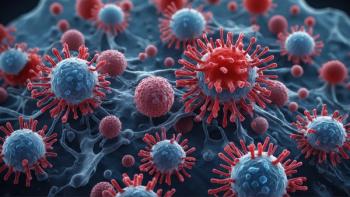
A recent study published in Advanced Photonics looks at three-dimensional (3D) imaging of cells and tissue using phase-modulated stimulated Raman scattering tomography (PM-SRST).

The enterprise laboratory software works with more than 1,500 customers in a variety of industries including pharmaceutical and consumer packaged goods.

Yan’an University researchers publish findings in Spectrochimica Acta Part A: Molecular and Biomolecular Spectroscopy about three new luminescent coordination polymers that could be used in environmental protection efforts.

A new study presents how the isoquinoline core (IQ) could be used to better detect mercury ions in the environment and help safeguard human health.

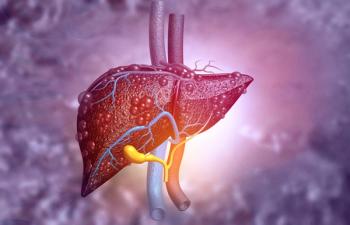
Nano-X received clearance from the U.S. Food and Drug Administration for its HealthFLD artificial intelligence (AI) software, which is designed to perform automated qualitative and quantitative analysis of liver attenuation from CT scans.
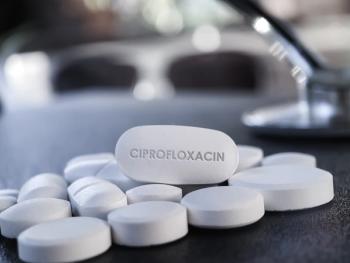
The interaction between surface-active compounds (SACs) and ciprofloxacin was explored in this study to further understand how variations in alkyl chain lengths of SACs impact the binding activity of ciprofloxacin.

The Vanderbilt chemistry professor was an expert in mass spectrometry and ion mobility studies on synthetic polymers.

A new study reveals the potential of a newly designed silicon-rhodamine-based photosensitizer to be used in photodynamic cancer treatment.

In this paper, a one-time digestion method for the determination of arsenic (As), antimony (Sb), selenium (Se), and mercury (Hg) in geological samples was established.

A complex fluorescence method utilizing the Sn(II)-salicylfluorescein (SAF)-cetyltrimethylammonium bromide (CTMAB) system demonstrated effective detection of Sn(II) with a linear relationship between its concentration and fluorescence intensity, along with successful application in various sample matrices with high recovery rates.
