

This review covers products introduced in the spectroscopy space between May 2023 and April 2024.
This review covers products introduced in the spectroscopy space between May 2023 and April 2024.

A recent study showcases how a new rapid colorimetric nanosensor can make the process of detecting hydrogen peroxide in milk products more sustainable.
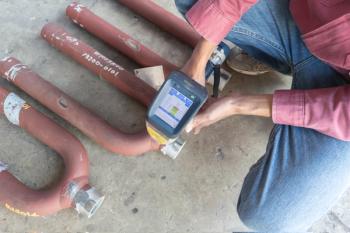
Portable spectrometers allow the equipment to be taken to the sample, as opposed to the sample to the spectrometer, moving the laboratory to the point of need.

A recent study from Denmark examined using microspatially offset low-frequency Raman spectroscopy (micro-SOLFRS) to analyze drug delivery systems.

A recent study from the Czech Republic examines the behavior of nanoparticles (NPs) in complex aqueous environments.

Spectroscopy sat down with Jeanette Grasselli Brown to discuss her early life and how she got started working in chemistry.
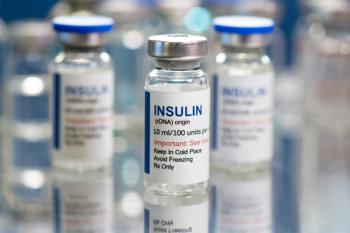
Spectroscopy Emerging Leader in Molecular Spectroscopy award winner Dmitry Kurouski and his team recently explored the link between fatty acids and neurodegenerative diseases.

A recent study from Lanzhou Jiaotong University presented a new fluorescent sensor that can detect permanganate ions in water.

Two distinct baseline correction methods: frequency-domain polynomial fitting, and time-domain molecular free induction decay (m-FID) are compared to determine which approach is more effective in reducing baseline errors in infrared absorption spectra.

Researchers in China have developed a cutting-edge machine learning approach that can detect chylous blood in blood intended for transfusion with more than 90% accuracy. This development promises to significantly reduce the risks associated with blood transfusions and improve the efficiency of blood donation centers.

Here, we detail the role time-domain spectroscopy is playing in the oil industry.

Here, we document recent studies using surface-enhanced Raman spectroscopy (SERS).

Spectroscopy published stories on Raman, infrared spectroscopy, UV-vis, and more. Here are the top reads from the week.

A recent study discusses the recent upgrades to the infrared (IR) beamline at BESSY II storage ring, which has helped it improve its results when conducting IR microscopy.

A recent study analyzed the mid-infrared (mid-IR) and visible near-infrared (VNIR) spectra of primitive Main Belt asteroids.

Researchers from Kyoto University and Japan's National Institute of Advanced Industrial Science and Technology have developed innovative probes to monitor the chemical composition of biodegradable polymer blends during injection molding. This breakthrough could lead to improved production efficiency and reduced waste in the polymer industry.

A recent study demonstrated experimental sensing on field-resolved molecular fingerprinting using scanning techniques.

We explore the buckminsterfullerene molecule using spectroscopy for its physical properties.

Researchers from Peking University and Kwansei Gakuin University are developing a new approach to analyze intermolecular interactions using two-dimension correlation spectroscopy.

A recent study from the University of Bristol shows how Raman spectroscopy can be used to distinguish between ivory belonging to elephants or mammoths.

A recent study examined the ultraviolet-visible (UV-vis) and infrared (IR) spectra of theabrownins in dark tea.

This quarter Spectroscopy spoke to experts in laser ablation, SERS, and Raman spectroscopy, among others.

William Frederick Meggers, honored as the Dean of American Spectroscopists by the US National Bureau of Standards (NBS), dedicated over five decades of his career to NBS, which later became the US National Institute of Standards and Technology (NIST) in 1988 under the United States Department of Commerce. We profile his contributions to spectroscopy here.

Two researchers hailing from Wageningen University and the Norwegian University of Life Sciences collaborated on a new method that improves on existing multilinear predictive modeling methods.

A recent study uses Fourier transform infrared (FT-IR) spectroscopy to study biochemical changes associated with child obesity.
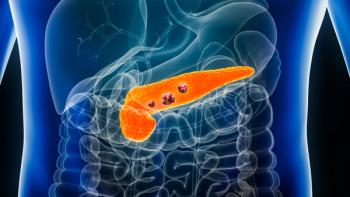
A recent study from Shenzhen University used a novel biosensor based on Fano resonance to improve the detection of cancer.

A recent study used deep level transient spectroscopy to investigate the electrical response of defect filling and emission in monolayer metal-organic chemical vapor deposition (MOCVD)-grown materials deposited on complementary metal-oxide-semiconductor (CMOS)-compatible substrates.

In a new study, researchers from Ulsan National Institute of Science and Technology and Pohang University of Science and Technology presented a new surface-enhanced Raman spectroscopy (SERS) device, improving gap plasmon resonance.

A recent study from Southwest Jiaotong University examines using laser-induced breakdown spectroscopy (LIBS) to analyze the sturdiness of steel rails used in infrastructure projects.

A recent study offers an inside look as to how chemometric modeling is directly impacting greener analytical solutions.