

A recent study led by Detlef Gunther examined using laser ablation with inductively coupled plasma time-of-flight mass spectrometry (LA-ICP-TOF-MS) in quantifying elements in biotissues of plants.
A recent study led by Detlef Gunther examined using laser ablation with inductively coupled plasma time-of-flight mass spectrometry (LA-ICP-TOF-MS) in quantifying elements in biotissues of plants.

A recent study published in Analytical Chemistry developed a new optical emission spectroscopy (OES) method to analyze food for aromatic molecules.
A recent study from the University of Shanghai for Science and Technology used surface-enhanced Raman spectroscopy (SERS) to improve analysis of biological fluids such as urine.
From new gas analysis systems to Raman tools and software, here are some of the new products vendors showcased at the world’s largest laboratory and analysis industry trade fair.

A recent study examined how near-infrared (NIR) spectroscopy was used to ensure peach kernel quality.
During the Analytica conference in Munich, Germany experts from industry and academia discussed the latest trends in spectroscopy instrumentation.
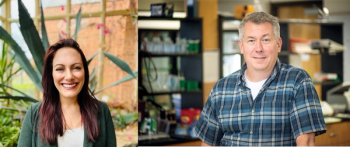
Spectroscopy sat down with Molly Lockart and Brad Pierce to discuss their group’s work with pulsed electron paramagnetic resonance (EPR) spectroscopy to improve our understanding of enzyme dysfunction and the mechanism of sulfur-oxidation.
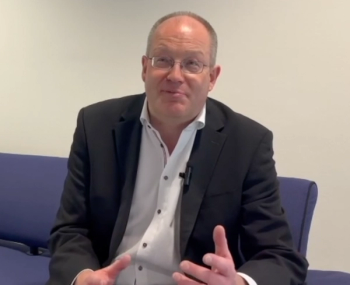
Uwe Karst of the University of Münster took time at Analytica 2024 to talk about the session he's chairing, as well as detail the future of imaging and other trends in analytical chemistry.
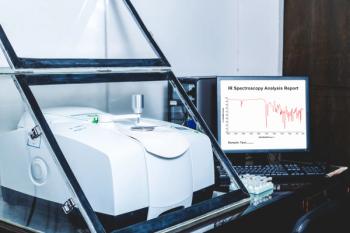
Experts from BASF, the French National Institute for Agriculture, Food, and Environment, and other institutions discussed how their teams are using chemometrics to improve their work.
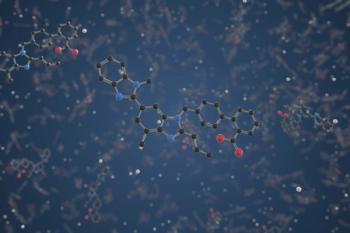
A recent study used spectroscopic techniques to quantify telmisartan and rosuvastatin in tablet dosage form and plasma.

Scientists at the Analytica conference in Munich, Germany delivered lectures on using techniques such as Raman and tunable diode laser absorption spectroscopy to analyze gas in the environment.
In this article, tunable diode laser absorption spectroscopy (TDLAS) is used to measure ammonia leakage, where a new denoising method combining empirical mode decomposition with the Savitzky-Golay smoothing algorithm (EMD-SG) is proposed to improve the signal-to-noise ratio (SNR) of absorbance signals.
Here are the top five articles that the editors of Spectroscopy published this week.

Near infrared (NIR) spectroscopy is a spectroscopic technique used in various industries. Here, we explain its importance in the pharmaceutical, agriculture, and food and beverage analysis industries.

A recent study examined the nutritional parameters in cookies using Fourier transform near-infrared spectroscopy (FT-NIR).

Two awards will be presented at Analytica including the Bunsen-Kirchhoff Award, which is sponsored by Analytik Jena.
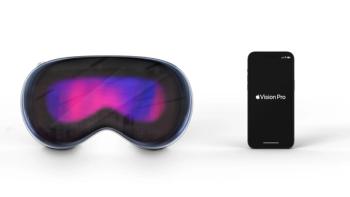
Liquid Instruments recently integrated its Moku system with Apple Vision Pro, according to an announcement from the company.
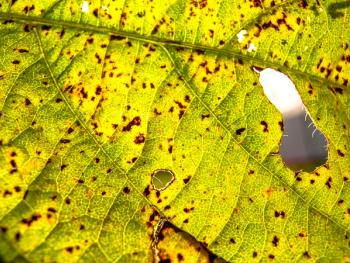
A study from Brazil explored how to use hyperspectral imaging and machine learning to determine the severity of Asian soybean rust.

In this article, the editors of Spectroscopy present an overview of the latest trend in Raman spectroscopy.

This year Analytica, which is held every two years in Europe, will focus on laboratory innovation and sustainability.

A recent study published in The Astrophysical Journal explored two new substructures of the inner Milky Way, Shakti and Shiva, unearthing more information into the formation of the galaxy.

The instrument manufacturer recently made updates to its Raman library, in addition to launching two new analyzers.

NASA’s X-ray Imaging and Spectroscopy Mission (XRISM) uses spectroscopy to study the hottest regions of the universe.


In a recent study, researchers from China investigated the effects of incorporating environmental markers into toxicity prediction models.

A recent study explores the use of another fluorescent probe that can be used in targeted protein degradation.
This article highlights the use of nuclear magnetic resonance (NMR) spectroscopy to characterize biomarkers of metabolic syndrome at different stages of progression.

In a recent study, spectroscopy-based detection protocols were used to detect Covid-19.

Heavy metals in soil remains one of the most pressing issues in environmental conservation efforts. According to the authors of a new study, laser-induced breakdown spectroscopy (LIBS) can contribute to the solution.