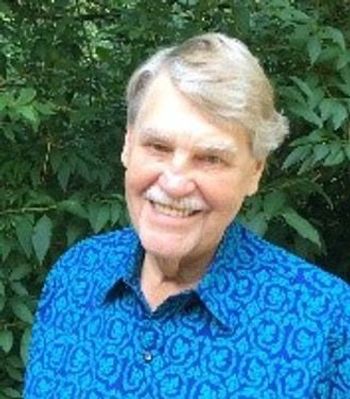
The Eastern Analytical Symposium (EAS) Award for Outstanding Achievements in Vibrational Spectroscopy will be presented to John A. Reffner on Tuesday, November 17.
The Eastern Analytical Symposium (EAS) Award for Outstanding Achievements in Vibrational Spectroscopy will be presented to John A. Reffner on Tuesday, November 17.

Recent collaborative research demonstrates the use of Kerr-gated Raman spectroscopy to study catalysts and catalytic reactions for investigating renewable energy sources.
Spectroscopy Magazine is pleased to announce the addition of seven new members to its editorial advisory board.
Once again, the Eastern Analytical Symposium takes the spotlight November 16–19, providing analysts with the latest developments in areas ranging from biopharmaceutical analysis to materials characterization, from quality assessment to green analysis, and from environmental contaminant determination to antibody analysis, to name a few of the many areas covered.
Lydia Neguse of The California Academy of Mathematics and Science School was selected as the winner of the Most Outstanding Female in Chemistry or Chemical Analysis award at the Fair

Raman imaging manufacturer WITec (Ulm, Germany) is expanding its headquarters building.

Raman imaging manufacturer WITec (Ulm, Germany) is expanding its headquarters building.
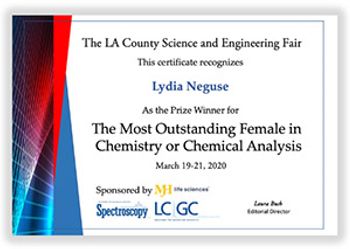
Spectroscopy and LCGC North America are proud to announce that Lydia Neguse of The California Academy of Mathematics and Science School in Carson, California, has been named the winner of the 2020 Most Outstanding Female in Chemistry or Chemical Analysis award at the Los Angeles County Science & Engineering Fair.
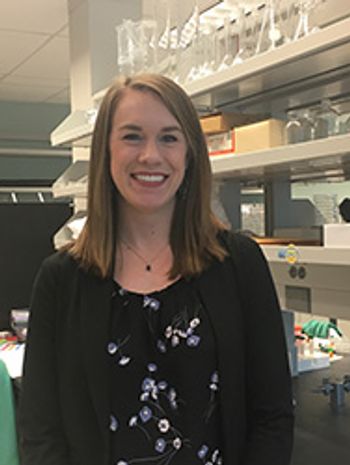
The New York and New Jersey Regional Section of the Society for Applied Spectroscopy (NYSAS) held an on-line meeting on Wednesday, May 27. The speaker, Nicole Ralbovsky, was selected as the 2020 NY–NJ SAS Graduate Student Award winner. Ralbovsky is a fourth-year doctoral candidate in Igor K. Lednev’s laboratory at the University at Albany, SUNY.
Special Issues
A preview of this year’s ASMS conference, in its new on-line format.
The New York and New Jersey Society of Applied Spectroscopy (SAS) has postponed its live meetings until the country gets back to a normal work schedule. In the interim, an online meeting schedule has been developed as a way to maintain the connection.
Jelle Hendrix, an assistant professor at the Biomedical Research Insititute of Hasselt University in Belgium, has received the 2020 Young Fluorescence Investigator Award.
Agilent Technologies, Inc. (Santa Clara, California) recently became a sponsor of My Green Lab, a nonprofit organization dedicated to improving the sustainability of scientific research.
Spartan Bioscience (Ottowa, Canada) recently obtained Health Canada approval for use of the Spartan Cube, reportedly the world’s smallest DNA analyzer, for COVID-19 testing.
The Optical Society of America (OSA) has shifted its Optical Sensors and Sensing Congress to an all-virtual web conference format, free to attendees. The event will be held June 22–26, 2020.
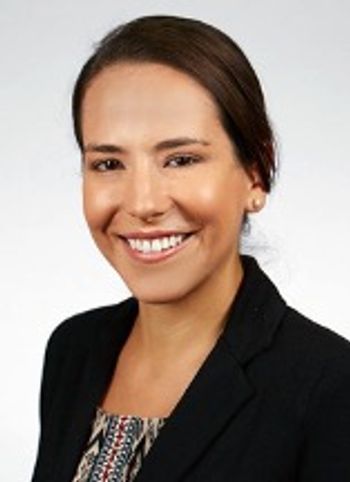
Markita Landry, PhD, an assistant professor at University of California, Berkeley, has won the 2020 Emerging Leader in Molecular Spectroscopy Award, which is presented by Spectroscopy magazine.
ACD/Labs (Toronto, Canada) and Nanalysis Scientific Corporation (Calgary, Albereta, Canada) have entered into a collaborative arrangement that will supply purchasers of Nanalysis 60 and 100 MHz benchtop NMR spectrometer with ACD/Spectrus Processor software for data processing and analysis.
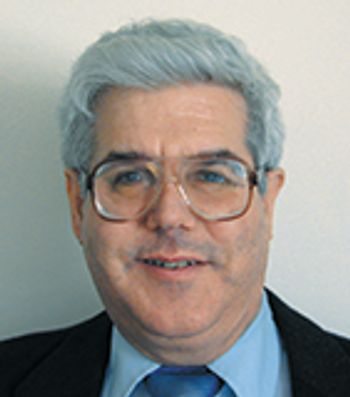
Dr. Howard Mark and Dr. Jerome Workman, Jr. have been named as the winners of the 2020 New York Society for Applied Spectroscopy Gold Medal Award.
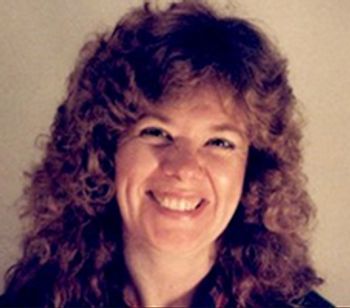
Eileen M. Skelly Frame, PhD, a spectroscopist, chemistry professor, and industrial chemist, died at the age of 66 on Monday, January 13, 2020, following a year-long battle with cancer.
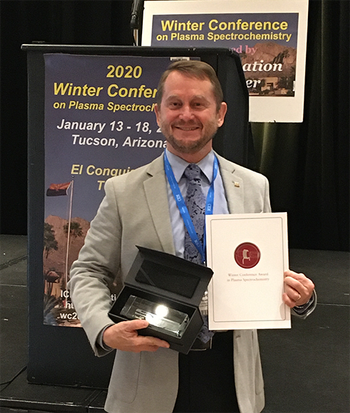
Scott D. Tanner is the 2020 winner of the 2020 Winter Conference Lifetime Achievement Award in Plasma Spectrochemistry, sponsored by Thermo Fisher Scientific.
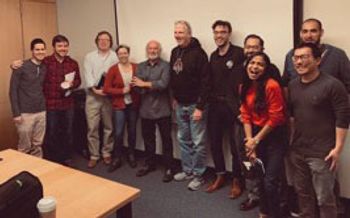
On Tuesday and Wednesday, November 4 and 5, 2019, the State University of New York at Buffalo Chapter of the Society for Applied Spectroscopy (SAS) had the pleasure of hosting Dr. Rick Russo as part of the 2019 SAS Tour Speaker Series.
The Society for Applied Spectroscopy (SAS) presented students Melissa Fernandez and Jessica Hellinger with the SAS Undergraduate Student Award on Sunday, October 13, at SciX 2019 in Palm Springs, California.
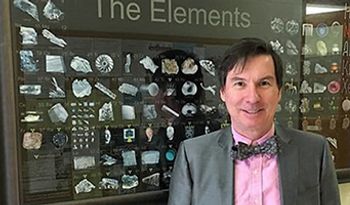
The Eastern Analytical Symposium (EAS) Award for Outstanding Achievements will be presented to Peter de Boves Harrington on Tuesday, November 19.
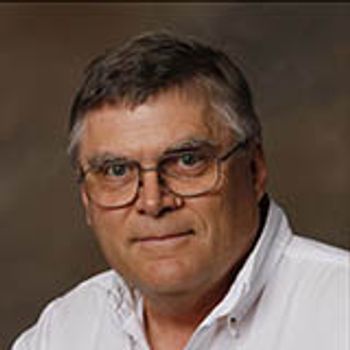
The Eastern Analytical Symposium (EAS) Award for Outstanding Achievements in the Fields of Analytical Chemistry will be presented to Joel M. Harris at EAS 2019 on Wednesday, November 20.
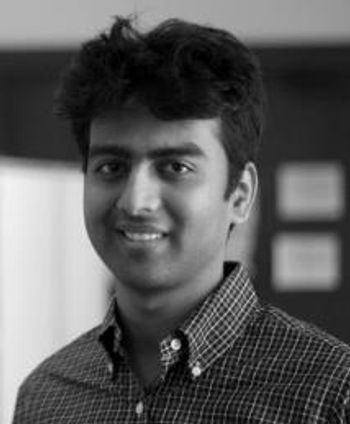
The Society for Applied Spectroscopy’s (SAS) Barbara Stull Graduate Student Award was presented to two students this year: Santosh Paidi of Johns Hopkins University and Saumya Tiwari of the University of Illinois at Urbana Champaign.
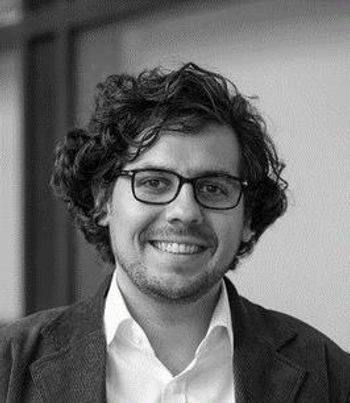
Four student researchers were presented with the Society for Applied Spectroscopy’s (SAS) Atomic Technical Section Student Award at SciX 2019.
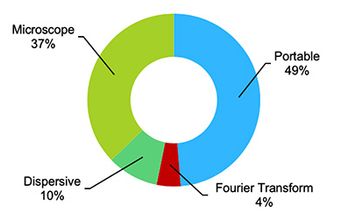
Nowadays, Raman spectroscopy can be applied to many fields where non-destructive chemical analysis and microscopic imaging needs to be provided rapidly. It can analyze many states of matter such as solid, liquid, gases, and even gels and slurries. It is used in a variety of applications such as pharmaceutical, cosmetic, material, semiconductor, and life science industries and research.
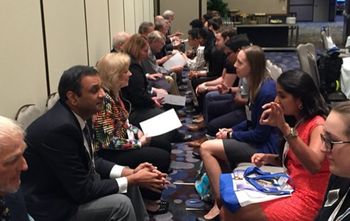
The Coblentz Society will offer a Speed Mentoring event at the Eastern Analytical Symposium (EAS) on Monday, November 18, at 11:45 in the third floor mezzanine.
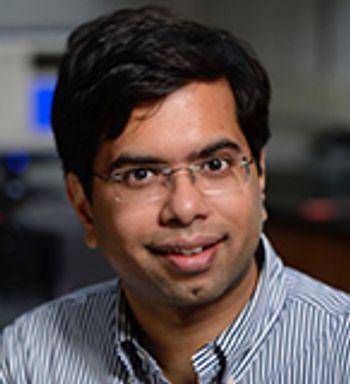
Spectroscopy’s Emerging Leader in Molecular Spectroscopy Award will be presented to Ishan Barman, an assistant professor at Johns Hopkins University on Monday, October 14, at SciX 2019 at the Palm Springs Convention Center in California.