



Webcast
Webinar Date/Time: Thu, May 23, 2024 1:00 PM EDT
Webcast
Webinar Date/Time: Thu, May 23, 2024 1:00 PM EDT

Rigaku Analytical Devices has been awarded a third year of funding for a TSA contract dedicated to creating better-optimized screening equipment.

A PhD student in the Department of Bioengineering at the University of Pennsylvania has won the 2024 Physics of Medical Imaging Student Paper Award, which is given out annually by the International Society for Optics and Photonics (SPIE), at the Medical Imaging Symposium in San Diego, California.
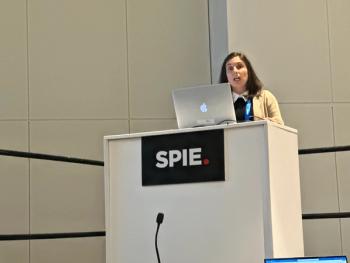
Ana Doblas of the University of Massachusetts Dartmouth presented her team’s findings on how models based on deep learning (DL) can enhance different microscopy imaging infrastructures.

A team of scientists have used airborne lidar mapping to study Mayan architecture, seeing how certain buildings’ construction can hint at the social status of their inhabitants.

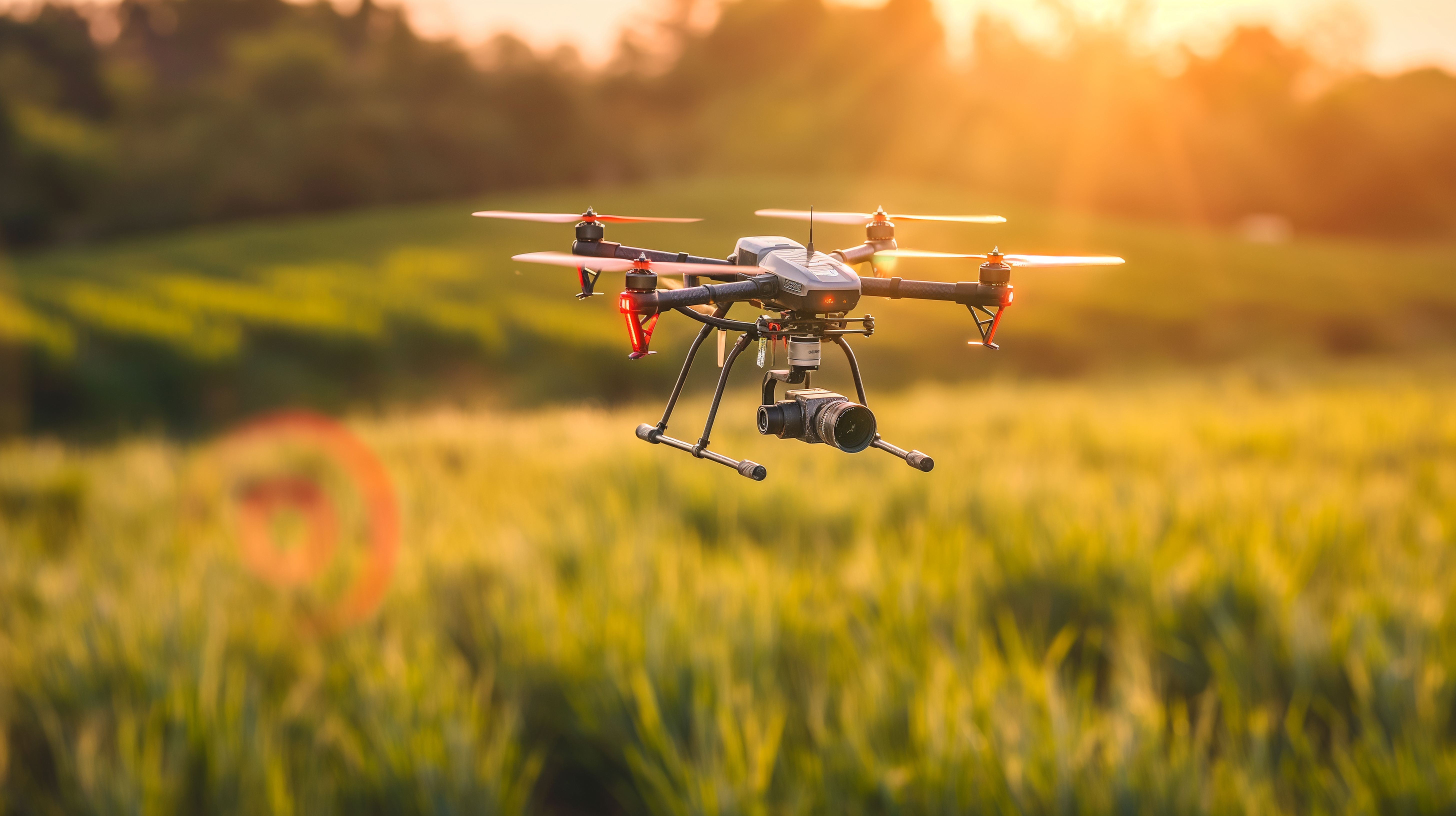
Utilizing a low-altitude unmanned aerial vehicle (UAV), a hyperspectral remote-sensing system can identify key grass species indicating grassland degradation, developing an ASI index and classification rules and leveraging spectral differences and plant senescence reflectance to effectively monitor and evaluate grassland conditions and degradation.

This tutorial illustrates spectroscopic imaging principles, applications, advantages, and limitations for UV-vis, FL, NIR, IR, THz, Raman, XRF, ICP-MS, and LIBS techniques. It provides a guide for understanding spectroscopic imaging for diverse sample types and applications.
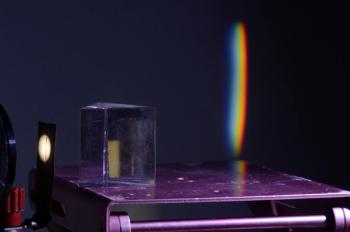
This study explores the enhanced performance of modified alternating least squares (MALS) over alternating least squares (ALS) in analyzing infrared and Raman image spectral data, highlighting the stability and computational efficiency of MALS.

An inside look at the fundamentals of Raman microscopy and how Raman can be utilized in chemical imaging and analysis, from its inception to modern applications.
Webcasts
Webinar Date/Time: Wed, Nov 15, 2023 2:00 PM EST

Webcasts
Webinar Date/Time: Europe: Thursday, September 28, 2023, at 1 pm BST | 2 pm CEST North America: Thursday, September 28, 2023, at 1 pm PDT | 4 pm EDT Asia: Friday, September 29, 2023, at 9:30 am IST | 12 pm CST | 1 pm JST | 2 pm AEDT

Webcasts
Webinar Date/Time: Thu, Sep 14, 2023 10:00 AM EDT

Webcasts
Webinar Date/Time: Wednesday, June 21st, 2023 at 11am EDT | 8am PDT | 4pm BST | 5pm CEST

A new study highlighted the potential benefits of using hyperspectral imaging technology in the tea industry.

Webcasts
Webinar Date/Time: Europe: Thursday, May 4, 2023, at 9 am BST | 10 am CEST North America: Thursday, May 4, 2023, at 11 am PDT | 2 pm EDT Asia: Friday, May 5, 2023, at 10:30am IST | 1 pm SST | 2 pm JST | 3 pm AEDT

Webcasts
Webinar Date/Time: Europe: Tuesday, May 9, 2023, at 3pm BST | 4pm CEST North America: Tuesday, May 9, 2023, at 11am PDT | 2pm EDT Asia: Wednesday, May 10, 2023, at 8:30am IST | 11am HKT | 12pm JST | 1pm AEDT
Webcast
Webinar Date/Time: Tuesday, February 28 and Wednesday, March 1, 2023 Morning Session: 9 am EST | 6 am PST | 3 pm CET | 2 pm GMT Afternoon Session: 2 pm EST | 11 am PST | 8 pm CET | 7 pm GMT
Webcasts
Webinar Date/Time: On-Demand
Webcasts
Webinar Date/Time: Wednesday, August 23rd, 2023 at 8am PDT | 11am EDT | 4pm BST | 5pm CEST
Webcasts
North America: Wednesday, November 16, 2022 at 11am PST | 1pm CST | 2pm EST Europe: Thursday, November 17, 2022, at 11am BST | 12pm CET Asia: Thursday, November 17, 2022, at 10:30 IST | 1pm SGT | 2pm JST | 4pm AEST Fast, easy, and accurate analysis of microplastics is a key need of anyone with an interest in this area. With the capacity to conduct this analysis directly on the filter in the Agilent 8700 LDIR for microplastics, this analysis has now reached a new level.

Our annual review of new products for atomic and molecular spectroscopy, including details by category and highlights of overarching trends.
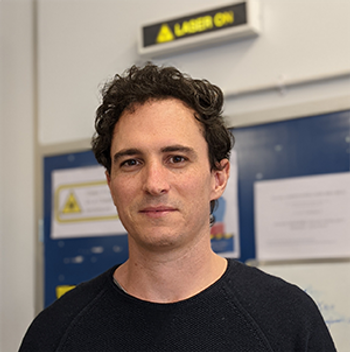
Salvatore La Cavera III and his colleagues in the Faculty of Engineering at the University of Nottingham, in Nottingham, United Kingdom have developed a novel measurement system consisting of two ultrafast lasers that excite and detect high-frequency ultrasound from a nano-transducer fabricated onto the tip of a single-mode optical fiber.
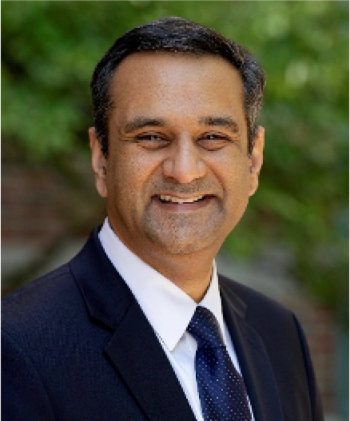
Professor Rohit Bhargava and his team at the University of Illinois, where they have established the Cancer Center at Illinois, are advancing research in tumor microenvironments, using techniques such as high-definition Fourier transform infrared (HD-FT-IR) coupled with machine learning. We recently spoke to Bhargava about this work.

This article discusses coherent Raman imaging and how it can visualize and quantify cutaneous pharmacokinetics (PK).
Inline FT-NIR and offline terahertz Raman imaging analysis are used to characterize active pharmaceutical ingredient (API) crystallinity and to monitor different solid physical states of the API, to control process parameters of hot melt extrusion.