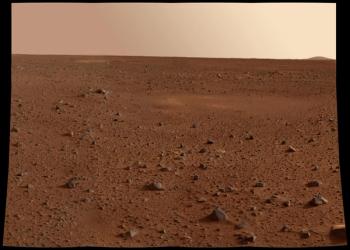
The Canadian Space Agency contract funds refinement and prototype testing of a laser-based cavity spectrometer intended to monitor trace methane continuously at the Martian surface.
While traditional near-infrared Raman systems offer non-contact identification of several explosive substances, they are prone to interfering fluorescence. 1064nm dispersive Raman systems offer reduced interference and higher prediction accuracy.