

Metrohm USA announced Katelyn Michael as the 2024 winner of its Young Chemist Award for her work on the degradation of perfluorooctanesulfonic acid (PFOS).
Aaron Acevedo is an assistant editor for LCGC and Spectroscopy at MJH Life Sciences.
Metrohm USA announced Katelyn Michael as the 2024 winner of its Young Chemist Award for her work on the degradation of perfluorooctanesulfonic acid (PFOS).

Here are the top five articles that the editors of Spectroscopy published this week.

A PhD student in the Department of Bioengineering at the University of Pennsylvania has won the 2024 Physics of Medical Imaging Student Paper Award, which is given out annually by the International Society for Optics and Photonics (SPIE), at the Medical Imaging Symposium in San Diego, California.

In a recent study from the Autonomous University of Puebla (BUAP), scientists studied how excited-state proton transfer based fluorescence works with Kaempferol powder and different solutions.
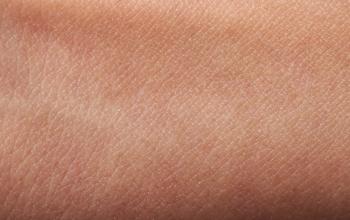
Scientists from the Beijing Technology and Business University in Beijing, China recently evaluated the capabilities of ceramide nanoemulsions (NEs) using confocal Raman spectroscopy.
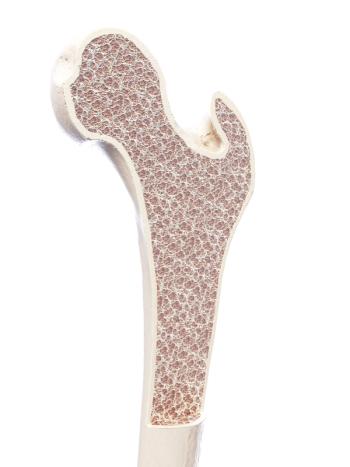
In a new study, scientists are investigating Raman spectroscopy as a technique for monitoring postmenopausual osteoporosis.

Scientists from Hirosaki University Graduate School of Science and Technology in Japan evaluated the eating quality of white rice samples using Raman spectroscopy.

Peter M. Carlson will take over as CEO of Spectral AI, replacing Wensheng Fan.
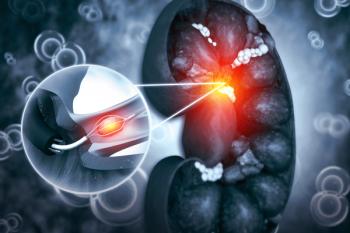
Juergen Popp of the Leibniz Institute of Photonic Technology presented at Pittcon 2024 about how artificial intelligence (AI) can help scientists with tumor removal processes.

A R&D chemist at Inorganic Ventures held a presentation at Pittcon about detecting toxic metals in hemp samples using inductively coupled plasma–optical emission spectroscopy (ICP–OES).

Scientists from Gazi University recently created a new analysis system for detecting melamine, a toxic chemical, in milk samples.
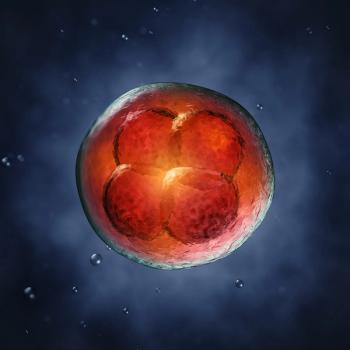
A team of scientists from the Masschusetts Institute of Technology are combining Raman spectroscopy with holo-tomography to monitor early embryonic development.

Boris Mizaikoff of the University of Ulm recently held a presentation on how analyzing a subject’s exhaled breath can help identify who is suffering from long COVID-19.
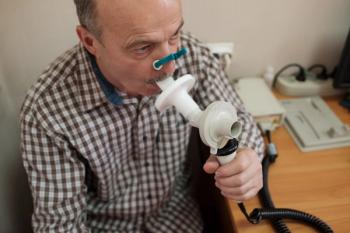
Boris Mizaikoff of the University of Ulm in Germany held a presentation on how mid-infrared spectroscopy techniques and exhaled breath analysis can help detect diseases like gastric cancer.
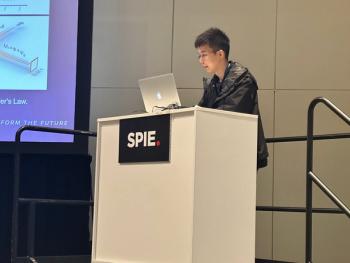
At SPIE Photonics West 2024, Jiachi Ye of the University of Florida held a presentation about a 4f-based free-space optical system (light-based computer) to address power consumption and speed limitations of calculations performed with convolutional neural networks (CNNs).
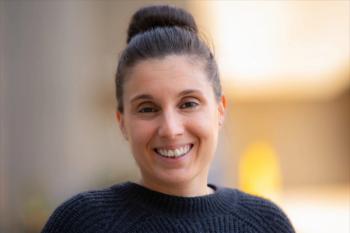
At SPIE Photonics West, Spectroscopy spoke with Ana Doblas of the University of Massachusetts, Dartmouth about artificial intelligence, deep learning, and their potential in microscopy.
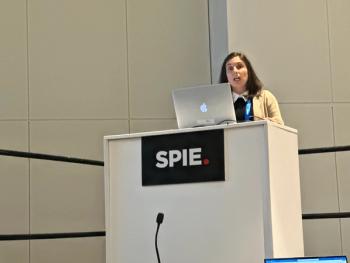
Ana Doblas of the University of Massachusetts Dartmouth presented her team’s findings on how models based on deep learning (DL) can enhance different microscopy imaging infrastructures.
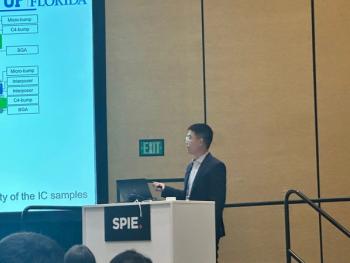
Chengjie Xi of the University of Florida held a lecture on how terahertz time-domain spectroscopy (THz-TDS) can be used to detect changes in integrated-circuit (IC) packaging materials.

Using visible and near-infrared (Vis/NIR) hyperspectral imaging (HSI), scientists were able to determine macro- and micronutrient contents rapidly and non-destructively in persimmon leaves.

Scientists from Zhejiang A&F University and Huzhou University in China recently created a new time series prediction model that combines linear and nonlinear prediction methods.
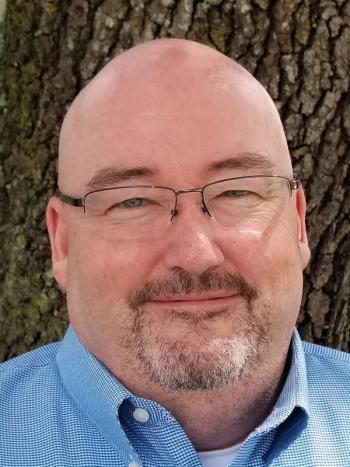
Stawick has been a member of AOAC for more than 20 years and has held multiple senior management positions in biology, food science, and business administration.
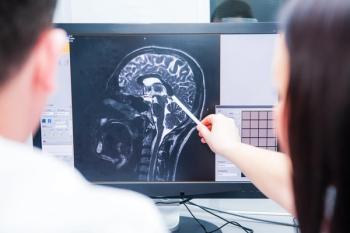
This interview with Pola Goldberg Oppenheimer of the University of Birmingham highlights new research her team is working on that includes a Raman-based system for detecting early traumatic brain injuries.
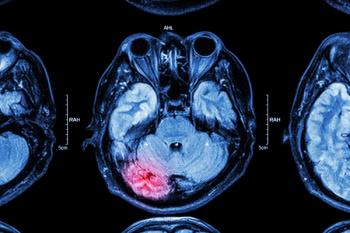
Scientists from the United Kingdom recently created a Raman spectroscopy-based system for detecting early signs of traumatic brain injury (TBI) in patients.
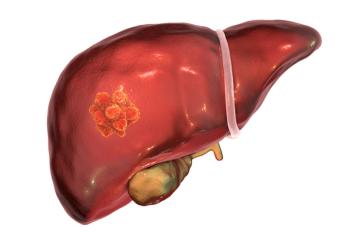
Scientists recently tested a new means of detecting early-stage liver cancer using surface-enhance Raman spectroscopy (SERS).
In a new study, scientists have created a fluorescence chemo sensor to selectively determine histamine in human plasma samples.
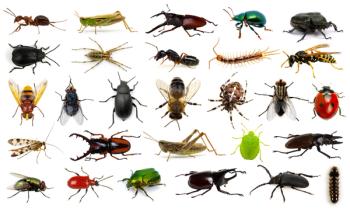
Scientists have created a new means of identifying insect species using ATR-FTIR spectroscopy and machine learning methods.

A group of Brazilian scientists tested a new means of testing for COVID-19 using a combination of Vis-NIR spectroscopy and machine learning algorithms.
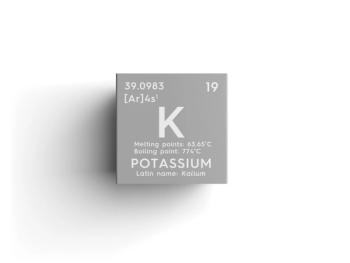
In a new study, a group of scientists investigated the potassium isotopic composition of different plant reference materials using multi-collector inductively coupled plasma mass spectrometry (MC-ICP-MS).

Scientists from Xi’an Jiaotong University in Xi’an, China measured the effects of ablation craters on geomaterials that occur as a side effect of laser-induced breakdown spectroscopy (LIBS).
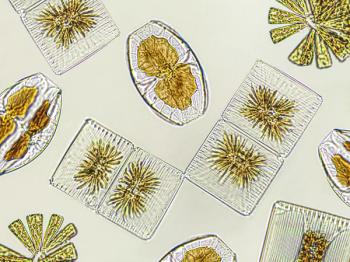
Using single-cell inductively coupled plasma mass spectrometry (SC-ICP-MS), scientists from Kanazawa, Japan created a new method for detecting cadmium in marine phytoplankton.