

What was covered in our last "What's Nu" newsletter? We've got you covered! This Q&A overview addresses key topics in analytical spectroscopy, such as how spectroscopy is being used in materials science and battery analysis.

Will Wetzel is a Senior Editor for Spectroscopy magazine. He specializes in creating engaging, high-value content for diverse audiences. His role involves driving digital growth through KPI assessments, social media strategies, and innovative content development.
Wetzel is also a sports writer and commentator, serving as a freelance writer for several sports websites, including FanSided. He currently serves as the host, producer, and creator of “The Inside Fastball,” a LinkedIn newsletter that discusses topical issues in Major League Baseball (MLB). Outside of work, Wetzel volunteers with the Nashville Humane Association and Habitat for Humanity. His stated goal is to help build one house with Habitat for Humanity in every U.S. state.
What was covered in our last "What's Nu" newsletter? We've got you covered! This Q&A overview addresses key topics in analytical spectroscopy, such as how spectroscopy is being used in materials science and battery analysis.

A European study of nearly 9,000 cropland soil samples found that combining visible–near-infrared (vis-NIR) spectroscopy with climate and topographic data only improves soil carbon and nitrogen prediction accuracy at spectral resolutions of 10 nanometers or finer.
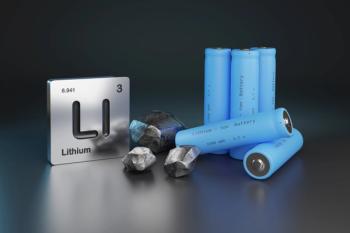
Spectroscopy is playing a key role in analyzing materials in lithium-ion batteries.

The upcoming 2026 Vibrational Spectroscopy Seminar will focus on time-resolved spectroscopy and vibrational imaging, with structured mentorship component for doctoral and postdoctoral attendees.

A new artificial intelligence (AI) interpretability method developed at Zhejiang Police College was designed to improve transparency in Raman spectroscopy classification by segmenting spectral data into continuous regions and quantifying each region's contribution to model decisions.

A review of selected X-ray analysis work published on Spectroscopy Online from 2022–2026.
How does a college professor pull from their experience in government and the private sector to educate students pursuing careers in spectroscopy?

What is infrared thermography and how can it be used to help us learn more about the Giza Pyramids?
Top articles published this week include the debut episode of “Spectroscopy Around the Globe,” a new episode of “Pathways in Spectroscopy,” and more.

"Spectroscopy Around the Globe" releases its debut episode, which focuses on the role spectroscopy has played in studying the Giza Pyramids.
The Atacama Large Millimeter/submillimeter Array (ALMA) and the James Webb Space Telescope (JWST) are being used by astronomers and scientists to learn more about interstellar chemistry.

The American Chemical Society (ACS) will be having its annual conference from August 23–27, in Chicago, Illinois. Here’s why spectroscopists and analytical chemists should attend.

A recent study examined how surface-enhanced Raman spectroscopy (SERS) is being used with machine learning (ML) analysis to accurately distinguish patients with Crohn’s disease.

Monitoring wood coating decay proactively ensures the safety of commercial wood used for construction.
Pursuing careers in industry means young professionals need to understand what skills the job market values the most.
Students may not get the internship of their dreams, but they still might be able to land a relevant internship they can leverage into a full-time job after college.
Top articles published this week include a preview of the upcoming International Symposium on Molecular Spectroscopy (ISMS) conference, an inside look at particle correlated Raman spectroscopy, and more.

Researchers detect up to 587 particles per kilogram in locally marketed table salt, raising questions about daily consumer exposure through a dietary staple.

The first episode of "Spectroscopy Around the Globe" will take viewers on a journey to the Great Pyramids of Giza, where spectroscopy is playing a key role in uncovering Ancient Egyptian history.
In a recent interview, Miguel Sanz-Novo, an Alexander von Humboldt Fellow at the Max Planck Institute for Extraterrestrial Physics, explained how simple molecules in molecular clouds evolve into increasingly complex chemical species during star formation.
A continuation of our conversation with Janam Pandya, Product Manager at Thermo Fisher Scientific, provides insight into how the global market for Raman, infrared (IR), and mid-infrared (MIR) instruments is set to evolve over the next five years.

A recent review article explores the problem of weak interfacial forces in soft matter research.
In this interview segment, Miguel Sanz-Novo, an Alexander von Humboldt Fellow at the Max Planck Institute for Extraterrestrial Physics, discusses why complex organic molecules are important to study.

Raman spectroscopy is being applied in various industries. This Q&A overview highlights some of the most important trends and developments involving the technique that researchers should be aware of.
How can molecular analyzers be integrated into closed-loop process control? Janam Pandya of Thermo Fisher Scientific explains.
Succeeding as an applications manager means multitasking, presenting, and learning new spectroscopies at a high level. Jennifer Ferguson explains.
Top articles published this week include a preview of the upcoming International Symposium on Molecular Spectroscopy (ISMS) conference, an inside look at particle correlated Raman spectroscopy, and more.
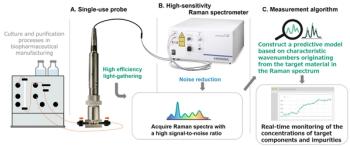
A new inline Raman measurement system seeks to address current industry challenges in biopharmaceutical manufacturing.
A continuation of our conversation with Janam Pandya, Product Manager at Thermo Fisher Scientific, highlights the challenges of operating field-deployable instruments in harsh, rugged landscapes.
Minjung Son, an assistant professor of chemistry at Boston University, and her group is developing nanomaterials and polaritons, which is important for energy conversion technologies.