
This evergreen Q&A explores the latest trends and advancements in laser-induced breakdown spectroscopy (LIBS).
Will Wetzel is a Senior Editor for Spectroscopy magazine. He specializes in creating engaging, high-value content for diverse audiences. His role involves driving digital growth through KPI assessments, social media strategies, and innovative content development.
Wetzel is also a sports writer and commentator, serving as a freelance writer for several sports websites, including FanSided. He currently serves as the host, producer, and creator of “The Inside Fastball,” a LinkedIn newsletter that discusses topical issues in Major League Baseball (MLB). Outside of work, Wetzel volunteers with the Nashville Humane Association and Habitat for Humanity. His stated goal is to help build one house with Habitat for Humanity in every U.S. state.
This evergreen Q&A explores the latest trends and advancements in laser-induced breakdown spectroscopy (LIBS).
A recent study presented a new method for identifying textile fibers using Raman spectroscopy and deep learning.

Carbon plays a role in building complex organic molecules, including those found in outer space.
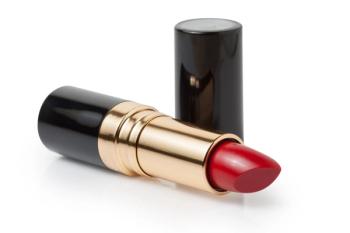
A recent study published in the journal Forensic Science International tested a new method for differentiating between individual lipstick products.

This curated selection of articles highlights recent advancements in microplastics and nanoplastics and soil analysis.
This "Pathways in Spectroscopy" clip highlights two skills scientists need to build a successful career in forensics.
This dynamic video explores some of the latest advancements in molecular spectroscopy.
Top content published this week include a new digital e-book that explores the role of spectroscopy in cultural heritage analysis and more.
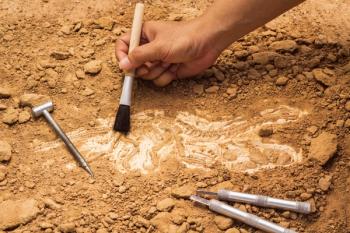
A handheld infrared (IR) scanner paired with an artificial neural network (ANN) can identify human versus animal bone with over 96% accuracy.

The 29th International Conference on Raman Spectroscopy (ICORS 2026) is set to have a gala dinner cruise for conference attendees to enjoy.

X-ray fluorescence (XRF) spectroscopy has been an important method in the study Stonehenge.
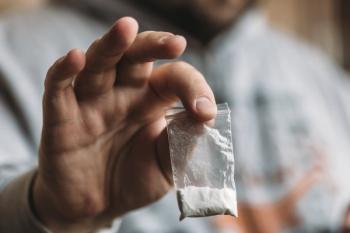
Sapienza Università di Roma team reports near-infrared (NIR) techniques that identify and quantify cocaine and cutting agents through sealed police evidence bags, addressing safety and chain-of-custody concerns in forensic laboratories.
In this preview of the upcoming American Chemical Society (ACS) Fall 2026 Meeting, we sat down with Pavithraa “Pavi” Sundararajan, a postdoctoral fellow at NASA Ames Research Center, talks about her career journey and what inspired her to become an astrochemist.

In this preview of the upcoming American Chemical Society (ACS) Fall 2026 Meeting, we sat down with Pavithraa “Pavi” Sundararajan, a postdoctoral fellow at NASA Ames Research Center, to ask her about what she is looking forward to at the conference.

The Altar Stone cannot be taken to a laboratory for analysis, but portable Raman analyzers are getting the job done on-site.

The 29th International Conference on Raman Spectroscopy (ICORS) takes place next week in Istanbul, Turkey. We preview the conference here.
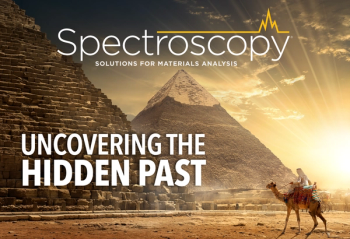
This interactive e-book covers the recent trends and developments in analytical spectroscopy and how it is being used in archaeology and cultural heritage analysis.
Infrared (IR) spectroscopy, paired with statistical modeling, can non-destructively distinguish human, dog, and cat bloodstains on sand and soil, offering a preliminary proof-of-concept for field-deployable forensic screening tools.
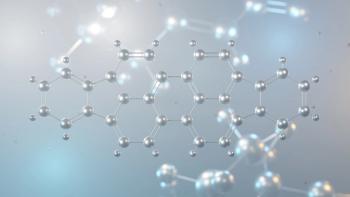
In this preview of the upcoming American Chemical Society (ACS) Fall 2026 Meeting, we sat down with Pavithraa “Pavi” Sundararajan, a postdoctoral fellow at NASA Ames Research Center, discusses how spectroscopic techniques have been applied in the study of nitrogen-containing polycyclic aromatic hydrocarbons (PAHs).
Top articles published this week include a new peer-reviewed article how laser pulse width and repetition rate affect quantitative elemental analysis of aluminum alloys using fiber laser-induced breakdown spectroscopy (LIBS) and more.

In this preview of the upcoming American Chemical Society (ACS) Fall 2026 Meeting, we sat down with Pavithraa “Pavi” Sundararajan, a postdoctoral fellow at NASA Ames Research Center, previews her upcoming talk on polycyclic aromatic hydrocarbons (PAHs).

Researchers developed spherical and hollow gold nanoparticle-based SERS platforms that enable label-free molecular imaging of chemotherapy drug effects and drug release within cancer cells, offering a theranostic tool with potential applications in early cancer diagnostics.
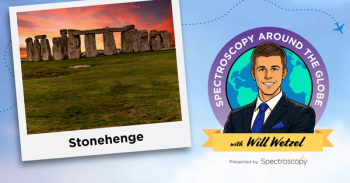
In the second episode of “Spectroscopy Around the Globe,” host Will Wetzel takes viewers on a journey to England to explore how spectroscopy is being used to uncover the secrets of Stonehenge.
Environmental analysis is a growing area of study, and single-particle inductively coupled plasma–mass spectrometry (spICP-MS) is one of the techniques contributing to this growth.
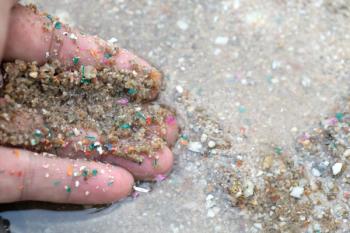
What are some of the limitations of elemental selective techniques?
How can inductively coupled plasma–mass spectrometry (ICP-MS) detect particles that were missed in initial analyses?
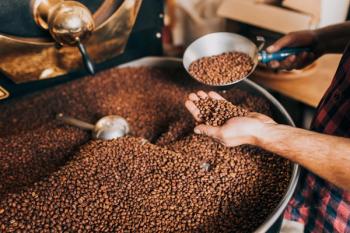
An upcoming poster presentation set to take place at the American Chemical Society (ACS) Fall 2026 Meeting will explore how spectroscopy is being used to distinguish different roasted coffee types.
This "Pathways in Spectroscopy" episode highlights why adapting to new technologies is essential for growing a career in science.
Can spectroscopy make real-time monitoring in nuclear and radioisotope facilities faster and safer?
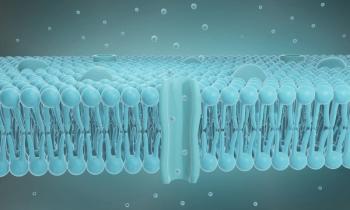
An upcoming talk at the American Chemical Society (ACS) 2026 Fall Meeting will address a key question in membrane biophysics.